Those two words might be my favorite words in all of Scripture — and honestly, my favorite concept for how life actually works.
Let me explain.
A Song That Wouldn’t Leave My Head
In 1986, a hip hop artist named Sir Mix-a-Lot released a song titled “Baby Got Back.” It’s a song that still gets played in certain circles from time to time, and it opens with a line most of us could finish without help:
“I like big butts and I cannot lie…”
The song is obviously talking about body parts. But as I was preparing this word, that opening phrase came to mind — because that same sentence applies to most of us, just in a completely different way.
Think about how often your own inner monologue sounds like this:
“I would go work out today, but I’m too tired.”
“I want to talk to my friend about this issue, but I don’t like confrontation.”
“I want to do great things, but I’m too old.” (or too young)
“I would do [whatever it is], but[insert any excuse you own].”
Do you see what’s happening? Every time we follow a statement with the word but, we erase everything that came before it. The but swallows the sentence.
And in real life, that little word gets big. Life inflates the but until it looks like a wall — and that wall keeps us from doing the things we know we should do, the things we were made to do.
Well, I want to tell you something: it’s time for all of us to get off our buts.
Because the next time you catch yourself saying but, you have the option to follow it with something else entirely.
But God.
The Two Words That Change Everything
When I say “But God” is my favorite phrase in the Bible, I’m not exaggerating. I love it because of what it always does. It never appears in Scripture to cancel hope — it appears to redirect it. Just look at how it shows up:
Genesis 50:20 — “You intended to harm me, but God intended it for good to accomplish what is now being done, the saving of many lives.”
Psalm 49:15 — “But God will redeem my life from the grave; he will surely take me to himself.”
1 Corinthians 1:27 — “But God chose the foolish things of the world to shame the wise; God chose the weak things of the world to shame the strong.”
Ephesians 2:4-5 — “But God, being rich in mercy, because of the great love with which he loved us, even when we were dead in our trespasses, made us alive together with Christ — by grace you have been saved.”
Matthew 19:26 — Jesus looked at them and said, “With man this is impossible, but with God all things are possible.”
Every single time, someone had reached the end of their own strength. Someone had filled in the blank after the but with a dead end. And God stepped in and rewrote the sentence.
Mercy and Grace: The Engine Behind “But God”
Here’s what makes the whole thing work: it rests entirely on God’s mercy and grace.
Those two words get used interchangeably, but they’re not the same thing. Here’s the clearest way I know to put it:
Mercy is God not punishing us as our sins deserve. It’s deliverance from judgment. It’s God not giving us what we do deserve.
Grace is God blessing us despite the fact that we don’t deserve it. It’s extending kindness to the unworthy. It’s God giving us something we don’t deserve.
Mercy says, “I won’t give you what you’ve earned.” Grace says, “I’ll give you what you never could have earned.”
And when those two work together, you get a But God statement. There are countless things we have access to because of it — but today I want to look at just three.
1. God’s Mercy and Grace Give Us Salvation
Titus 3:5 — “Not by works of righteousness which we have done, but according to his mercy he saved us, by the washing of regeneration, and renewing of the Holy Ghost.”
Ephesians 2:8-9 — “For you are saved by grace through faith, and this is not from yourselves; it is God’s gift — not from works, so that no one can boast.”
The apostle Paul knew he had received God’s mercy, and he knew full well he didn’t deserve it. But God — the most wonderful two words ever put together — gave it to him anyway.
You see, Paul made a lot of mistakes before he was saved. He was essentially an old-time Charles Manson, responsible for the death of a lot of Christians. Then one day, on the road to Damascus, Paul received God’s mercy instead of the judgment he deserved. Not only that — grace was given to him too. A new name (Saul became Paul). A new life. A new mission. None of it based on anything he could boast in.
He was forever thankful. And so am I.
2. God’s Mercy and Grace Give Us Help in Times of Trouble
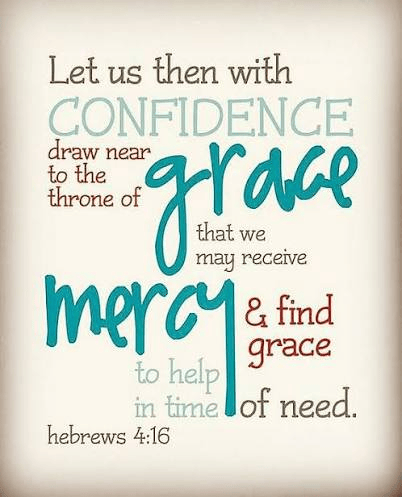
Hebrews 4:16 — “Let us therefore come boldly unto the throne of grace, that we may obtain mercy, and find grace to help in time of need.”
We all face difficult, trying seasons. If you’ve lived very long at all, you’ve cried — I know I have. But there is good news: the help and comfort we need is always available during those times, and it’s all because of God’s mercy and grace.
Nobody has earned the help God gives us each day. Honestly, we all deserve to reap the results of our bad choices without any comfort at all. You’ve probably heard the phrase, “You made your bed, now lie in it.” We do find ourselves in trouble because of our own choices sometimes — but God shows mercy by not leaving us alone, and then shows grace by giving us help anyway.
What have any of us done for God lately that He owes us a favor? He is God. He doesn’t need anything from us. Everything we’re given is because of His loving grace and mercy.
I’m so thankful for the blessings God gives me — especially the ones I never earned.
3. God’s Mercy and Grace Give Us Strength to Endure
2 Corinthians 4:1 — “Therefore, since we have this ministry because we were shown mercy, we do not give up.”
Philippians 4:13 — “I am able to do all things through Him who strengthens me.”
The Berean Literal Bible puts it this way: “I have strength for all things in the One strengthening me.”
Sometimes life gets so stressful it feels like we can’t make it through one more day. But there is good news: we are not alone. God’s mercy and grace strengthen us and sustain us so we don’t have to give up. We can endure whatever comes our way because He gives us strength and walks through it with us.
We may feel alone, abandoned, too weak to make it — but God never leaves us or forsakes us. We have a friend in Jesus, a friend who sticks closer than a brother. When it seems like we can’t go another step, He tells us to cast our cares on Him, because He cares for us. His mercy and grace are new every morning, always available.
The Man Who Built the Thing
I want to share a short story about Henry Ford.
One day Ford was driving through the Michigan countryside when he saw a man whose Model T had broken down alongside the road. Mr. Ford stopped and asked if he could take a look and see if he could fix it. The man said yes. In just a matter of minutes, Mr. Ford had the car running again.
The man told him he sure was impressed. Henry Ford replied, “Well, I should be able to fix it — after all, I’m the one who designed it.”
God designed us. And whatever might be wrong with us, God is able to fix it. There is nothing God cannot do.
So the next time life throws you something that makes you pause and start a sentence with but — I want you to remember the biggest but of all.
But God.
Go to Him. Take advantage of His mercy and grace today.
It turns out I really do like big buts. And I cannot lie.
More “But God” Verses to Study
If you want to go deeper, here are a few more of my favorites:
Genesis 8:1 — “But God remembered Noah and all the wild animals and the livestock that were with him in the ark, and he sent a wind over the earth, and the waters receded.”
Genesis 31:42 — “…But God has seen my hardship and the toil of my hands, and last night he rebuked you.”
1 Samuel 23:14 — “Day after day Saul searched for him, but God did not give David into his hands.”
Nehemiah 9:17 — “…But you are a forgiving God, gracious and compassionate, slow to anger and abounding in love. Therefore you did not desert them.”
Psalm 73:26 — “My flesh and my heart may fail, but God is the strength of my heart and my portion forever.”
Isaiah 40:8 — “The grass withers and the flowers fall, but the word of our God stands forever.”
Jonah 2:6 — “…But you brought my life up from the pit, O LORD my God.”
John 1:18 — “No one has ever seen God, but God the One and Only, who is at the Father’s side, has made him known.”
Acts 2:24 — “But God raised him from the dead, freeing him from the agony of death, because it was impossible for death to keep its hold on him.”
Romans 5:8 — “But God demonstrates his own love for us in this: While we were still sinners, Christ died for us.”
Romans 6:23 — “For the wages of sin is death, but the gift of God is eternal life in Christ Jesus our Lord.”
Romans 8:9 — “You, however, are controlled not by the sinful nature but by the Spirit, if the Spirit of God lives in you.”
2 Timothy 2:9 — “…But God’s word is not chained.”
What’s one “but” you’ve been carrying lately? I’d love to hear it — drop it in the comments and let’s trade it for a “But God” together.
Finding Your Path: Life Lessons from Boy Scouts Adventures
Some of the things we learn when we are young stay with us much longer than we realize.
For me, Boy Scouts was one of those things.
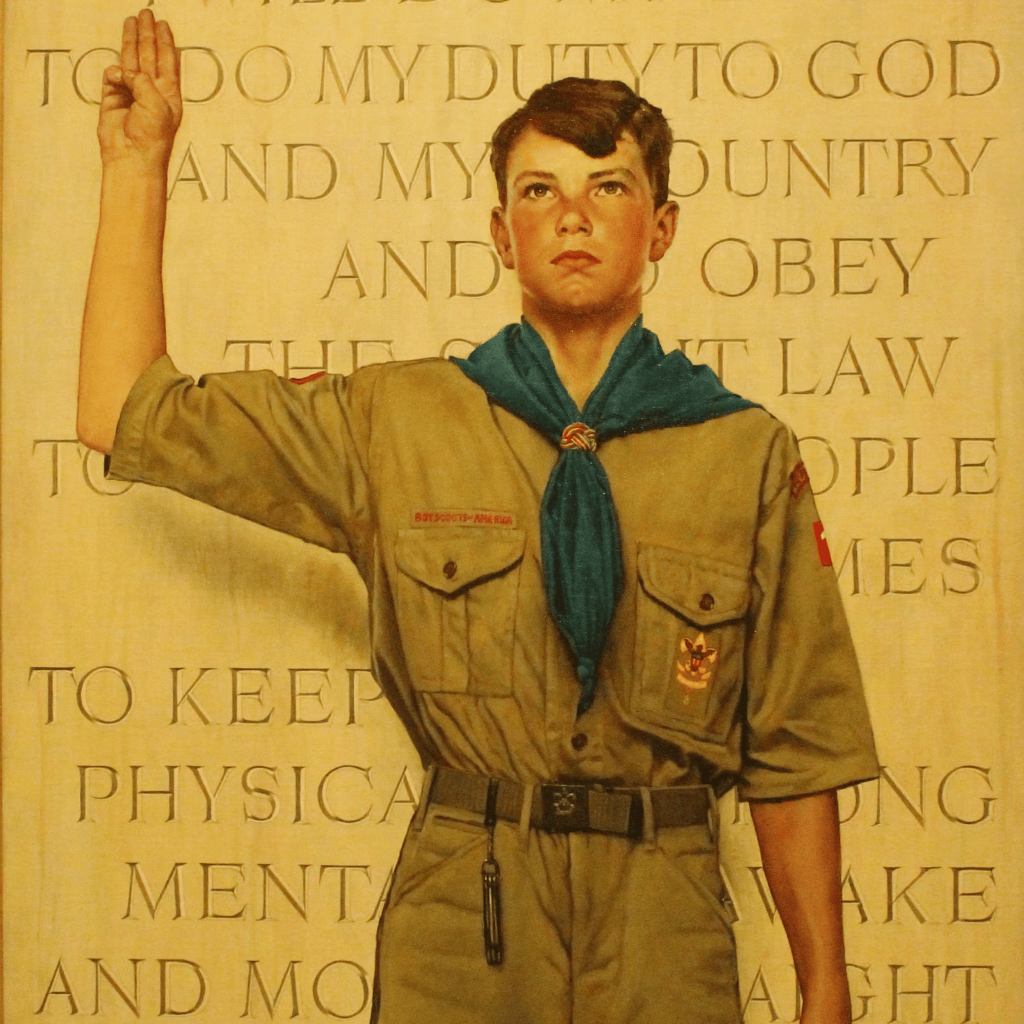
I started as a Cub Scout, moved through Webelos, and eventually earned my Eagle Scout badge in 1990. I was also involved in the Order of the Arrow and even participated in Fancy Feather dancing. At one point, I was fortunate enough to find myself on the cover of the February 1986 issue of Boys’ Life magazine.
Looking back, being a Boy Scout was one of my favorite times growing up.
But it wasn’t just about camping, hiking, earning merit badges, or learning outdoor skills.
Scouting also gave me something much more important: time and experiences with my father.
My father had been a Boy Scout himself and had earned his Eagle Scout badge. So in a very real sense, Scouting gave us another connection. Some of the things he had learned as a Scout became things he could teach me.
I learned skills while working on merit badges. I learned responsibility through leadership positions such as Senior Patrol Leader, I learned how to work with others and I really enjoyed getting to spend time outdoors.
And interesting enough, along the way, I learned how to find my way.
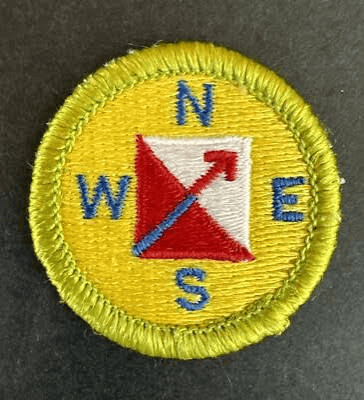
One of my favorite skills was orienteering.
There was something satisfying about standing in the woods with a map and compass, figuring out where you were, determining where you needed to go, and then finding your way there.
At the time, I simply enjoyed the challenge.
I didn’t realize that decades later, I would look back at something I learned in those woods and see a lesson about life.
You Don’t Just Set Your Direction Once
When you’re learning to navigate with a compass, you first establish a bearing. You know where you want to go, set your direction, and start walking. But you don’t simply put the compass away and assume you’ll stay on course.
Instead, you use the terrain around you. You walk toward a recognizable landmark, pause to check your direction, look up, and choose the next landmark. Then you continue. Along the way, you periodically check your compass and make whatever adjustment is necessary.
Why?
Because even when you begin in exactly the right direction, you can drift.
A tiny change in direction may not be noticeable at first, but the farther you travel, the more that small deviation can matter. A degree or two here and there may seem insignificant when you’re just getting started. After a long enough journey, however, you may find yourself somewhere very different from where you intended to be.
That’s true in the woods, and it’s true in life.
Small Deviations Add Up
Imagine that one of your legs takes a slightly longer stride than the other. The difference might be only half an inch, something you would never notice walking across a room. But if that small difference continues step after step, your body can gradually begin to turn. What started as an almost imperceptible difference can eventually produce a significant change in direction.
Life can work the same way.
Most people don’t suddenly decide to destroy their lives. More often, they drift off course through a series of small choices that, taken individually, may not seem particularly significant. It might be a relationship that gradually pulls them away from their values, an unhealthy habit they keep excusing, or simply another rationalization that says, “It’s not really that big of a deal.”
And maybe, in that moment, it isn’t.
The problem is what happens when that decision gets repeated. One compromise becomes another, and eventually those choices begin to establish a pattern. The pattern becomes a direction, and over time that direction can take us much farther from where we intended to be.
Direction matters.
The Danger of “Close Enough”
One of the most dangerous things about being off course is that you can be only slightly off and still feel like you’re doing fine.
If you’re one degree off, you may not notice it at all. You’re still moving. You’re still making progress. You’re still headed
somewhere.The problem is that somewhere may not be where you intended to go.That’s why I like the idea of a compass check.You don’t wait until you’re lost to check your direction. You check while you can still make a small correction.
What Is Your Compass?
When I work with people in counseling and coaching, we often end up talking about values. Not just what you want to accomplish, but what kind of person you want to be along the way. That’s an important distinction.
A goal tells you where you’re trying to go. Your values help you decide how you want to get there. Maybe you want to have a better marriage. That’s a good goal. But then you have to ask, “Are the way I’m talking to my spouse, the choices I’m making, and the way I’m handling conflict consistent with the kind of spouse I want to be?”
Maybe you want to get your finances under control. Are the decisions you’re making reflecting responsibility and integrity?Maybe you want to get healthier. Are the things you’re doing each day actually taking you in that direction?Maybe you want to grow spiritually. Are you making room in your life for that?
That’s where a compass check becomes useful. It’s not just asking, “Am I getting where I want to go?” It’s asking, “Is the way I’m living consistent with where I say I want to go?” And maybe even more importantly:”Am I becoming the person I say I want to become?” That’s a compass check.
Stop and Check
Sometimes we need to stop moving long enough to ask ourselves some honest questions. Where am I right now, and where have the choices I’ve been making actually been taking me? Is the direction I’m traveling consistent with the values I say are important to me? Is this particular decision moving me closer to the life I say I want, or is it gradually taking me farther away from it?
Those questions can be uncomfortable, but they are not meant to condemn us. They give us an opportunity to become aware of what is happening before the distance between where we are and where we want to be becomes even greater.
Being off course does not mean that you are a failure. It means that you have discovered something important about your direction. Once you recognize that, you have information you can use. You can reconsider your choices, make an adjustment, and begin moving in a better direction.
That’s what a compass is for. It doesn’t criticize you for being off course. It simply helps you recognize where you are and gives you the information you need to find your way again.
You Don’t Have to See the Whole Trail
One of the things I like about navigating in the woods is that you don’t always have to see the whole trail in front of you. Sometimes you can only see as far as the next landmark, and that’s okay.
You figure out your direction, pick a tree or some other landmark ahead of you, and start walking. When you get there, you pull out the compass, check your direction, and figure out where you’re going next.
Life can be a lot like that.
We can get overwhelmed thinking we have to know exactly where everything is headed. What will my life look like five years from now? Where will I be next year? How is all of this going to work out?
The truth is, sometimes we just don’t know. But we usually don’t have to know the entire route. We just need to know our direction and figure out what the next right step looks like.
Take that step. Get to the next landmark. Check your compass. Then figure out where you’re going from there. Sometimes that’s all you need to do.
Keep Your Eyes on the Path
Proverbs gives us a similar picture:
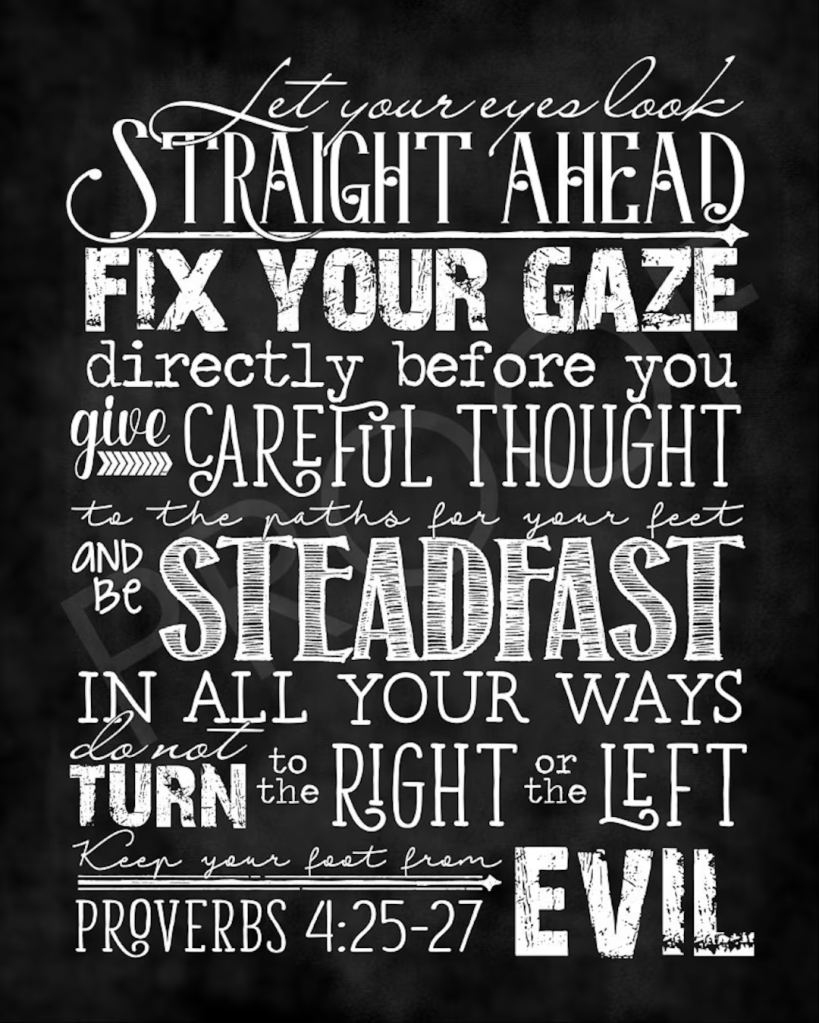
“Let your eyes look directly forward, and your gaze be straight before you. Ponder the path of your feet; then all your ways will be sure. Do not swerve to the right or to the left.”
Proverbs 4:25-27
There is something important about that combination.
Look forward. Consider your path. Don’t swerve.
The Christian life isn’t about blindly moving forward and hoping we end up in the right place.
It involves paying attention, pausing and examining our path,then recognizing when we’ve drifted and making corrections.
Your Values Can Help Point the Way
Values do not necessarily make our decisions easy. In fact, sometimes our most difficult decisions happen when two things we genuinely value seem to be pulling us in different directions. There are also times when doing what is consistent with our values comes with a cost, and the easier choice is to do something else.
What our values can give us, however, is a reference point for evaluating the choices we make. When we are uncertain about a decision, we can step back and ask ourselves whether what we are considering actually reflects the person we want to be and the kind of life we are trying to build.
Is this decision consistent with the values I say are important to me? Is it moving me toward the life I say I want, or is it gradually taking me in another direction? If I choose this path, will I be able to look back and recognize that my decision reflected the kind of person I want to become?
Sometimes those questions will confirm that we are headed in the right direction. Other times, they may reveal that we have started to drift. That does not mean we have failed or that we are hopelessly lost. It simply gives us an opportunity to stop, reconsider where we are headed, and make a course correction before we get farther off track.
That is what makes a compass useful. It is not there to tell you that you have failed whenever you get off course. It is there to help you recognize where you are and give you the information you need to decide what to do next.
The Goal Isn’t Perfect Navigation
There is something else worth remembering about navigating with a compass: good navigation does not mean that you will never get off course. That is simply not realistic. Even when we know where we are going and have a reliable bearing, we can get distracted, become tired, encounter an unexpected obstacle, or simply make a mistake. Sometimes circumstances change and the route we originally planned is no longer the best way forward. The same thing happens in life.
We make mistakes. We sometimes make decisions based on emotion rather than good judgment, and there are choices we look back on later and realize were not particularly wise. None of that means the journey is over or that we have permanently lost our way.
What matters is whether we are willing to check our direction and make an adjustment when we recognize that we have drifted. Someone who regularly checks their compass has a much better chance of catching a small deviation before it becomes a major problem.
I think that principle applies far beyond navigating a trail. We can use the same kind of check when we are evaluating a relationship, working through recovery, making an important life decision, or considering the direction of our spiritual lives. The question is not whether we have ever gotten off course. The more important question is whether we are willing to recognize it and do something about it.
In that sense, the compass is not really about perfection. It is about awareness, correction, and continuing the journey in the direction we intended to go.
So Check Your Compass
Maybe today is a good time to stop for a moment and take an honest look at the direction your life has been heading. That does not necessarily mean something is wrong, and it certainly does not mean that you have failed. Sometimes we simply need to pause long enough to make sure that the direction we are traveling still matches where we intended to go.
In the woods, that means pulling out the compass and checking the bearing. In life, it might mean taking a closer look at our values, our choices, our habits, and the patterns that have been developing over time. We can ask ourselves some fairly simple questions: Am I still headed toward the life I say I want? Are the choices I am making consistent with the person I want to become? Is the direction I am traveling actually consistent with what I say matters most to me?
If the answer is yes, then there is no need to overcomplicate things. Keep going.
If the answer is no, there is no reason to panic. Recognizing that you have drifted gives you an opportunity to make a correction. You can reconsider your direction, choose the next landmark, and begin moving that way. Then, somewhere down the trail, you can check the compass again.
Maybe that is one of the most useful things I learned from orienteering. Finding your way is rarely about making one enormous decision that suddenly puts everything in order. More often, it is about paying attention to where you are going and being willing to make small corrections along the way.
Sometimes the wisest thing we can do is not to walk faster or try harder. Sometimes we simply need to stop for a moment, pull out the compass, and make sure we are still headed in the direction we intended to go.
Long before I thought of myself as a counselor, pastor, coach, or author, I was a Boy Scout. I started as a Cub Scout, moved through Webelos, and eventually earned my Eagle Scout badge in 1990. I was also involved in the Order of the Arrow and participated in Fancy Feather dancing. Scouting gave me an appreciation for the outdoors and taught me a collection of practical skills that have stayed with me throughout my life.
One of my favorites was orienteering.
There was something satisfying about standing in the woods with a map and compass, determining where you were, figuring out where you needed to go, and then finding your way there. Orienteering is more than simply knowing which direction is north. It is the skill of determining your position, establishing a direction of travel, and navigating from one location to another.
Modern technology has made navigation remarkably easy. A GPS device or smartphone can tell us where we are and often give us turn-by-turn directions to wherever we want to go. Even so, I still think there is something valuable about knowing how to find your way with a simple compass.
So let’s go back to the basics.
Understanding Your Compass
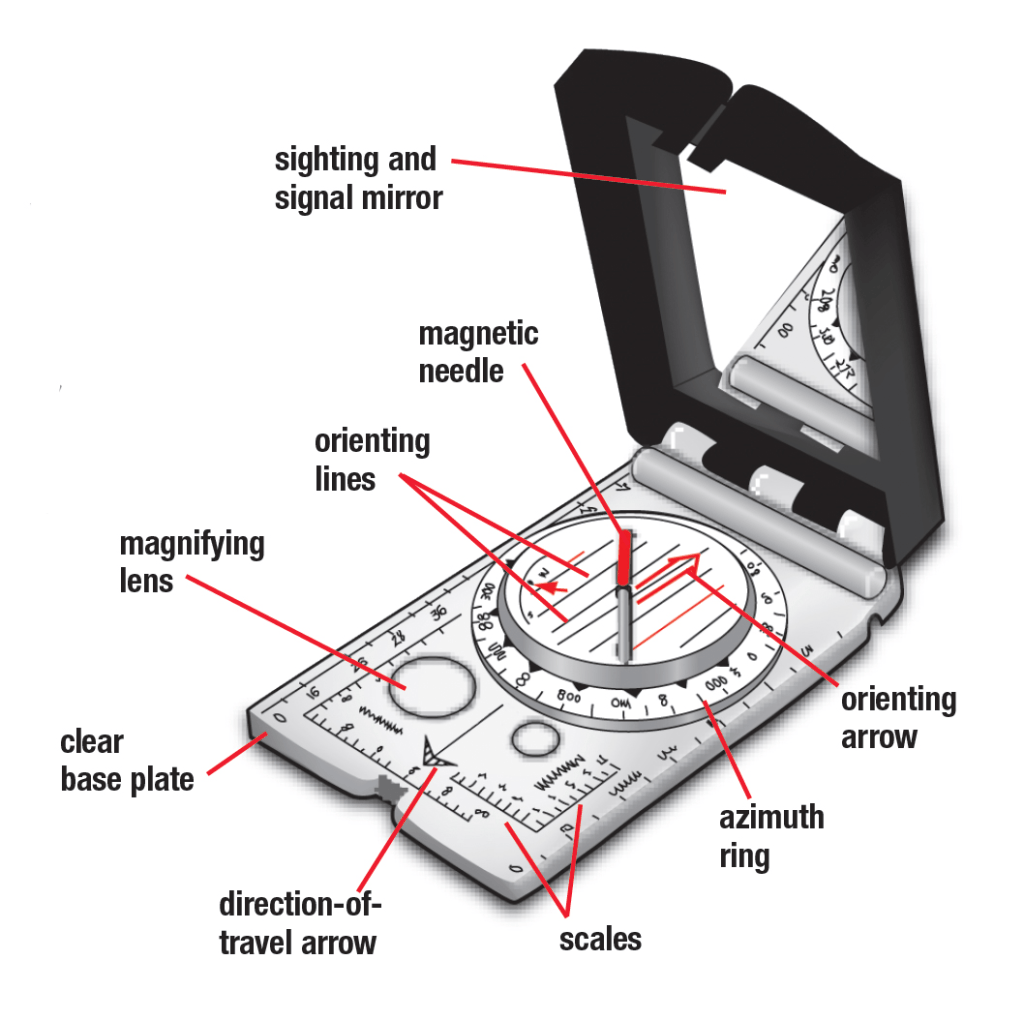
A basic orienteering compass doesn’t have to be complicated, but it helps to understand what the different parts are designed to do.
Magnetic Needle
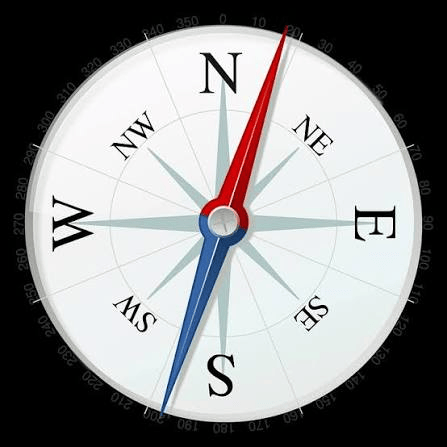
The magnetic needle is the part that points toward magnetic north. On most compasses, the red end of the needle indicates north.
Baseplate
The baseplate is the clear, flat portion of the compass. Because it is transparent, you can place it over a map while still seeing the terrain and markings underneath.
Direction-of-Travel Arrow
The direction-of-travel arrow shows the direction you intend to travel.
This is one of the first distinctions beginners need to understand. The magnetic needle tells you where magnetic north is; the direction-of-travel arrow tells you where you want to go. They serve two completely different purposes.
Rotating Bezel
The rotating bezel, sometimes called the compass housing, is marked in degrees from 0° through 360°. This allows you to establish a bearing, which gives you a precise direction of travel.
Orienting Arrow
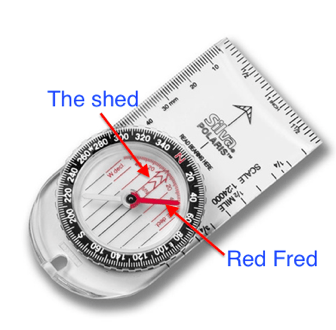
The orienting arrow is located inside the compass housing and is used to align the compass with the magnetic needle.
This is where the familiar Scout phrase comes in:
“Red in the shed.”
The red end of the magnetic needle goes inside the orienting arrow.
Finding Direction
Before you can navigate, you need to know which way you’re facing. Hold the compass reasonably flat and allow the magnetic needle to settle. The red end will point toward magnetic north.
Once you have north, you can identify the other primary directions:
North = 0° or 360°
East = 90°
South = 180°
West = 270°
The spaces between these primary directions can also be expressed in degrees. For example, 45° is northeast, 135° is southeast, 225° is southwest, and 315° is northwest.
That ability to express direction in degrees is what makes a compass more precise than simply saying, “Go that way.”
What Is a Bearing?
A bearing is simply a direction expressed in degrees. Instead of telling someone to walk northeast, you might tell them to travel on a bearing of 45°. That gives you a specific direction rather than a general one.
Suppose you want to travel on a bearing of 70°. Set the compass so that 70° lines up with the direction-of-travel arrow. Then turn your body until the red end of the magnetic needle lines up with the orienting arrow.
Red in the shed.
At that point, the direction-of-travel arrow is pointing in the direction you need to travel.
You don’t want to spend the entire journey staring down at your compass, though. Instead, look ahead and choose a recognizable landmark in the direction of travel. Walk toward that landmark, then use the compass again to confirm your direction before selecting another landmark.
This is an important part of practical orienteering. Don’t walk through the woods staring continuously at your compass. The compass establishes your direction, but the terrain around you helps you actually navigate it.
Navigating From a Map
A map and compass become much more useful when you learn to use them together.
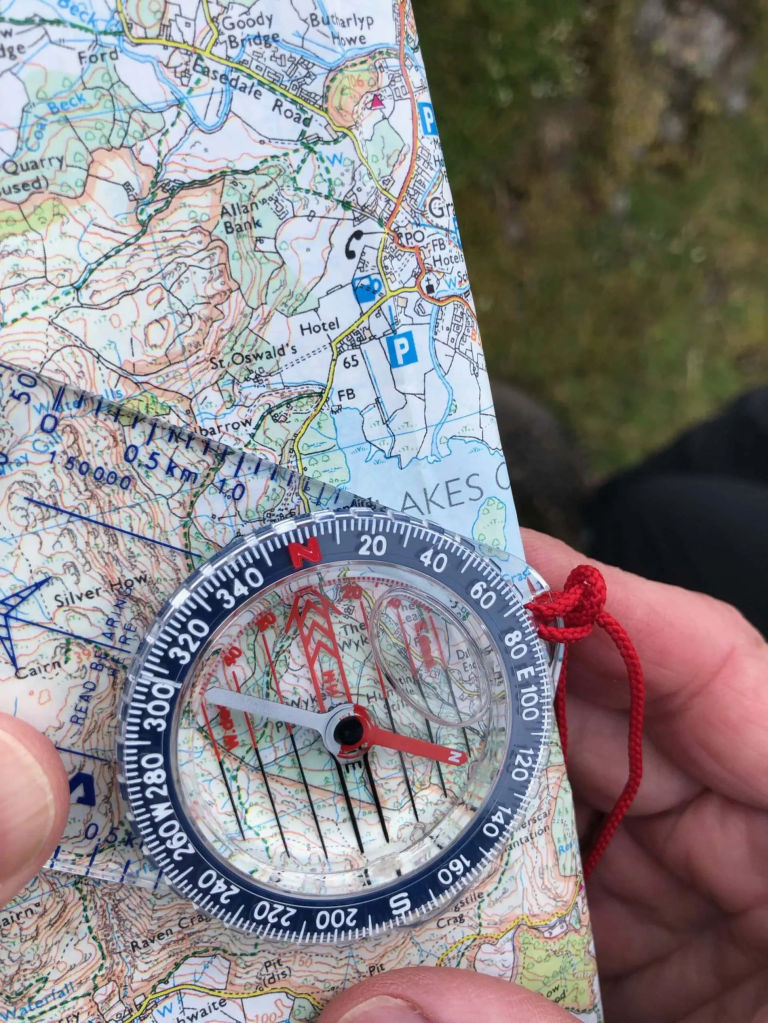
If you know your current location and want to travel to another location on the map, place the straight edge of the compass between the two points. When measuring a bearing on a map, ignore the magnetic needle for a moment. Beginners often get tripped up by trying to line up “red in the shed” immediately, but that isn’t what you’re doing at this stage. Your compass is essentially acting as a protractor.
Align the compass baseplate between your starting point and destination, making sure the direction-of-travel arrow points toward the destination. Then rotate the compass housing until its internal orienting lines run parallel with the north-south lines on the map. You can then read your bearing from the index line.
Only after you lift the compass from the map do you turn your body and align the magnetic needle with the orienting arrow. In other words, this is where “red in the shed” becomes part of actually following the bearing.
Depending on the map, compass, and location, you may also need to account for magnetic declination, which is the difference between true north and magnetic north.
Maps are drawn toward geographic True North, meaning the North Pole. Your compass needle, however, points toward Magnetic North, the direction indicated by Earth’s magnetic field. The difference between these two directions is called magnetic declination.
Depending on where you are, you may need to adjust your compass housing a few degrees east or west so that the map and compass are working from the same reference point. That adjustment becomes increasingly important when precision matters, particularly over longer distances.
Taking a Bearing on an Object
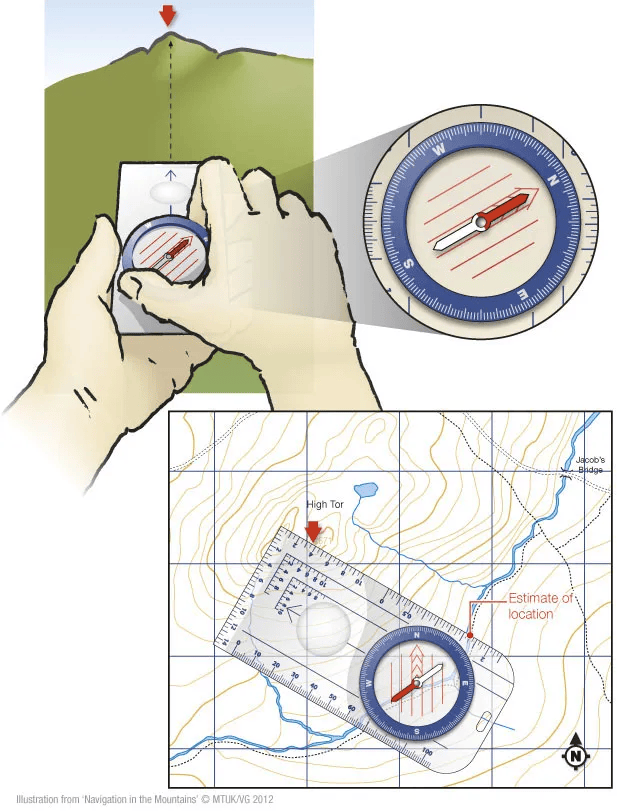
Sometimes you are standing in one location and want to determine the direction of something you can see. It might be a tower, distinctive tree, building, hill, or another recognizable landmark.
Point the direction-of-travel arrow toward the object while holding the compass level. Then rotate the compass housing until the orienting arrow lines up with the magnetic needle. The bearing shown on the compass tells you the direction from your position to that object.
When you combine that information with a map, you can use visible landmarks to help determine where you are and where you need to go.
The Back Bearing
A back bearing is simply the opposite direction from your original bearing. It can be useful when retracing your route or determining the direction from which you came.
The rule is straightforward. If your original bearing is less than 180°, add 180°. If it is greater than 180°, subtract 180°.
For example:
Outbound: 45° Back bearing: 225°
Or:
Outbound: 225° Back bearing: 45°
The two bearings are exactly opposite one another.
Knowing how to find a back bearing gives you another way to check your navigation and can be especially helpful when you need to retrace a route.
Navigational Features
A compass gives you direction, but good orienteering involves more than following a number on a dial. One of the real skills of navigation is learning to use the terrain around you.
Handrails
A handrail is a linear feature that you can follow as you travel. A trail, fence, creek, road, or ridgeline can all serve as handrails.
Instead of trying to navigate through completely featureless terrain, you use something obvious to help keep yourself oriented. If you know the creek is supposed to remain on your left as you travel, for example, it becomes a reference point that helps confirm you are still moving in the right direction.
Catching Features
A catching feature is something beyond your destination that tells you when you have gone too far.
Suppose your destination is a small trail crossing. That crossing might be difficult to identify precisely, but a road farther beyond it could serve as your catching feature. If you reach the road, you know you have passed the intended destination and need to correct your course.
The idea is simple: don’t just know where you are going. Know what will tell you that you’ve gone too far.
Attack Points
Sometimes your final destination is difficult to identify from a distance. Rather than trying to navigate directly to a small or indistinct target, it can be easier to navigate first to a larger, easily recognized feature nearby.
That feature becomes your attack point.
Once you reach it, you can make a shorter and more precise approach to your actual destination. Instead of solving the hardest navigational problem all at once, you break it into manageable pieces.
Aiming Off
Aiming off is another useful technique, and it sounds a little strange until you understand why it works.
Suppose you need to reach a stream, but once you reach the stream you need to know whether to turn left or right to reach your destination. If you aim directly at the stream, you may arrive at it without knowing which direction your destination lies.
Instead, intentionally aim slightly to one side.
When you reach the stream, you already know which direction you need to turn. The small intentional error has actually made the next decision easier.
Good navigation isn’t always about traveling in the most direct possible line. Sometimes a deliberate adjustment gives you greater certainty when you reach your next decision point.
The Problem With Walking in a Straight Line
Here’s something that surprised me when I first learned about practical navigation: human beings are not very good at walking perfectly straight for long distances without some kind of reference.
Even small differences in stride can create significant drift. Imagine that your left stride is 30 inches and your right stride is 30.5 inches. That half-inch difference seems insignificant, but if your body consistently moves slightly differently on one side, you can gradually begin to curve rather than travel in a straight line.
A variety of other factors can contribute as well, including unequal leg strength, previous injuries, differences in joint mobility, balance, vision, terrain, and fatigue.
The important lesson is that small directional errors accumulate.
You may barely notice a deviation over ten feet. Over a much longer distance, however, that same error can become substantial. This is one reason people navigating without reliable landmarks can gradually drift off course or even begin walking in circles.
It is also a good reminder that confidence and accuracy are not the same thing. You can feel like you’re walking straight and still be moving farther away from where you intended to go.
Common Beginner Mistakes
When learning compass navigation, a few mistakes show up repeatedly.
Holding the compass tilted. The compass needs to be reasonably level so the needle can move freely.
Confusing the arrows. The magnetic needle points toward magnetic north. The direction-of-travel arrow shows where you want to go.
Forgetting magnetic declination. Depending on the distance and the level of precision required, the difference between true north and magnetic north can matter.
Staring at the compass while walking. Establish your direction, then use landmarks and terrain to navigate. Check the compass again when you need to confirm your course.
Reading the bearing backward. A 180° mistake can send you confidently in exactly the wrong direction.
That last mistake may be the most humbling. It is entirely possible to be very confident, very intentional, and very wrong.
A Simple Practice Exercise
You don’t need a wilderness expedition to begin practicing.
Find an open area where you can safely walk a reasonable distance. Start by determining north, then set your compass to a bearing of 90° and walk approximately 100 yards. Stop, set the compass to the back bearing of 270°, and see if you can return to your starting point.
Once you are comfortable with that, practice with bearings of:
45°
135°
225°
315°
As you become more comfortable, move your practice into an area with trees and other terrain features. Instead of simply following a bearing across an open space, begin using landmarks as part of your navigation. Choose a tree or another recognizable feature, travel to it, confirm your direction, and then select your next landmark.
You’re practicing more than the mechanics of using a compass. You’re learning how to maintain orientation while moving through an environment that can make staying on course surprisingly difficult.
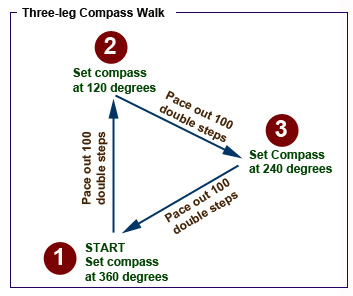
The Three-Leg Triangle Challenge
Want a fun, hands-on test of your accuracy? Try the classic geometric triangle exercise in your backyard or an open park.
Start by placing a small marker, such as a coin, hat, or stick, on the ground at your feet. This is your starting point.
Set your compass to 0° (North) and walk 50 paces, counting every time your left foot hits the ground. Stop there.
Next, add 120° to your bearing. Set the compass to 120° (Southeast) and walk another 50 paces.
Finally, add another 120°. Set the compass to 240° (Southwest) and walk your final 50 paces.
If your bearings were precise and your pace remained consistent, you should end up standing very close to your original marker.
This exercise is a great illustration of how small errors accumulate. A slight error on the first leg becomes part of the starting point for the second leg, and another small error gets carried into the third. By the time you complete the triangle, you can see just how much precision matters.
It also makes a simple point that is easy to understand once you’ve experienced it: knowing where you intended to go doesn’t guarantee that you actually got there.
Why I Still Like Orienteering
I learned compass navigation as a Boy Scout more than three decades ago, but I still appreciate the skill. Maybe part of that is simply nostalgia. I still enjoy being outdoors, and there is something satisfying about using a simple tool to solve a practical problem.
But I think there is something deeper about knowing how to find your way.
A compass doesn’t eliminate obstacles. It doesn’t tell you whether the trail ahead will be easy, and it doesn’t remove the need to pay attention. What it does is give you a reliable reference point.
Sometimes that’s exactly what we need.
The woods can teach us a lot about finding our way.
Interested in the life lesson behind compass navigation? Read the companion article,“The Compass Check: Staying on Course When Small Deviations Add Up.”
Sometimes you start cooking with a plan and discover that you don’t actually have the ingredients you planned on using.
Last night was one of those nights.
I had originally planned to make a simple garlic-Parmesan spinach. The basic idea was pretty straightforward: butter, garlic, spinach, Parmesan, salt and pepper. Simple. Quick. Good.
Except there was one problem.
I was out of fresh spinach.
I did, however, have a couple of cans of spinach sitting in the pantry.
So I improvised.
And somewhere along the way, I stopped making a vegetable side dish and started making something that tasted suspiciously like a spinach dip.
And honestly?
I’m not mad about it.
From Side Dish to Dip
I started by melting some butter in a skillet and sautéing down onions and mushrooms together. Once they had cooked down and started getting nice and soft, I added my chicken.
I seasoned the chicken with salt, black pepper, garlic powder, and Dano’s seasoning. I wasn’t trying to create anything complicated. I just wanted good, savory flavor.
Once the chicken was cooked, it was time to deal with the spinach.
Since I was using canned spinach, I drained it as well as I could and then added it to the skillet. I let it cook for a while to drive out some of that excess water.
That step matters.
Canned spinach carries a lot more moisture than fresh spinach, and if you don’t cook some of that water out, you’re going to end up with a watery mess.
Once the spinach had cooked down, I added a little chicken bouillon for extra flavor.
Then things took a turn.
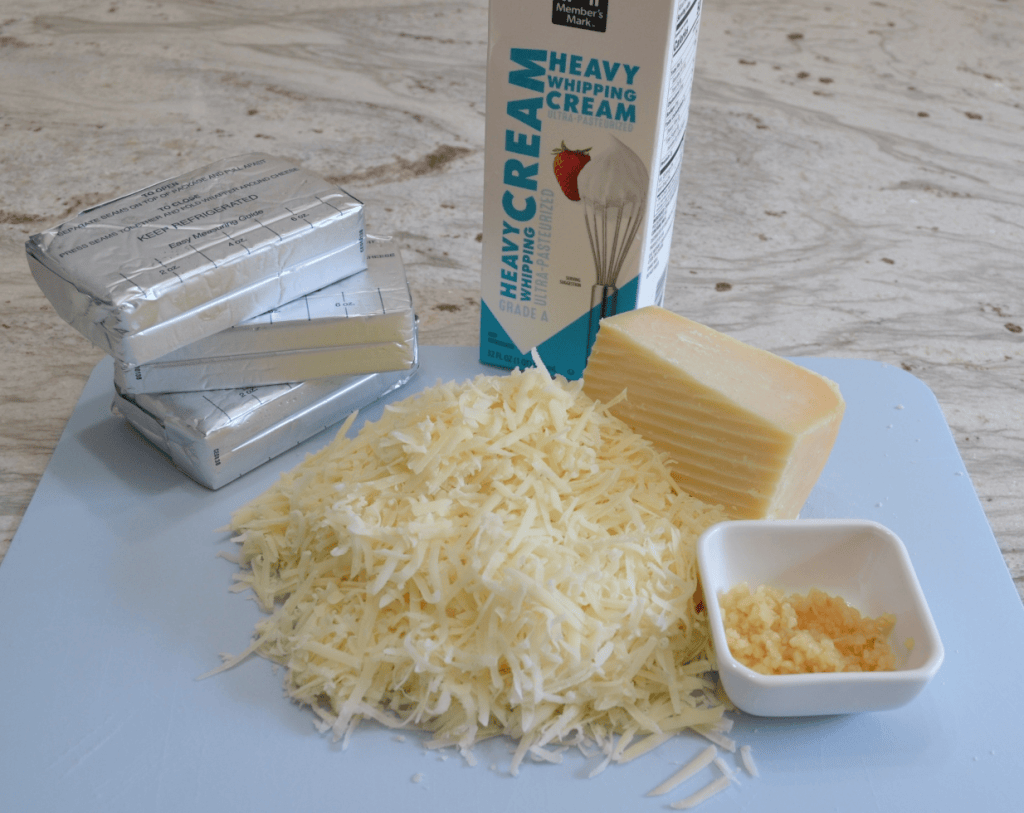
I added heavy cream, cream cheese, and Parmesan cheese.
At that point, I knew I wasn’t making my original spinach side dish anymore.
I was making dip.
The Happy Accident
The funny thing about cooking is that sometimes the best recipes aren’t the ones you planned.
The canned spinach gave the dish a completely different texture from fresh spinach. Instead of the lighter, more traditional sautéed spinach I had originally envisioned, it became creamy, thick, savory, and almost spreadable.
Think spinach dip.
But with chicken, mushrooms, onions, and a little more substance.
And rather than putting it on a plate beside the meal, I grabbed some tortilla chips.
Problem solved.
Actually, problem improved.
The tortilla chips worked surprisingly well with it. The cream cheese and Parmesan gave it that familiar creamy spinach-dip quality, while the chicken, mushrooms, onions, garlic, and seasoning made it feel more substantial.
It became less of a side dish and more of an appetizer.
Or, depending on how hungry you are, dinner.
The Recipe
This isn’t really the original garlic-Parmesan spinach recipe anymore. This is what I ended up making.
Creamy Chicken, Spinach & Parmesan Skillet Dip
Ingredients
2–3 tablespoons butter
½ onion, diced
4–6 oz mushrooms, sliced
1–2 chicken breasts, diced into bite-sized pieces
Salt and black pepper, to taste
Garlic powder, to taste
Dano’s seasoning, to taste
2 cans spinach, drained very well
A small amount of chicken bouillon, to taste
½ cup heavy cream, approximately
4 oz cream cheese
½–1 cup freshly grated Parmesan cheese
Tortilla chips, for serving
Directions
Melt the butter in a large skillet over medium heat.
Add the diced onion and sliced mushrooms. Sauté until the onions soften and the mushrooms cook down.
Add the diced chicken and season with salt, pepper, garlic powder, and Dano’s seasoning. Cook until the chicken is done.
Drain the canned spinach as thoroughly as possible. Add it to the skillet and cook for several minutes, stirring occasionally, to remove additional moisture.
Add a small amount of chicken bouillon for additional savory flavor. Go easy at first because the Parmesan and seasoning will also add salt.
Reduce the heat and add the heavy cream and cream cheese. Stir until the cream cheese melts and everything begins to come together.
Add the Parmesan and stir until melted and incorporated. If the mixture is too thick, add a little more heavy cream. If it is too thin, let it cook a little longer.
Taste and adjust the seasonings.
Serve hot with tortilla chips.
A Few Thoughts After Making It
Would I make it exactly the same way again?
Probably not.
I’d probably add some red pepper flakes or diced jalapeño next time. A little heat would work really well with the creamy cheese and spinach.
I might also experiment with adding some mozzarella for extra cheesiness.
And if I actually had fresh spinach?
I’d probably still use it.
But that’s the funny thing about cooking. Sometimes the ingredients you don’t have force you to be creative with the ingredients you do have.
What started as a simple garlic-Parmesan spinach side dish turned into a creamy chicken and spinach skillet dip.
Not exactly what I planned.
But sometimes the best meals are the ones you never planned to make.
“Owe no one anything, except to love one another, for the one who loves another has fulfilled the law… The night is far gone; the day is near. Let us then throw off the works of darkness and put on the armor of light… Instead, put on the Lord Jesus Christ, and make no provision for the flesh, to gratify its desires.”
— Romans 13:8–14
Jesus once summarized the entire law in two commands: love God and love your neighbor.
Most of us have no problem saying, “Amen.”
Then we drive out of the parking lot.
“Love your neighbor” sounds wonderful until your neighbor lets their dog ruin your yard. Loving people sounds holy until someone at work takes credit for your work, a family member spreads a rumor, or someone you love touches an old wound they promised never to touch again.
Suddenly, love is no longer a word on a coffee mug. It becomes difficult, uncomfortable, and deeply personal.
What do we do when the person God commands us to love is the person we’d rather avoid? What happens when our emotional tank is empty and someone is still asking us for grace?
I’ve sat in my car and said it myself:
Lord, I am completely out of love. I have nothing left for this person.
Romans 13 offers an answer, but it is not simply, “Try harder.”
Paul gives us a different way to think about the Christian life. He begins with a debt we can never finish paying, calls us to wake up to the reality of how we are living, and then tells us to change what we are wearing.
Love Is Not the Same as Nice
Before getting to Paul’s three movements, we need to understand what biblical love actually means.
One of the great misunderstandings in the modern church is that love and niceness are the same thing. They aren’t.
Biblical love does not mean being agreeable all the time or avoiding difficult conversations. Sometimes love means telling the truth. Sometimes it means confronting what is wrong. Sometimes it means establishing a boundary rather than continuing to enable unhealthy behavior.
Jesus demonstrated this perfectly. He showed compassion to hurting people while also calling people to repentance. He protected the woman caught in adultery from condemnation while telling her to leave her life of sin.
Love does not ignore what is harmful. It seeks what is genuinely good for another person.
That is part of what Paul is getting at in Romans 13. The commandments against murder, stealing, adultery, and coveting are not arbitrary restrictions. They protect people from harm. Love fulfills the law because genuine love does not seek to destroy, exploit, or diminish another person.
But that raises an important question:
How do we love people when we don’t feel like loving them?
The Debt We Never Finish Paying
For years, many of us have tried to solve that problem with willpower.
I’m going to be more patient.
I’m going to stop getting angry.
I’m going to be nicer to that difficult coworker.
I’m not going to let them get to me anymore.
How long does that usually last?
Maybe until Tuesday afternoon.
Willpower has limits. We can discipline our behavior for a while, but eventually what is inside us finds its way back out.
That is why Romans 13:8 is so important:
“Owe no one anything, except to love one another.”
Think about how ordinary debt works. You pay off the car. You pay off the mortgage. You pay off the credit card. Eventually, you reach the point where you can say, “I don’t owe you anything anymore.”
We often approach relationships the same way.
We keep a ledger.
I called them three times. They never called me back.
I forgave them twice. They did it again.
I was there for them when they needed me. They weren’t there for me.
At some point, we decide the account is closed.
But Paul turns that way of thinking upside down. There is one debt the Christian never gets to mark “paid in full”: the debt of love.
Why?
Because our obligation to love is not determined by how other people treat us. It is rooted in what Christ has already done for us.
Romans 5:8 reminds us that Christ died for us while we were still sinners. He did not wait until we had cleaned ourselves up, apologized for everything, or become easy to love.
He loved us first.
That changes the way we look at difficult people.
At some point, we have to recognize that we have been the difficult person too. We have been the one who needed patience, mercy, forgiveness, and another chance. We have received grace we could never have earned.
When we remember that, the resentment ledger begins to lose its authority.
We don’t love because the other person has earned it.
We love because Christ loved us.
That doesn’t mean there are no boundaries. It doesn’t mean we tolerate abuse or pretend harmful behavior is acceptable. It means that even when wisdom requires distance, our hearts do not have to become places of hatred and vengeance.
The debt of love remains.
Wake Up
Paul then makes an unexpected shift.
He’s not writing to people who have never heard of Jesus. He’s writing to the church:
“You know the time, that the hour has come for you to wake from sleep.” — Romans 13:11
You can belong to Jesus and still be spiritually sleepwalking.
Sleep makes us unaware of what is happening around us. Spiritually, something similar can happen. We become so absorbed in temporary things that we lose sight of eternal realities.
Money begins to feel permanent.
Career begins to define us.
Comfort becomes our highest priority.
Petty offenses become major battles.
We can still attend church, know Scripture, and speak the language of faith while gradually becoming less attentive to the things of God.
Spiritual sleep is often subtle.
Prayer becomes rushed and eventually optional.
Scripture becomes something we occasionally read instead of something that continually shapes us.
Conviction begins to feel like irritation.
Sin becomes something we explain rather than something we confess.
Other people begin to feel like interruptions instead of opportunities to love.
Paul’s command is simple:
Wake up.
He gives the command urgency because our time matters.
“Salvation is nearer to us now than when we first believed” (Romans 13:11).
The Christian life is not merely about getting through today. We are living toward something. Christ has already accomplished our salvation, He is transforming us now, and we look forward to the day when He will make all things new.
That perspective changes what deserves our attention.
If we are living with eternity in view, we don’t have to spend our limited time rehearsing every offense someone has committed against us. We don’t have to keep reopening old arguments. We don’t have to make every disagreement a battle.
There are more important things to do.
We have people to love.
We have grace to extend.
We have lives to live faithfully.
The call to wake up is really a call to become aware again of what matters.
Change Your Clothes
Paul doesn’t stop with telling us what not to do. He gives us something to do.
“Let us then throw off the works of darkness and put on the armor of light… put on the Lord Jesus Christ.” — Romans 13:12, 14
Paul uses the language of clothing because Christianity isn’t simply about stopping bad behavior. Something has to replace it.
First, cast off what belongs to darkness.
Take off the garments of bitterness, jealousy, gossip, resentment, retaliation, and whatever else keeps us living contrary to Christ.
Then Paul gives another command that deserves our attention:
“Make no provision for the flesh.”
In other words, don’t feed what you are asking God to remove.
Temptation often begins long before the moment when we finally give in.
The affair may begin with a conversation that should have remained public.
The angry outburst may begin with resentment that has been rehearsed for weeks.
The addiction may begin with the decision to put ourselves in a situation where we already know we are vulnerable.
The bitterness we eventually express may have been quietly nourished for months.
Sometimes the wisest response to temptation is not to prove how strong we are. It is to stop making room for what we know can pull us away from Christ.
Before sending the angry message, ask:
Am I trying to win this argument, or am I trying to reflect Jesus?
Before reopening the mental file of old grievances, ask:
Why am I feeding something I am asking God to heal?
Before stepping into a situation that repeatedly leads me into temptation, ask:
Why am I making provision for something I claim I want to overcome?
And then Paul gives us the positive command:
Put on Christ.
This is more than trying to imitate Jesus from the outside. The Christian life is participation in Christ through the work of His Spirit within us.
We don’t simply put on better behavior.
We put on Christ.
That changes how we enter our marriages, workplaces, friendships, churches, and communities.
In marriage, it means we stop keeping score and begin looking for opportunities to extend grace.
At work, it means we refuse to participate in gossip even when everyone else is doing it.
In the church, it means we stop treating minor offenses like major wars and remember that the person sitting across from us is someone Christ loves.
Putting on Christ means allowing His character to shape our responses.
Our Hope Isn’t Trying Harder
This is where the whole passage comes together.
Our hope was never that we could become good enough through stronger discipline.
Our hope is Christ.
He perfectly loved His Father and His neighbor. He remained faithful when others failed Him. He walked as the Light of the World in the middle of darkness. And when we could not overcome our own sin, He carried it to the cross.
The Christian life is not imitation before it is participation.
We don’t wake up every morning, put on our own strength, and hope we can somehow manage to act like Jesus.
We put on Christ because He is already at work within us.
So if you’re exhausted from trying to love someone out of an empty tank, perhaps the answer isn’t to squeeze harder.
Perhaps it’s time to remember where your love comes from.
If you’re carrying a ledger of offenses, hand it over.
If you’ve become spiritually numb, wake up.
If you’ve been making room for the very things you’re asking God to remove, close the door.
And if you’ve been trying to look like Jesus through your own strength, remember that Christ has invited you into something deeper than imitation.
He invites you to put Him on.
That’s the debt of love.
It’s the one debt we never get to mark “paid in full,” because it was never ours to pay in the first place.
Love because He loved you. Wake up because He awakened you. Put on Christ because He has clothed you.
That is the life Romans 13 calls us to live.
Keep the Conversation Going
Adjusting to change is rarely a one-time decision. It is an ongoing process of learning, reflecting, and discovering healthier ways to move forward. Whether you are navigating a major transition, working through difficult emotions, or simply trying to become more intentional about the life you are building, you do not have to figure it all out alone.
If this post connected with something you are experiencing, I invite you to continue the conversation. At ScottCatchot.com, you can find resources, articles, and information about counseling, coaching, and ministry designed to help you move toward greater clarity, growth, and purpose.
Take the next step when you are ready.
Visit ScottCatchot.com to learn more and explore ways we can move forward together.
As we come to the conclusion of our series, Strong & Broken: Men’s Mental Health at the Foot of the Cross, we have covered some difficult but necessary ground. We began by confronting the conspiracy of silence that often surrounds men and mental health. We learned to recognize some of the hidden ways depression and emotional distress can manifest in men, particularly when pain is expressed through anger, isolation, irritability, overwork, substance use, or simply shutting down. We then considered the courage it takes to ask for help.
Now we come to an equally important truth: asking for help is only part of the journey. We also need people with whom we can walk.
You do not have to walk this road alone.
God Did Not Design Us for Isolation
First Peter 5:7 tells us to “cast all your anxiety on him, because he cares for you.” There is tremendous comfort in that promise. God does not simply instruct us to bring our burdens to Him because He is obligated to listen. He invites us to do so because He genuinely cares about what is happening within us.
At the same time, Scripture consistently shows us that God often works through relationships and community. His care for us does not eliminate our need for other people. In many cases, other people become part of the way God provides encouragement, correction, accountability, practical assistance, and companionship.
Ecclesiastes 4:9–10 reminds us that “two are better than one” and asks, “For if they fall, one will lift up the other; but woe to one who is alone and falls and does not have another to help.”
That is more than a statement about friendship. It reflects something fundamental about how we were created. We are relational beings. We need God, but we also need healthy relationships with other people.
This can be particularly important for men because many men have learned to operate independently. We may become very good at solving problems, providing for others, or showing up when someone else needs us while simultaneously becoming uncomfortable when we are the ones who need support. We can spend years being dependable for everyone else while never allowing anyone to know when we are struggling.
Eventually, isolation takes its toll.
The answer is not to surround yourself with hundreds of people. In fact, a large social circle does not necessarily provide meaningful support. What many of us need are a few safe and trustworthy relationships where honesty is possible.
Build Your Support Network Before You Need It
A healthy support network does not usually appear in the middle of a crisis. It is something we intentionally build before the crisis comes.
Consider identifying one or two people you trust enough to have honest conversations with on a regular basis. These should be people who can listen without immediately judging or trying to fix you, but who are also willing to tell you the truth when you need to hear it.
That combination matters.
We need people who will encourage us, but we also need people who will challenge us. We need relationships where we can say, “I’m not doing well,” without worrying that our honesty will immediately become gossip or be used against us later. At the same time, we need people who care enough to ask difficult questions when they recognize that we are withdrawing, becoming angry, neglecting ourselves, or returning to unhealthy patterns.
For men of faith, this kind of community can be particularly valuable within the church. The church should be one of the places where people can bring their struggles into the light without fear of condemnation. Unfortunately, that is not always the experience people have had. Some men remain silent because they are afraid that admitting depression, anxiety, addiction, marital problems, or emotional pain will change the way others see them.
We have to do better.
A healthy Christian community should not require people to pretend that they have no struggles. Grace does not mean pretending that problems do not exist. Grace creates a place where we can tell the truth about our lives and begin doing the work of healing.
Joining a men’s group, support group, recovery community, church small group, or other healthy peer network can be an important part of that process. Community is not a sign that you are incapable of standing on your own. It is one of the ways we become stronger, wiser, and more resilient.
Caring for the Whole Person
Building a support network is not the only part of maintaining mental and emotional health. We also need to pay attention to the ways we care for our minds and bodies.
Our spiritual lives cannot be separated completely from our physical and emotional well-being. We are whole people, and the condition of our bodies can affect our emotions, our thinking, our relationships, and even the way we experience spiritual disciplines.
One practical way to begin is through regular self-check-ins. Take a few minutes each week to consider where you are emotionally and physically. How would you rate your current stress level? How have you been sleeping? How has your mood been? Are you becoming more irritable or withdrawn? Are you neglecting things that normally help you stay healthy? Paying attention to these patterns can help you recognize when pressure is beginning to build rather than waiting until you reach a breaking point.
Physical activity is another important part of caring for yourself. You do not have to become an athlete or spend hours in a gym. Even modest, consistent exercise can support physical and mental well-being. A walk, a workout, time outdoors, or another form of movement can become part of a healthy routine.
Learning simple techniques for regulating your breathing can also be useful when stress or anxiety begins to rise. Slow, intentional breathing can help create a moment of pause when your body is moving into a heightened state of stress. Taking a few slow breaths, with a longer and controlled exhale, can become a simple way to interrupt the cycle of escalating tension and regain your sense of calm.
There is also something restorative about stepping away from the constant noise of life. Time outdoors, quiet reflection, prayer, Scripture, worship, and moments of intentional stillness can help us slow down enough to recognize what is happening within us.
These practices should not be viewed as substitutes for professional mental health care when professional care is needed. Rather, they are ways of practicing good stewardship of the whole person God has created. Caring for your mind and body is not separate from your spiritual life. It is part of learning to live faithfully within the life God has given you.
The Patterns We Pass On
One of the reasons this conversation matters so much is that our struggles do not always stop with us.
Fathers, husbands, mentors, coaches, pastors, and other men influence the people around them, often in ways they do not realize. We do not simply pass down our genetics. We pass down patterns.
The way a man handles anger can become a pattern his children learn.
The way he responds to stress can become a pattern his family adapts to.
The way he deals with conflict, vulnerability, failure, and emotional pain can teach the next generation what they believe it means to be strong.
That does not mean that every struggle we have will damage our families. It means that our willingness to address those struggles can become part of the legacy we leave.
A man who learns to build healthy relationships, speak honestly about his struggles, receive correction, and seek help when necessary can become a different kind of presence in his home. He does not have to become perfect. Perfection is not the goal.
The goal is to become present, teachable, emotionally available, and willing to continue growing.
Our families do not need men who never struggle. They need men who are willing to deal honestly with their struggles.
Build the Bridge Before the Storm
One of the most practical things you can do is establish an accountability relationship before you desperately need one.
Choose someone you trust and establish a regular rhythm of connection. It might be a weekly phone call, a conversation over coffee, a walk, or another consistent point of contact. The format matters less than the consistency.
Talk about how you are actually doing, not just what you have been accomplishing.
Talk about your stress.
Talk about your relationships.
Talk about your spiritual life.
Talk about the things you are tempted to hide.
And give that person permission to ask questions and speak honestly when they see something you may not be seeing yourself.
Do not wait until you are in the middle of a crisis to build the bridge. Build it while things are relatively stable so that the relationship is already established when the storm comes.
This is one of the most important lessons we can take from this series. Mental and emotional health is not simply about what we do when we are in crisis. It is also about what we build into our lives before the crisis arrives.
Consistency creates stability. Healthy relationships create places of refuge. And asking for help becomes much easier when we already have people in our lives who know us well enough to recognize when something has changed.
You Don’t Walk Alone
As we close this series, I want to return to where we began.
Being strong and being broken are not always opposites.
Sometimes strength is found in admitting that we are hurting. Sometimes courage looks like making a counseling appointment. Sometimes faith means telling someone we trust that we are struggling. And sometimes healing begins when we stop trying to carry everything by ourselves.
God is not asking you to pretend that you are okay when you are not.
He is inviting you into truth, relationship, healing, and wholeness.
You need God.
You also need people.
That is not a contradiction. It is part of God’s design.
So build your support network now. Find people who can walk with you, pray with you, encourage you, challenge you, and tell you the truth. Become that kind of person for someone else as well.
The goal is not to create a life where storms never come. The goal is to make sure that when the storms come, you are not standing in them alone.
You do not have to walk this road alone.
A Prayer for Community and Strength
Father, thank You that You care about every part of our lives, including the burdens we carry in our minds and hearts. Thank You that You have not designed us to live in isolation, but have given us relationships, community, and people who can walk alongside us.
Help us recognize the people You have placed in our lives and give us the wisdom to build healthy, trustworthy relationships. Give us courage to be honest about our struggles and humility to receive encouragement, correction, and help when we need it.
Heal the places where shame and fear have caused us to isolate ourselves. Help the church become a place where men can be honest about their struggles without fear of condemnation and where grace and truth can exist together.
Teach us to care for our minds, our bodies, our relationships, and our spiritual lives. Help us build healthy patterns now that will strengthen us when difficult seasons come.
And for every man who feels isolated, overwhelmed, or forgotten, remind him that he is not alone. Surround him with people who will walk with him, and draw him continually into the presence of Christ.
May we become men who are willing to be honest, willing to heal, willing to grow, and willing to walk alongside one another.
In the mighty name of Jesus Christ, amen.
The Journey Continues
The end of this series does not mean the end of the conversation.
Mental health is not a topic we address once and then move on from. It is part of caring for the whole person. If something in these posts has resonated with you, do not ignore it. Talk with someone you trust. Reach out to a pastor or mentor. Consider professional counseling if you need additional support.
And if you are the person who notices that someone else may be struggling, do not assume that someone else will reach out first. Sometimes simply asking, “How are you really doing?” can open a door that a person has been afraid to open for a long time.
We are strong, but we are also human.
We may be broken in places, but we are not beyond healing.
And we do not have to walk this road alone.
Need someone to walk with you? I am a Licensed Professional Counselor, Life and leadership coach, and a minister. check out scottcatchot.com
Labor Day has become one of those holidays that can sneak up on us.
For many of us, it means a three-day weekend. It means one more backyard barbecue before summer gives way to fall. It means sales at the stores, football season getting closer, and maybe trying to squeeze in one last trip to the lake.
And, of course, it means somebody is probably firing up the grill.
But Labor Day wasn’t originally about hamburgers, hot dogs, or a long weekend.
It was about people who worked hard and believed that working people deserved to be recognized, respected, and treated fairly.
Before the Barbecue
The first Labor Day celebration took place in New York City on September 5, 1882. Thousands of workers and their families participated in a parade organized by the Central Labor Union. The celebration included a parade, speeches, a picnic, and plenty of food and fellowship.
Labor Day eventually spread throughout the country. By 1894, 23 additional states had recognized the holiday, and on June 28 of that year, President Grover Cleveland signed legislation making the first Monday in September a national holiday.
The holiday grew out of a labor movement that was pushing for better working conditions, better wages, and shorter workdays. At the time, many workers endured extraordinarily long hours. The eight-hour workday became one of the major goals of the movement.
So when we say “Happy Labor Day,” we’re really saying more than, “Enjoy your day off.”
We’re recognizing the people whose work helps keep families, businesses, communities, and this country moving.
That’s worth remembering.
Then We Fire Up the Grill
Of course, Labor Day has changed over the years.
Today’s celebration is much less likely to involve a labor parade and much more likely to involve somebody standing beside a grill saying, “It’s almost ready.”
And I’m perfectly okay with that.
There’s something about a Labor Day cookout that feels almost as American as the holiday itself.
The grill gets fired up. Somebody brings the drinks. Somebody else brings dessert. There are folding chairs in the backyard. Kids are running around. Somebody is arguing about whether the burgers are done.
And there’s usually way too much food.
According to Numerator research, grilling was the top planned Labor Day celebration activity in 2023, with 61% of Labor Day celebrants saying they planned to grill. Among those planning to purchase food, hamburgers were at the top at 83%, followed by hot dogs at 67%, chicken at 60%, and steak at 41%.
So apparently, my suspicion is correct.
Labor Day is basically an excuse to put hamburgers and hot dogs on a grill.
And that’s not necessarily a bad thing.
Because sometimes food isn’t just food.
Sometimes it’s tradition, it’s family and friendship.
Sometimes it’s a reminder of people we miss.
And sometimes it’s a bowl of potato salad sitting beside the grill.
But Let’s Talk About the Potato Salad
I’m going to admit something.
I’m a little particular about potato salad.
First, I like mine cold.
Not room temperature.
Not warm.
Cold.
There is just something about cold potato salad alongside a hot burger or a couple of grilled hot dogs that works.
And I prefer a potato salad that leans more toward the flavors of a deviled egg than toward a sweet picnic salad.
That means mayonnaise.
A little mustard.
Dill pickle relish, definitely not sweet relish.
Purple onion.
Green onion.
Celery seed.
And, most importantly, eggs.
My Great Uncle Standford had a rule about potato salad that I’ve never forgotten:
You use as many eggs as you use potatoes.
Not pounds.
Potatoes.
If you have six potatoes, you use six eggs.
Now, I don’t know if that rule came from some long-standing culinary tradition or if Great Uncle Standford simply really liked eggs.
I’m willing to believe either one.
But I’ve adopted the rule.
Great Uncle Standford’s Rule
So if you’re looking for a Labor Day potato salad that tastes a little more like a deviled egg and a little less like something you bought at the grocery store, here’s my version.
Deviled-Egg Style Labor Day Potato Salad
Ingredients
6 medium Yukon Gold potatoes
6 large eggs
1 to 1½ cups mayonnaise, depending on how creamy you like it
¼ to ⅓ cup finely chopped dill pickle relish
1 small purple/red onion, finely chopped
2–3 green onions, thinly sliced
1–2 tablespoons yellow or Dijon mustard
1 tablespoon pickle juice
½–1 teaspoon celery seed
½ teaspoon paprika, plus a little more for the top
Kosher salt, to taste
Freshly ground black pepper, to taste
Making It
Start by boiling the potatoes until they are tender but still firm enough to hold their shape. You don’t want mashed potatoes. You want potato salad.
Drain them and allow them to cool.
While the potatoes are cooking, prepare your eggs. Since we’re following Great Uncle Standford’s rule, six potatoes means six eggs.
Once the eggs are cooled, chop them. I like some of the pieces fairly small so they blend into the dressing while leaving a few larger pieces for texture.
For the dressing, combine the mayonnaise, mustard, dill pickle relish, pickle juice, celery seed, paprika, salt, and pepper.
Add the purple onion and green onion.
Then gently fold in the potatoes and eggs.
Taste it.
This is important.
Potato salad is one of those dishes where you have to make it yours. Maybe you want a little more mustard. Maybe you want more pickle. Maybe you want another spoonful of mayonnaise. I like black pepper on mine and you can never go wrong with bacon sprinkled on top
Adjust it until it tastes right to you. Then refrigerate it.
And remember:
Cold.
I cannot emphasize this enough.
Letting the potato salad sit in the refrigerator for a few hours also gives all those flavors time to come together.
Before serving, sprinkle a little paprika over the top. And there you have it.
A bowl of potato salad worthy of a Labor Day cookout.
More Than a Day Off
But here’s the thing I don’t want us to miss.
It’s easy for Labor Day to become just another day on the calendar.
A day off. A sale. A barbecue. The unofficial end of summer.
But the history behind the holiday reminds us that there is dignity in work.
There is dignity in the person who gets up before daylight to go to work.
There is dignity in the nurse working a holiday shift.
There is dignity in the construction worker, teacher, mechanic, truck driver, farmer, restaurant worker, caregiver, technician, first responder, small-business owner, and countless others whose work often goes unnoticed.
And there is also dignity in recognizing that people need rest.
That’s something I think we sometimes forget.
We can become so focused on productivity that we start believing our value comes from what we accomplish.
But you are more than your job.
Your worth isn’t determined by your paycheck.
Your identity isn’t your job title.
And taking a day to rest doesn’t mean you’re lazy.
Sometimes rest is part of healthy living.
So This Labor Day…
Maybe fire up the grill. Make the hamburgers. Cook the hot dogs. Throw some chicken on there.
Make a BIG bowl of potato salad.
Sit outside. Talk to somebody. Laugh.
Remember the people who taught you the traditions you still carry.
And take a moment to appreciate the people who work hard every day.
Because Labor Day began as a celebration of working people, and that’s still worth celebrating.
But maybe it can also remind us of something else:
We weren’t created simply to work.
We were created to live.
To connect.
To rest.
To enjoy one another.
To make memories.
So this Labor Day, enjoy the cookout.
And if somebody asks you to bring the potato salad, remember Great Uncle Standford’s rule.
We are continuing our series, Strong & Broken: Men’s Mental Health at the Foot of the Cross. In the earlier posts, we have named the enemy’s conspiracy of silence and pulled back the curtain to recognize some of the hidden signs of depression that can manifest uniquely in men. Now we turn our attention to one of the most important steps toward healing: learning to ask for help.
For many men, asking for help can feel like admitting defeat. We have been shaped by a culture that often tells men they are supposed to handle their problems on their own, keep their emotions under control, provide for their families, protect the people around them, and remain strong regardless of what is happening internally. The idea of handling everything alone can sound courageous, and there are certainly times when perseverance and personal responsibility are necessary. But when independence becomes isolation, when strength becomes an inability to admit weakness, and when pride prevents us from receiving help, what looks like strength can actually become a form of bondage.
God’s way has always been different.
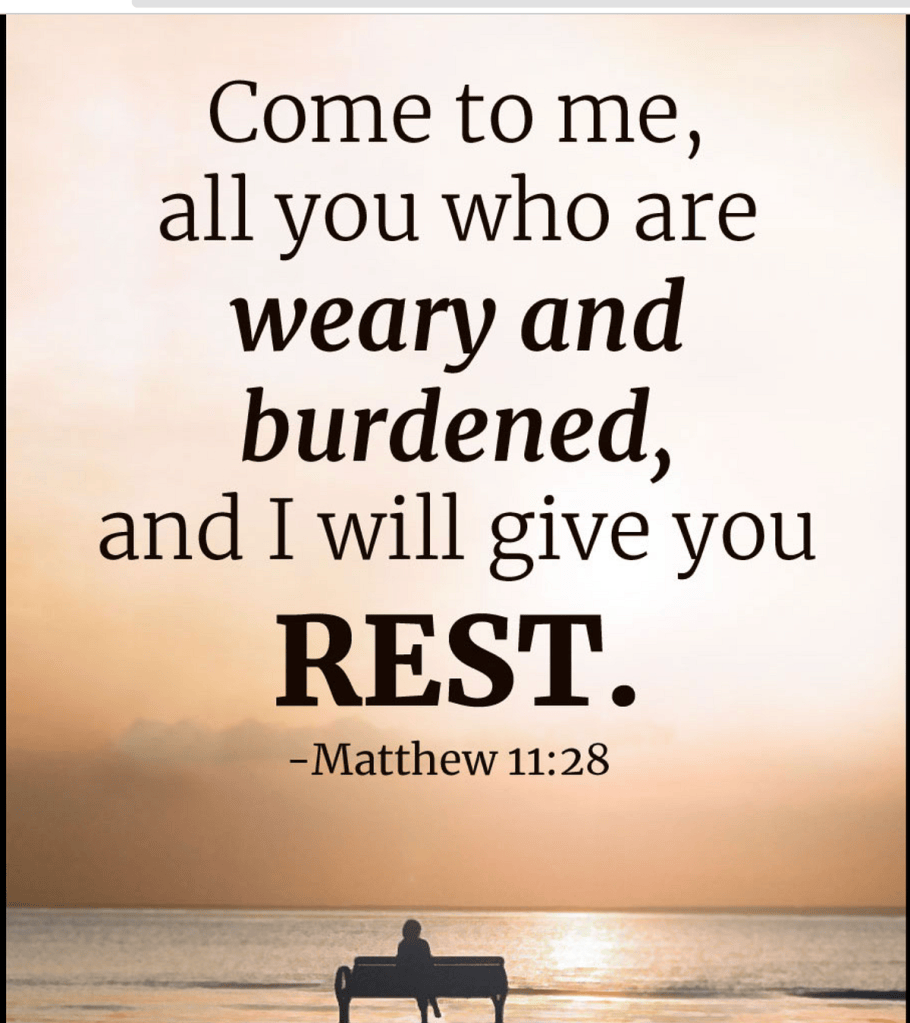
Jesus said in Matthew 11:28, “Come to me, all you that are weary and are carrying heavy burdens, and I will give you rest.” This invitation was not extended to people who had everything figured out. Jesus did not tell the weary to become stronger before approaching Him. He invited those who were already carrying burdens to come as they were.
That is an important Kingdom truth for men to understand: rest is not earned by suffering quietly in the dark. It is received by being willing to come honestly into the light. Asking for help is not the absence of faith. In many circumstances, it can be one of the clearest expressions of faith because it requires us to acknowledge that we were never meant to carry everything by ourselves.
We Were Never Meant to Carry Everything Alone
Throughout Scripture, we see men who reached the limits of their own strength. Their stories remind us that experiencing exhaustion, fear, discouragement, or even moments of despair does not automatically mean that a person has failed God.
Consider Elijah in 1 Kings 19. After one of the greatest spiritual victories of his ministry, Elijah became exhausted, afraid, and overwhelmed. He eventually reached a point where he wanted to die. What is interesting is how God responded to him. God did not begin by rebuking Elijah for his lack of faith. He allowed him to rest. Elijah was given food and water, slept, and was strengthened before God continued dealing with him about his calling and direction.
There is something significant about that order. Elijah needed spiritual direction, but he also needed physical rest and care. God addressed the whole person.
We see something similar when Jesus told His disciples in Mark 6:31, “Come away to a deserted place all by yourselves and rest a while.” The disciples had been serving, teaching, and ministering to others, and Jesus recognized that they needed to step away from the demands around them. Even those who were actively participating in the work of God needed renewal.
That should challenge the way we think about strength. If Elijah needed care, and if Jesus’ disciples needed rest, then perhaps we should stop treating our own need for help as though it were something shameful.
When a man seeks help, he is not necessarily saying, “I am finished.” He may actually be saying, “I recognize that something needs to change, and I am willing to do something about it.”
That is not weakness. That is responsibility. Remember, even the Lone Ranger had Tonto.
What Does Asking for Help Actually Look Like?
Sometimes we talk about getting help in such broad terms that we never take the next practical step. If we want men to become more comfortable seeking help, we need to make the process concrete.
Seeking help may begin with something as simple as breaking isolation and having an honest conversation with a trusted friend. It may mean talking with a pastor, mentor, or mature spiritual leader who is willing to listen without immediately trying to fix everything. For some men, the appropriate next step may be professional counseling with a licensed mental health professional who can help them understand what they are experiencing and develop healthier ways of responding.
There are also accessible tools that can help a person begin gaining some clarity about what is happening. Mental Health America, for example, provides free and confidential online mental health screenings that can be used as an initial point of reflection for concerns such as depression and anxiety. A screening is not the same thing as a professional diagnosis, but it can help someone recognize that the things they have been dismissing may deserve further attention.
For men who are hesitant about walking into a counseling office, telehealth can provide another option. Being able to speak with a counselor from the privacy of your own home can sometimes make that first step feel more manageable.
If you are looking for a counselor, I am a Licensed Professional Counselor in Texas and provide counseling through telehealth. My goal is to provide a safe and confidential environment where men can talk honestly about what they are experiencing without having to pretend that everything is fine. You can learn more about counseling and scheduling through my counseling services.
Seeking help is not an insult to your masculinity. It is an investment in your future, your relationships, and the people who depend on you. Sometimes taking care of yourself is also one of the ways you take care of the people you love.
Stop Waiting for a Crisis
One of the problems with the “handle it yourself” mentality is that it can cause men to wait until a situation becomes a crisis before they acknowledge that something is wrong. By the time they finally seek help, the problem may have already affected their marriage, family, employment, physical health, spiritual life, or relationships.
There is no requirement that you wait until everything falls apart before you ask for help.
You do not have to wait until your marriage is in crisis. You do not have to wait until depression becomes unbearable. You do not have to wait until anxiety begins controlling your decisions. You do not have to wait until alcohol, drugs, anger, pornography, work, or some other coping mechanism has taken over your life.
You can ask for help while you still have the opportunity to make changes.
In fact, one of the healthiest things a man can learn is how to recognize when his current ways of coping are no longer working. There is wisdom in recognizing our limitations. Strength does not mean pretending that we have no limits. Strength also means having the humility to recognize those limits and respond appropriately.
Take One Step
So, rather than allowing this to remain another inspirational message that sounds good but produces no action, I want to challenge you to take one tangible step.
Before the week is over, have one honest conversation with someone you trust. Schedule an appointment with a professional counselor. Complete a mental health screening and use the results as an opportunity to talk with someone. The specific step may look different for each person, but the important thing is to move beyond simply recognizing the problem and begin doing something about it.
You do not have to solve your entire life in one conversation. You do not have to understand everything you are feeling before you reach out. Sometimes the first step toward healing is simply acknowledging that the way you have been coping is no longer working and being willing to take the next right step.
That may begin with three simple words: “I need help.”
There is courage in saying them.
What Does Real Strength Look Like?
Men are often taught that strength means being the provider, the protector, the problem-solver, and the person everyone else can depend on. Those are not bad qualities. In fact, responsibility, perseverance, courage, and sacrificial love are important characteristics of healthy manhood.
But strength was never intended to mean that a man must become emotionally unreachable, spiritually isolated, or psychologically exhausted.
Real strength allows us to acknowledge when we are struggling. It gives us the humility to listen, the wisdom to seek counsel, and the courage to make changes when something in our lives is not working. It allows us to bring our struggles into the presence of God rather than hiding them from Him and from the people who could help us.
You are not less of a man because you are struggling. You are not less of a Christian because you need counseling. Needing help does not mean that you have failed your family or abandoned your faith.
It means you are human.
And God has never asked us to walk through this life alone.
A Prayer for the Man Who Needs Help
Father, thank You that You meet us in our weariness and our burdens. Help us release the shame that keeps us silent and isolated. Give us the courage to acknowledge when we are struggling and the wisdom to recognize when we need help.
Place safe people in our lives who will listen with compassion and walk alongside us. Give pastors, mentors, counselors, clinicians, friends, and family members wisdom as they support those who are hurting. Help us understand that seeking help is not weakness, but can be an act of courage, humility, responsibility, and faith.
For every man who has been carrying more than he can bear, remind him that he does not have to carry it alone. Give him the courage to take the next step toward healing and the faith to trust You along the way.
In the mighty name of Jesus Christ, amen.
You do not have to carry it alone. Sometimes strength begins when we finally have the courage to ask for help.
Last week, we opened this series by confronting the conspiracy of silence—shattering the fear and stigma that consistently force men into isolation.
Today, we have to recognize a critical, sobering reality: sometimes the men in our lives aren’t actually fine; they are simply displaying depression differently than we expect.
The Psalmist declares in Psalm 34:17 that the righteous cry out, and the Lord hears them; He delivers them from all their troubles.
We serve a God who intimately hears the cry of a man, whether that cry comes through literal tears, raw words, or a deep, groaning ache that you cannot fully express in human language. But the danger we face in our homes, our friendships, and our churches is that we often completely miss the cry because it doesn’t look like the textbook definition of sadness.
We must learn to identify the hidden signs of depression that manifest uniquely in masculinity. For many men, depression does not look sad—it looks mad. It shows up as uncharacteristic irritability, a short temper, simmering resentment, or suddenly snapping over minor inconveniences.
Sometimes it masks itself as aggression or a hyper-controlling behavior, which is rarely a simple “anger issue,” but is actually internal pain desperately trying to force control over an external environment that feels chaotic.For this reason anger is often referred to as a secondary emotion.
When a man is drowning internally, he may turn to reckless risk-taking—overspending, speeding, or operating with a dangerous, numb, “I don’t care” energy, because anything, even adrenaline, feels better than the void of feeling nothing at all. We see it in the rapid escalation of numbing habits and substance use, where alcohol, weed, pornography, over-gaming, or even a socially praised workaholism are weaponized just to quiet a racing, exhausted mind. We see it in subtle withdrawal—not necessarily a dramatic retreat into a cave, but a gradual distancing, fewer deep conversations, less emotional presence, and a constant, defensive posture of being too busy.
Furthermore, depression is physical before it is ever emotional; it wrecks a man’s biology through chronic restlessness, insomnia, oversleeping, and a bone-deep fatigue that a night of sleep cannot fix, ultimately causing him to lose entire interest in the hobbies, passions, and people he used to love.
Hear the decree of the Lord today: depression is not a spiritual defect, it is not a lack of faith, and it is not a masculine weakness. It is a real, heavy condition that requires real, uncompromised support. I am speaking divine hope into this room right now because God is not only capable of comforting your heart; He is fully able to restore your mind. The exact same God who breaks spiritual fear can bring miraculous healing to the precise place where your soul feels heavy.
Your step for this week is to actively check in on a man in your circle. Send a text message that is real, simple, and direct: “Hey Mental Health Struggles are real, How are you doing, really?” Do not approach it like a clinical interview; approach it with genuine, covenant care. And if you are the man sitting under the sound of my voice today who recognizes these symptoms in your own reflection, hear me: do not wait until you hit absolute rock bottom before you have the courage to speak up.
Let us pray.
Father, we ask that You open our eyes today to see the hidden battles we have been missing in the lives of our brothers, our husbands, our fathers, and our sons. By the authority of Your Word, deliver men from the spirit of heaviness and from the prison of hiding. Bring awareness into this house without a single drop of shame, and release divine healing without delay. We enforce the promise of Your scripture, and we claim power, love, and a sound mind over every man today, in the mighty name of Jesus Christ, amen.
Men, who are reading this I need your undivided attention. Today, we are launching a critical Impartation series for the entire month of June titled “Strong & Broken: Men’s Mental Health at the Foot of the Cross.” We are doing this because at the Cross, God doesn’t just deal with what is wrong in your life; He deals with what is hurting. For a vast majority of men in this room and watching online, deep emotional and psychological pain has been hiding under the heavy, exhausting mask of simply being fine.
The Apostle Paul wrote to a young leader in
2 Timothy 1:7, For that God has not given us a spirit of fear, but of power and of love and of a sound mind.(NKJV)
I want you to hear that with today: fear is not your driver. Shame is not your identity. And a sound mind is not a religious fantasy—it is a tangible reality that God builds within you the moment you decide to come to Him with absolute honesty.
To get to that sound mind, we have to confront the cultural and spiritual conspiracy that keeps so many men locked in absolute silence. We live in a world where stigma actively prevents men from reaching out for help. The tragic, clinical reality is that men are significantly more likely to die by suicide than women, and one of the primary drivers behind that statistic is that men do not seek help early. We wait, we carry, we internalize, and we hide until the weight crushes us.
This happens because from boyhood, cultural expectations train us in the art of silence. We are told to be strong, to never cry, and to just man up. We were never meant to do life alone. Remember, even the Lone Ranger had Tonto. We must understand that when you do not give your emotions a safe place to land, they do not miraculously disappear. Instead, they metastasize, which means to spread from one part of the body to another. Therefore they transform and erupt through chronic anger, irritability, emotional shutdown, dangerous risk-taking, or substance use. Silence eventually breeds isolation, and isolation never heals a man; it only delays his deliverance. Isolation whispers lies from the enemy into your mind, telling you that no one understands you, that you are entirely alone, and that you are defective. But that is a lie from the pit of hell. God understands your frame, and there are people equipped to help you carry the weight.
If you look closely at Scripture, God consistently met men who were profoundly hurting, not men who looked put-together. David cried out in agonizing despair throughout the Psalms. Elijah, a prophet of fire who called down miracles, sat under a tree in 1 Kings 19 and begged for his life to end. And Jesus—the Savior of the world, the perfect template of masculinity—spoke out of deep, sorrowful anguish in the Garden of Gethsemane, telling his inner circle that His soul was overwhelmed to the point of death. Bringing your brokenness to light is not about romanticizing pain or wallowing in defeat. It is about recognizing a profound spiritual truth: honesty can be an act of profound faith, and crying out to God can be a pure form of worship.
Therefore, your direct charge for this week and moving forward in your life is simple, real, and urgent: you must break the silence and talk to someone. Reach out to a brother, a pastor, a family member, or a professional—someone who represents a safe place. If you do not know how to initiate the conversation, start with these exact words: “Hey… I’ve been struggling. Can I talk to you?” And to the women and families supporting the men in your lives, your charge is to encourage them with a safe, non-judgmental tone. Do not immediately try to fix him or minimize his reality. Just create an atmosphere where truth can be spoken without penalty.
Let us pray.
Father, we thank You today that You are the God who sees us in our hidden places and the God who heals what is broken. Right now, by the authority of the broken body and spilled blood of Jesus, we break the assignment of shame over the men of this house. We break the spirit of fear, and we shatter the stronghold of silence. Holy Spirit, impart supernatural courage into every man today to be radically honest, and grant them the divine wisdom to find the help they need. In the mighty, unmatchable name of Jesus Christ, Amen.