
Blog

Don’t Second Guess God

While reading my devotional this morning, I was reminded of something important. We shouldn’t second guess God. As I am embarking on a new journey, having stopped being bi-vocational and am now doing full time ministry. I find myself praying, “Lord, please don’t let me screw this up.” Now while on one hand it is a good thing to keep in mind, let’s also not sell short the calling God has placed on our lives. Take Moses for example:

Exodus 4:10 But Moses said to the Lord, “O my Lord, I have never been eloquent, neither in the past nor even now that you have spoken to your servant, but I am slow of speech and slow of tongue.” 11 Then the Lord said to him, “Who gives speech to mortals? Who makes them mute or deaf, seeing or blind? Is it not I, the Lord? 12 Now go, and I will be with your mouth and teach you what you are to speak.” 13 But he said, “O my Lord, please send someone else.” 14 Then the anger of the Lord was kindled against Moses, and he said, “What of your brother Aaron, the Levite? I know that he can speak well; even now he is coming out to meet you, and when he sees you his heart will be glad. 15 You shall speak to him and put the words in his mouth, and I will be with your mouth and with his mouth and will teach you what you shall do. 16 He indeed shall speak for you to the people; he shall serve as a mouth for you, and you shall serve as God for him. 17 Take in your hand this staff, with which you shall perform the signs.”

Moses Returns to Egypt

18 Moses went back to his father-in-law Jethro and said to him, “Please let me go back to my own people in Egypt and see whether they are still living.” And Jethro said to Moses, “Go in peace.” 19 The Lord said to Moses in Midian, “Go back to Egypt, for all those who were seeking your life are dead.” 20 So Moses took his wife and his sons, put them on a donkey, and went back to the land of Egypt, and Moses carried the staff of God in his hand.

21 And the Lord said to Moses, “When you go back to Egypt, see that you perform before Pharaoh all the wonders that I have put in your power, but I will harden his heart, so that he will not let the people go. 22 Then you shall say to Pharaoh, ‘Thus says the Lord: Israel is my firstborn son. 23 I said to you, “Let my son go that he may serve me.” But you refused to let him go; now I will kill your firstborn son.’  (NRSVUE from BibleGateway).”

We see Moses arguing with God about his ability to take on the  job God was calling him to, citing his inability to be an effective speaker. Does that sound familiar? We are great about thinking of our shortcomings when often asked to do some important job by others, and especially by God. Though it is a little cliché, the saying holds true, “God does not call the qualified, He qualifies the called.” To Moses,  God suggests Aaron to work as Moses’ spokesperson. If you notice , God points out , “even now he is coming out to meet you.” God knew, and was already taking care of it. It is the same way for us. God already knows our strengths and weaknesses. 

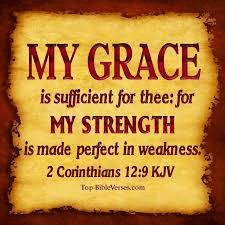
We need to change our understanding. It is faith in God, not ourselves that we boast of anyway. As Paul wrote in his letter to the Corinthians, “ but he said to me, “My grace is sufficient for you, for power is made perfect in weakness.”

So I will boast all the more gladly of my weaknesses, so that the power of Christ may dwell in me.  Therefore I am content with weaknesses, insults, hardships, persecutions, and calamities for the sake of Christ, for whenever I am weak, then I am strong (9-10,NRSVUE).”
See initially Moses took a backseat to his brother Aaron. That wasn’t the arrangement God intended. He pointed out to Moses, Moses was to perform the miracles as God called him (Exodus 4:21a) “When you go back to Egypt, see that you do before Pharaoh all the miracles that I have put in your power (emphasis mine).” 

God has called us to a specific purpose. He uses the analogy of the human body with Christ as the head for a reason. The hand is  not designed to do what our elbow does. Each person has influence in areas and skills that others don’t. This means there are specific callings we can accomplish that others would not be as effective in. Do you know what your calling is?

God does not want us to sit back and miss out on what He has planned for us. What opportunities, circumstances or situations do you steer clear of out of fear of rejection or feelings of inadequacy? It is time to grab the bull by the horns! Hiding will never make it go away. Go to the Lord. 1 John 4: 18 says, “18 There is no fear in love, but perfect love casts out fear; for fear has to do with punishment, and whoever fears has not reached perfection in love (NRSVUE).” We need to surrender to God, turn our fear over to Him so we can be set free and step into the calling He has placed on our lives. 

In the New Testament, when Stephen is speaking about Moses he states this as recorded in Acts, “ So Moses was instructed in all the wisdom of the Egyptians and was powerful in his words and deeds (22, NRSVUE).” Now this may seem a contradiction to what we read Moses saying earlier, but not really. A true contradiction has to be mutually exclusive. In other words, both cannot be true at the same time. It is very possible to be powerful in speech and deeds due to authority, and not be eloquent. However, I personally look at it a bit differently.

We often sell ourselves short, and what we read earlier was Moses who had been hiding in the desert ever since he fled Egypt giving his impression of himself. In addition, I truly believe that as Moses stepped into his God given calling, God did what He always does, brought perfection in Moses weakness. Speech is most definitely an ability that is developed, I used to teach speech classes. So My belief is that Moses grew into his ability as he gave over to God’s calling and so by Stephen’s day, and no one there disagreed with him as we know of his comments on Moses, Moses was remembered as a man who was powerful in speech and deed.

Are you ready to step into what God is calling you into?  There is no better day than today.

Be blessed, God loves you and so do I!

Let Go of Your Comfort Zone

In 1 Corinthians 9:16-23, Paul writes, “If I proclaim the gospel, this gives me no ground for boasting, for an obligation is laid on me, and woe to me if I do not proclaim the gospel! For if I do this of my own will, I have a reward; but if not of my own will, I am entrusted with a commission. What then is my reward? Just this: that in my proclamation I may make the gospel free of charge, so as not to make full use of my rights in the gospel. For though I am free with respect to all, I have made myself a slave to all, so that I might win more of them. To the Jews I became as a Jew, in order to win Jews. To those under the law I became as one under the law (though I myself am not under the law) so that I might win those under the law. To those outside the law I became as one outside the law (though I am not free from God’s law but am under Christ’s law) so that I might win those outside the law. To the weak I became weak, so that I might win the weak. I have become all things to all people, that I might by all means save some. I do it all for the sake of the gospel, so that I may share in its blessings.”

Ministry carries Paul all over the place. For a middle class kid from Tarsus, he experiences a broad swath of life on behalf of God. He transforms himself into all things for all people in order to reach as many folks as possible. Following Jesus sometimes means letting go of our comfortable bubbles and putting ourselves where God needs us.  I want you to ask yourself: What is your passion, what drives you, are you compelled in your Christian mission?

 Paul in his Second Letter to the Corinthians chapter 5, declares, “For Christ’s love compels us, because we are convinced that one died for all and therefore all died.  And He died for all, that those who live should no longer live for themselves, but for Him who died for them and was raised again.”  The love of Jesus compels us.”

As it relates to this text, what is it in our relationship with Jesus Christ that will not let us rest? Paul is saying that our love for Jesus , the understanding of what He did for us individually should excite us, even drive us to do things to demonstrate our love for Jesus, not to try and earn what we already have. So what is it that we are passionate about? I keep asking this because oftentimes these areas , where our passions lie, are opportunities for ministry that we might not be aware of. Ministry isn’t just standing in a pulpit, or going door to door. Not everyone is called to be on the street corner witnessing. Besides, in today’s culture this isn’t the most effective way to reach people anyway. 

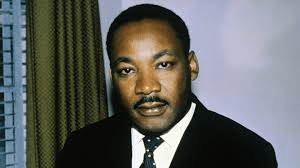
One of the interesting testimonies of Dr.Martin Luther King Jr.  was that upon his graduation from Crozier Theological Seminary in Pennsylvania, and his PHD at Boston University, his goal was to serve as a teaching professor in academia in one of the nation’s highly revered Seminaries.  A career that might be somewhat removed in relative seclusion and isolation from the realities of those suffering under the sweltering heat of an oppressive inequality,away from the  racial and social injustice in a majority of urban America cities of the deep south.

But the Spirit of the Lord was upon King, it seized Martin’s very soul, it would not let him rest until he answered the call to return to the Deep South and stand in solidarity with those ready and waiting for leadership to guide them in addressing the need for social as well as some soul transformation in our nation.

Jesus’ journey to Calvary during his final week and hours is called the Passion of the Christ, because it would not let him go, until He had fulfilled His mission here on planet earth in giving His life in order to buy our souls back for Satan, sin, hell, death and the grave.  He once said on His way to Calvary, “I must work the works of Him who sent me while it is day, for the night comes when no one can work”  (John 9:4).

Because He was passionate about dying for us, in our place, God moved Charles Wesley to write that memorable tune, O For A Thousand Tongues To Sing which reminds us “He breaks the power of canceled sin, He sets the prisoner free; His blood can make the foulest clean; His blood availed for me.”  Jesus was passionate in His mission to save us from ourselves.

So do you love Jesus enough to step out of your comfort zone? Are you willing to take a look at the areas you are passionate about and see how it could be used to bring glory to God? If you are not passionate about anything, are you willing to ask God to give you a passion? It’s time for us all to move outside of our God Box and serve in different ways than we ever imagined. 

What Kind of Soil am I ?

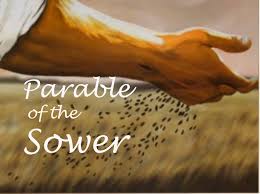
sower

Matthew 13: 1-9; 18-23

13 On that day Jesus went out of the house and was sitting by the sea. Such large crowds gathered around Him that He got into a boat and sat down, while the whole crowd stood on the shore.

Then He told them many things in parables, saying: “Consider the sower who went out to sow. As he was sowing, some seed fell along the path, and the birds came and ate them up. Others fell on rocky ground, where there wasn’t much soil, and they sprang up quickly since the soil wasn’t deep. But when the sun came up they were scorched, and since they had no root, they withered. Others fell among thorns, and the thorns came up and choked them. Still others fell on good ground and produced a crop: some 100, some 60, and some 30 times what was sown. Anyone who has ears should listen!”

“You, then, listen to the parable of the sower: 19 When anyone hears the word about the kingdom and doesn’t understand it, the evil one comes and snatches away what was sown in his heart. This is the one sown along the path. 20 And the one sown on rocky ground—this is one who hears the word and immediately receives it with joy. 21 Yet he has no root in himself, but is short-lived. When pressure or persecution comes because of the word, immediately he stumbles. 22 Now the one sown among the thorns—this is one who hears the word, but the worries of this age and the seduction of wealth choke the word, and it becomes unfruitful.23 But the one sown on the good ground—this is one who hears and understands the word, who does bear fruit and yields: some 100, some 60, some 30 times what was sown.”

This is an excellent example of one of the ways Jesus would teach, with parables. This is a “true Parable” meaning it is told to illustrate only one point and draws from the daily observations of everyday life. In this case it relates to farming, something that would have really been appropriate to the audience he was addressing and can be related to many of us here. I don’t know how many of you are gardeners, I sort of fiddle with it and I have had varied success and failures with gardens over the years.

biloxi map

I grew up in Biloxi, Ms. This is a coastal town and I grew up surrounded by water. The Tchoutacabouffa River

 was a mile behind my house. Biloxi Bay was 5 miles away and it was just a short way past that and you hit the Gulf of Mexico. Growing up I learned a certain to make gardens. So when I first moved to East Texas and tried a garden, I did it the way I learned. I made my mounds about 6 inches high, busted the top of them, and planted the seed and so forth. Nothing worked out right. The corn only grew to about 2 feet tall and other issues. A friend came by and looked at the garden and asked why I made my mounds that way. I quickly explained you had to do that so that all the rain and standing water after the rain doesn’t wash your seeds away. See Biloxi’s average Annual rainfall is 65 inches a year. July is the wettest month with usually averaging over 7 inches just in July…well needless to say I had not taken into consideration the new climate and difference in the soil.  Good gardeners understand for seeds to truly grow, you need the right soil.

soil

This parable is often known as the parable of the sower and the seed, which is really the heart of the message, however I want to look at the soil first. All four types of soil are essentially the same dirt but are in different conditions and respond in different ways to cultivation.

What made one soil more responsive and the other less?

sowing

In Biblical times, communities were mainly agriculturally based. The farming methods however were different in those days. They actually sowed the seeds first then plowed them under as opposed to the technical way in which we have of plowing first, making rows and planting each seed to a certain depth depending upon the type of seed.


pathA family would be appointed a section of land to farm. Each farmer’s plot was adjacent to his neighbor’s. In order to get to the fields, they walked along the boundaries bordering each field to avoid stepping on the growing plants. The “path” was held in common by all the farmers. Over time, the soil on the path would compact. It was never plowed and never fertilized. In the parable, the seed that is sown on the path is not able to penetrate the ground because of the constant use. The condition of the first soil is hard and impermeable.

rocky soil


The second type of soil mentioned in the parable is the “rocky” places” or the shallow soil where the plow didn’t cut deeply enough to break up the shale or hard ground just below the surface. This soil produced only plants with weak, shallow roots.


thorns-1053424_960_720.jpg


The third type of soil mentioned is the thorny soil, most likely found in the corners of the field where the plow couldn’t reach; here, weeds overtook what was planted.

All the types of soils mentioned here are actually in the same plot of ground with one major difference: Only one area was fully yielded to cultivation, to being changed and prepared for planting. That area was called the good soil.

In the explanation, the soil along the path represents those who never really hear the word with understanding. The Word of God must be understood before it can truly bear fruit. One of the enemy’s chief works is to keep men in darkness regarding their understanding of the word.

the-four-soils-600x400

The rocky ground soil represents those who receive the word enthusiastically but it is short lived. They do not endure because the word has not been allowed to go deep and make strong roots. 

Charles Spurgeon made a good point in stating, “the fault did not lie in the suddenness of their supposed conversion, many sudden conversions have been among the best that have ever happened” So the problem was not the growth but their lack of depth. Without deep roots, they were not able to stand against the storms of life.

The soil that landed among the thorns showed growth, but allowed other things to grow along side and ultimately was choked out for the competition of other things. 

harvest.jpg

The good soil was those who received the word, let it grow roots, and it bore fruit on differing portions, some 100, some 60, and some 30. 

This would be a good place to pause and ask, what kind of soil am I? This is actually the title of the sermon, but this is really a bit of a trick question. To be honest none of us are just one type of soil, 

Like the path sometimes we allow the Word no room at all in our lives

Like the rocky places, we sometimes have flashes of enthusiasm that quickly burns out

Like the thorny area we sometimes get overwhelmed and bombarded by the other things we allow in our life. The cares of this world and the deceitfulness of riches are allowed to grow and block out the true priority and therefore choke out God’s Word and prevent its fruitfulness in our life.

And then there are times, like the good ground, the Word bears fruit in our lives.

Each of us has all four kinds of soil in our hearts, but despite all the talk about soils, despite the importance of knowing how we allow our hearts to respond, the Parable of the Sower isn’t really about dirt at all. The Parable of the Sower is, as the name implies, really about the Sower.

ParableTeller

Remember I said parables illustrate one main point? In this parable, nowhere does Jesus go and say we need to be good soil. In fact Jesus says to consider the sower and then focuses on the return of the harvest in spite of where the seed lands.

As important as it is for us to be aware of what’s going on in the soil, This story is a description of our loving God. God knows it is foolish to spread seed on unworthy soil, but he does it anyway. God spreads his love with reckless abandon in hearts that are at once all four different types of soil. We see this as Jesus throws seed at the disciples who over and over and over again prove that they have hard hearts, stiff necks, and dim minds. Jesus continues to throw seed at them, continues to work with them, and continues to help them see what God is up to in the world around them. He scatters the seed of the Gospel with wild recklessness, and even when it is clear that his disciples just don’t get it, when they turn him over to the authorities, abandon him in his hour of need, and deny even knowing him; Jesus continues to pour out his love on them by inviting them back into the fold after the resurrection. Throughout His earthly ministry Jesus continued to throw the seed, even to the Pharisee’s and though some never changed their heart, there were many who did because he continued to love recklessly.

gods embraceGod is downright foolish in his love for you and me as well. We who continue in the proud hard hearted, stiff necked and dim minded tradition of the disciples. We who neglect to build the kingdom and instead focus on building ourselves. We who show again and again why we need forgiveness and we forget again and again to give it to others. The good news is: God continues to throw seed at us. He pours out his love upon us relentlessly. And when he finds even the smallest patch of good soil in our hearts, he nurtures the Kingdom within us, producing an abundant harvest: 30, 60, even 100 fold if we will just give him the opportunity. This parable is about God and his wildly extravagant love for us, and that, my friends is more than enough when we allow him to work in whatever kind of soil is in our hearts.

 There is a song by Corey Asbury called Reckless Love , You should listen to it and realize its about His love and you.  I have included the lyrics: Reckless Love by Cory Asbury

Reckless Love

Before I spoke a word, You were singing over me
You have been so, so good to me
Before I took a breath, You breathed Your life in me
You have been so, so kind to me

Oh, the overwhelming, never-ending, reckless love of God
Oh, it chases me down, fights ’til I’m found, leaves the ninety-nine
I couldn’t earn it, and I don’t deserve it, still, You give Yourself away
Oh, the overwhelming, never-ending, reckless love of God, yeah

When I was Your foe, still Your love fought for me
You have been so, so good to me
When I felt no worth, You paid it all for me
You have been so, so kind to me

And oh, the overwhelming, never-ending, reckless love of God
Oh, it chases me down, fights ’til I’m found, leaves the ninety-nine
And I couldn’t earn it, and I don’t deserve it, still, You give Yourself away
Oh, the overwhelming, never-ending, reckless love of God.

There’s no shadow You won’t light up
Mountain You won’t climb up
Coming after me
There’s no wall You won’t kick down
Lie You won’t tear down
Coming after me

Oh, the overwhelming, never-ending, reckless love of God
Oh, it chases me down, fights ’til I’m found, leaves the ninety-nine
And I couldn’t earn it, I don’t deserve it, still, You give Yourself away
Oh, the overwhelming, never-ending, reckless love of God, yeah


My friends how will you respond to the overwhelming, never-ending, reckless love of God in your life this week? Will you let it be trampled and stolen? Will it get choked out? Or will you let it grow and form deep roots in your heart? 

God’s Promises

The loud sound of the gavel striking its wooden sound block echoed through the courtroom. The pain, rejection, feelings of failure, brokenness, and confusion that come from divorce would echo through my mind for years. Life does not always take the path that we expect. Years before that failed marriage even started I spent two entire summers in Queretaro, Mexico. One was spent working in an orphanage and the other was spent living in a Bible school while helping build a church in neighboring San Miguel De Allende. These trips were just one of many instances that God used to place a promise in my heart. A promise that was often obscured from my view by life’s many twists and turns. Promise is at the heart of this post.

Galatians

  • Scripture: Galatians 3:23–29    
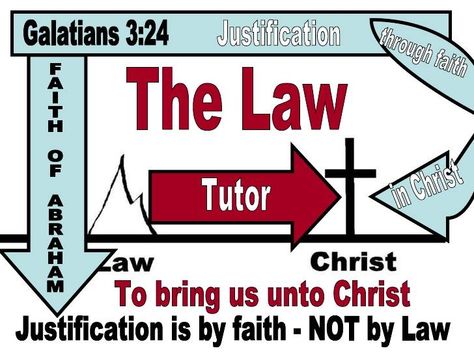
  •  23 Before this faith came, we were confined under the law, imprisoned until the coming faith was revealed. 24 The law, then, was our guardian until Christ, so that we could be justified by faith. 25 But since that faith has come, we are no longer under a guardian, 26 for you are all sons of God through faith in Christ Jesus.

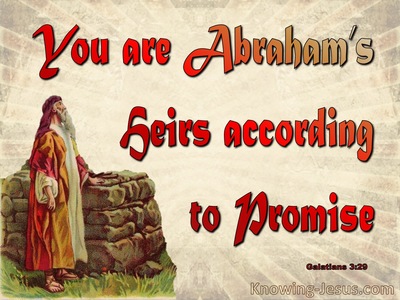
27 For as many of you as have been baptized into Christ have put on Christ like a garment. 28 There is no Jew or Greek, slave or free, male or female; for you are all one in Christ Jesus. 29 And if you belong to Christ, then you are Abraham’s seed, heirs according to the promise.


There seems to be  four main ideas in Paul’s thought in Galatians 3:23–29

First, Israel was confined under the law, which functioned like a guardian (or tutor or governess). Until Faith came, this provided restraint and guidance but could never give the inheritance (3:18).

Second, A great movement of faith came with Jesus. 

Third, whenever and wherever men and women give their lives to Jesus they are justified, and become children of God, regardless of who they are. 

Fourth, therefore, we who have accepted Jesus as Savior are heirs of His promise to Abraham.

law


  • Confined Under Law


The first point is taken in verses 23 and 24, “Now before faith came, we were confined under the law, kept under restraint until faith should be revealed. So that the law was our guardian until Christ came.” The word translated as guardian comes from the Greek word paidagogos (pahee-dag-o-gos) and can be translated as schoolmaster/ custodian and refers to a servant of the family responsible to watch over the son, from the nursery to his entrance into manhood. He governs the child’s behavior and instruction until the child has the maturity to do what is right without external constraints. The child was not allowed so much as to step out of the house without them before arriving at the age of manhood. However, No matter how important this person was, the paidagogos does not have the power to make the child’s heart good, nor can he give the child his inheritance.

That’s how the law functioned for Israel. It provided direction and restraint. It showed the way a mature child should behave. But it could not give Israel a new heart nor could it give the inheritance. And according to 

Hebrews 4:2 the reason the law did not benefit Israel was that it did not meet with faith. Faith is the mark of maturity, which the law prescribed, and so the law kept Israel under restraint until faith came.

 The purpose of the law was to instruct Israel how to live a faithful life in the promises of God but their response was more often than not rebellion. Israel, for the most part, did not humble themselves, and so the law functioned to expose Israel’s sin and hold them under restraint until the day when God began to take away the blindness and give them a heart to trust Him.

And the law works that way today, too. If you are not truly trusting God and relying on mercy, the law feels burdensome, offensive, like the assignments given by a harsh taskmaster. But if you trust God with all your heart and rely on his mercy, then the law will feel like a prescription from a wise Physician, like exactly what you need. What the law is for you depends on what you are toward the Law-giver. 

1 John 5:3 says, “This is the love of God, that we keep his commandments. And his commandments are not burdensome.” 

faith has come


  • Faith Has Come


The second point in Paul’s thought is that faith has now come. It’s coming is simultaneous with the coming of Christ. Verse 25, “But now that faith has come, we are no longer under a guardian.” What does he mean: “Faith has come”? He doesn’t mean that no one in Israel had saving faith before Christ came. Abraham did. Psalm 32 portrays a man whom the Lord reckons righteous by faith apart from works. Hebrews 11 gives a believers’ hall of fame from the time of the law. So Paul does not mean that no one had faith before Christ came, nor that justification was by works before Christ came. No one can earn it, it has to come by faith. There were believers who were justified by faith all along, 7,000, Paul says, in the time of Elijah in his letter to the Romans (11:4)

gal 3-24

So what Paul means when he says that “faith has come,” is that by God’s grace a period in redemptive history has come in which great numbers of people, especially Gentiles, are responding to God’s Word in faith. “Faith has come” means that a great movement has begun whose members are marked by this above all else—they trust like little children in the mercy of God. When the law was preached, it met with very little faith. But when the gospel is preached, many people believe and are saved. This movement has spread around the world. The reason for this is not that the law taught men to earn salvation while the gospel offers salvation freely to faith. No, both the law and the gospel offer salvation freely to faith, and both describe the obedience that shows the genuineness of this faith.

The reason why the law seemed to mostly shut people up in sin while the gospel wins faith from large numbers is that the preaching of the gospel is accompanied by a powerful work of the Holy Spirit to open the hearts of the listeners. The cross brought a change in relationship between people and God while the Holy Spirit brought power. (Acts 16:142 Corinthians 4:6). “Faith has come” means that God is fulfilling the promises of Ezekial 36:26 “I will give you a new heart and put a new spirit within you. If God were not causing the gospel of Christ to be accompanied by the convicting, opening work of the Spirit, the gospel would shut us under sin just like the law did. But that was not God’s plan. And every one of us here who lives by faith in the Son of God is living evidence that by the sovereign, effectual grace of the Holy Spirit “faith has come”—even to us, and taken up residence in our hearts, and made us new. If you know the hardness of your own heart apart from renewing grace, you know to  thank God every day that you are a believer.

united.jpg


  • United to Christ


The third point in the text is that faith in Christ so unites us to him that all the benefits he can give become ours. This harkens back to the picture of the loving father and the Prodigal Son. Though the son did not deserve it,  the love of the father wrapped the son in both his arms and His robes

That’s how it is with Christ. If you entrust yourself to Christ, and say you want to be his eternal guest, and wear his garments, and accept his customs, because of his love, Because of the cross, the father would be denying himself in the work of Christ to turn you away. And so all he has is yours. Foremost in verse 24 is justification—that is, acquittal of all guilt, forgiveness of all sin.

8_forgiveness-complete

It is important to understand this is complete forgiveness without any restitution on our part. We understand justice has been served when someone has paid his debt to society such as doing time in prison, a fine, etc. We pay nothing, we have no requirements outside of faith for this justification.  However in this justification Jesus paid our debt to God on the cross. Then, as verse 26 says, sonship and daughtership becomes ours. To belong to Christ is to be a child of God with all the stupendous privileges implied in that relationship. The idea here of baptism is amazing. It is a deeper meaning than just having been water baptized.

immersed

The Greek Word Baptizo means to be immersed, and so Paul isn’t saying just to be baptized, but to be baptized in Christ, to be immersed in Christ. 

When we are immersed in Christ, we are changed. It doesn’t matter what we were before. The reason is we have put on Christ like a garment, again that image from the prodigal son where the father covers the dirt and filth with His robe, Jesus covers all of our filth with Himself. Verse 28: “There is neither Jew nor Greek, there is neither slave nor free, there is neither male nor female.” Every possible ground for boasting is removed; every possible reason why we shouldn’t receive it is also removed. We are immersed in the cleansing and saving power of the cross and all who go through that power are changed and are part of the same family. Whatever our differences, racial, social, economic, whatever, we are all utterly dependent on the power and love of Christ, not the value of our distinctiveness. There is nothing more secure.

heirs to the promise


  • Heirs to the Promise


Finally, the fourth point is simply this: we are heirs to the promise. Verse 29: “If you are Christ’s, then you are Abraham’s offspring, heirs according to the promise.” To be a descendant of Abraham and to be a child of God are virtually the same in Paul’s mind. You become both when you entrust yourself to Christ and say, “I want to be yours.” I already mentioned the idea of sonship, with that comes inheritance. The promises of God are for those who are in his family. 

In Genesis 12 God told Abraham I will bless you and make your descendants into a great nation. You will become famous and be a blessing to others. I will bless anyone who blesses you, but I will put a curse on anyone who puts a curse on you. Everyone on earth will be blessed because of you. 

covenant

Later this was established again in covenant when Abraham was 99 years old. We see this in Genesis 17 :  I will always keep the promise I have made to you and your descendants, because I am your God and their God. I will give you and them the land in which you are now a foreigner. I will give the whole land of Canaan to your family forever, and I will be their God.

We are part of the fulfillment of God’s promise to Abraham as well as recipients of His Promises to His people. If you are Christ’s then you are Abraham’s heir. This place of high privilege comes according to the promise, not according to law or works.

family eternity

Because of Christ, we are connected with the long line of God’s people assembled throughout all the ages.This promise is only for those united by the blood of Christ, and if we are Christ’s, then we find our place in eternity, because we are sons and daughters of God. 


walk to emmaus

Several years back while on a Walk to Emmaus retreat, God reminded me of  a night I was at a service in Mexico. I had come to think because of many reasons, the biggest being my failed marriage that though Salvation was there for me, I was damaged goods and not good enough to be used in ministry any longer. During this moment God reminded me of a night in Mexico when I was pouring my heart out to Him as a young man distraught with his own shortcomings and inadequacies looking into the face of what God wanted Him to do explaining why I was not the right man, in much the same way Moses did, God reminded me what HE told me then. I was never worthy or good enough to begin with. It has nothing to do with my worth and everything to do with His Grace. When He called me, He knew the path my life would take, and though I had free will, HE knew the choices I would make, and would give me promises anyway, promises that HE stood by, He wanted to know would I believe those promises and continue to walk toward them and lay hold of those promises. The journey of my life has taken shape in ways I never expected, there have been highs and lows and many in between that over time I am sure you will hear about as we grow in this new relationship. Yet through all of that nothing has changed regarding God’s promises.

Slide1

The fact I am pastoring two churches, writing a blog, Doing ScriptureTalk Live!   (an online interactive bible study Mondays at 6pm Central time archived episodes is available) is all because of God’s faithfulness to his promises.

So we find our place in society, because we are brothers and sisters in the family of God, and we find our place in history, because we are part of God’s plan of the  ages. A plan that cannot be stopped by anything or anyone. 

God never goes back on His word or His purposes. I challenge you to dig into His word and see the promises that are written to you, if you are immersed in Christ, these are promises to you. Dust off the old prayer journal, what promises has God spoken over your life? What promises has He spoken over your family? This church? This city?  We are at least 3000 years from when God gave Abraham his promise, and yet God is still showing Himself faithful to that promise, do you think He is going to start being unfaithful now? No we are heirs to the promise just as we are evidence of the promise. Start laying a hold of those promises by faith and let’s look with expectation for what God is going to do next.

Pentecost

pentecost-300x188Pentecost Sunday is a remembrance and celebration of when God poured out His Holy Spirit upon the early church. When He did this, he was fulfilling what John the Baptist foretold when he said there would come later one who baptized with the Holy Spirit and with fire (Matthew 3:11).
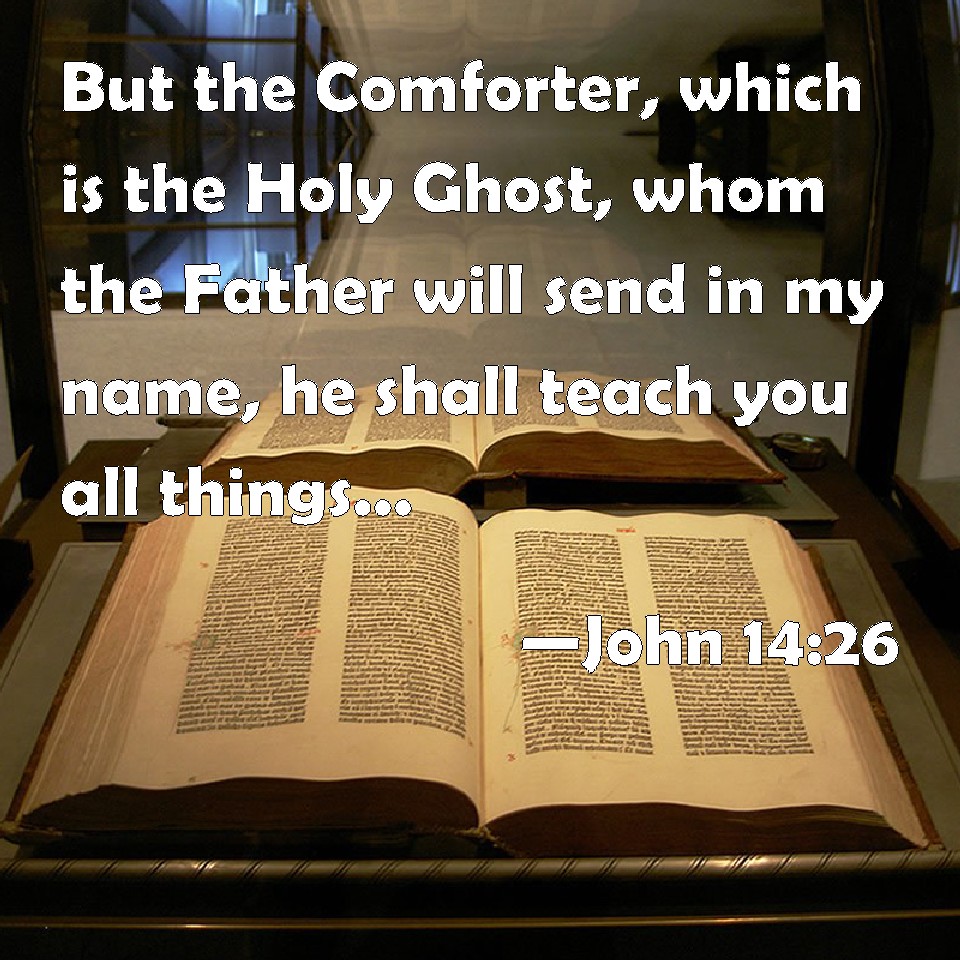
 

This was also a fulfillment of the promise Jesus made to His disciples regarding HimJohn 14 image sending a comforter, the Holy Spirit (John 14:26).
But neither of those are the reason it is called Pentecost. For this reason we need to look back at the foundation of the Christian belief, Judaism. Jesus and the disciples were Jewish. They observed and celebrated the Jewish Feasts.  There are seven feasts celebrated, but three main feasts. The three main feasts are: Pesach (Passover), Shavuot (Weeks or Pentecost), and Sukkot (Tabernacles, Tents, or Booths).

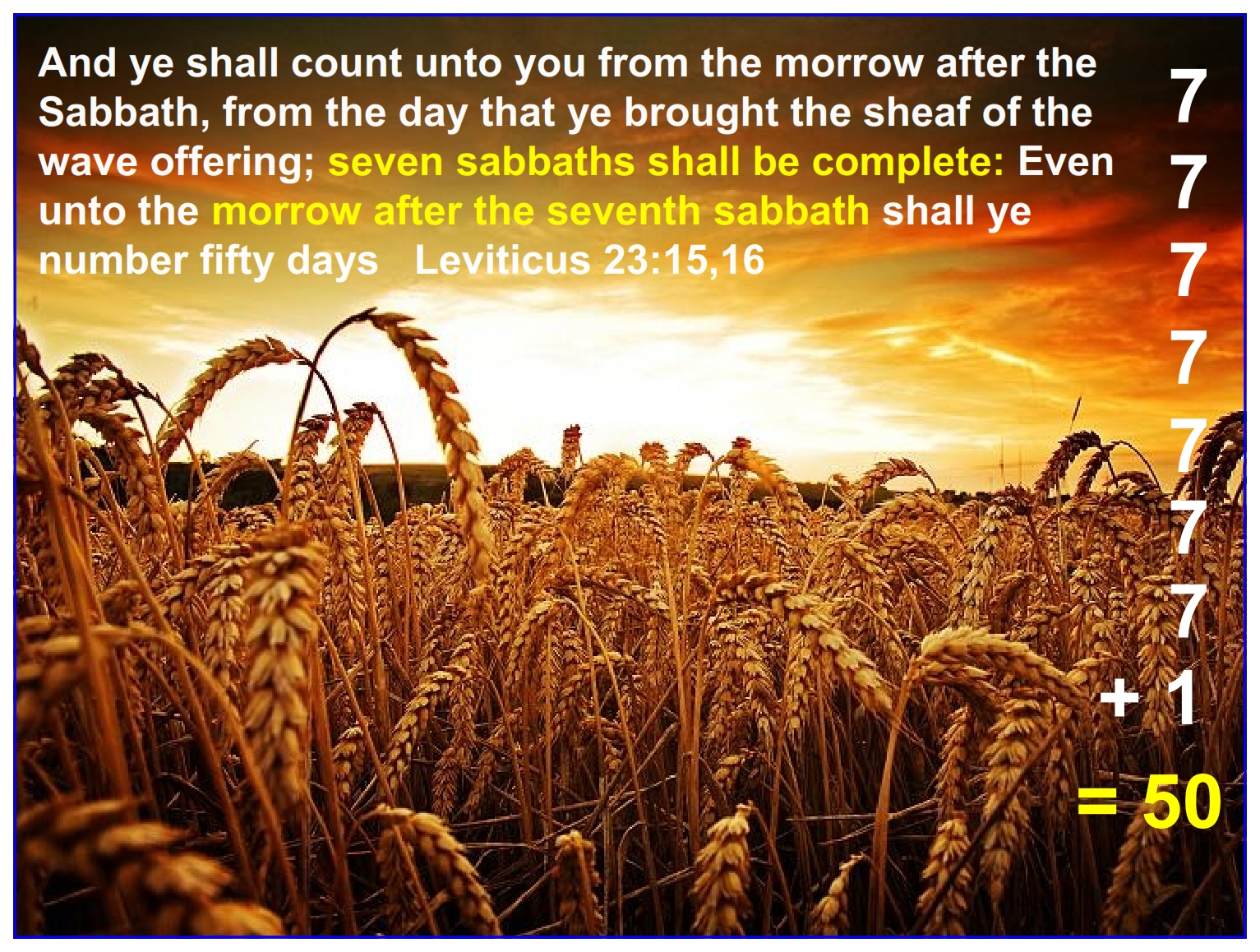
feast of weeksCelebrating the Feast of Pentecost is why the Apostles and other disciples of Jesus were gathered together in the upper room. The word Pentecost comes from  Greek Πεντηκοστή (Pentēkostē) meaning “fiftieth” (50th). It is called this because this feast takes place 50 days following Pesach (Passover).
Biblically speaking this feast is tied to the grain harvest, specifically wheat.  This harvest lasted seven weeks and was considered a time of joy (see Exodus 34:22, Deut. 16: 9-11, Isa. 9: 2 Jer. 5:24). It was the first day that the people could bring the first fruits as an offering to the Lord.

Later in time it would become associated with the giving of the Torah, or Law, to Israel at mosesMt. Sinai, following their salvation from Egypt. This is largely because of its association with Pesach (Passover) and the obvious ties to the Exodus through Moses and the subsequent giving of the Torah to the Israelites.


acts-birth-of-a-churchIn the New Testament, Pentecost is looked at as the birth of the church. It was this event that Jesus referred to when He told the disciples,  “Do not leave Jerusalem, but wait for the gift my Father promised, which you have heard me speak about.  For John baptized with water, but in a few days you will be baptized with the Holy Spirit” (Acts 1:4, HCSB).

The 1st chapter of Acts tells us there were 120 gathered together. Luke then describes in tongues of firechapter two the Holy Spirit falling upon them with what looked like tongues of fire. It says they were all baptized with the Holy Spirit and spoke in other languages or tongues. Peter later testifies in front of the crowd that this gift of the Holy Spirit is the fulfillment of Joel 2:38-32.

“this is what was spoken through the prophet Joel: And it will be in the last days, says God, that I will pour out My Spirit on all humanity; then your sons and your daughters will prophesy, your young men will see visions, and your old men will dream dreams. I will even pour out My Spirit on My male and female slaves in those days, and they will prophesy. I will display wonders in the heaven above and signs on the earth below: blood and fire and a cloud of smoke. The sun will be turned to darkness and the moon to blood before the great and remarkable Day of the Lord comes. Then everyone who calls on the name of the Lord will be saved” (Acts 2:16-21)

foxes-book-martyrs-470x246-01Foxe’s Book of Martyrs

The gift of the Holy Spirit is the catalyst that changed the disciples forever.  The truth of the resurrection was burned into their hearts and the group of men who scattered during the arrest and crucifixion, the men who denied with cussing that they even knew Jesus, went on to each give their lives, literally, to see the world turned upside down. Check out the above link for how each disciple gave their life as well as other Christians.

This was the birth of the church, we were to grow and prosper since that time. In many ways we have, in others we have grown stagnant. We need a fresh infilling of the Holy Spirit in order to truly live out the final instructions of Jesus to His church. It is a because of having access to the Holy Spirit that we will be able to do the things Jesus did, and even more, as according to what Jesus said in John 14.

This is why we celebrate the gift that is the Holy Spirit on Pentecost Sunday. May it be more than a side comment or even a potluck dinner to commemorate it. Let it be a push to seek for more of the Holy Spirit and fire operating in our life so that we can make a difference in the world.

change

Gluten Free, Keto approved Pizza

I gave a new recipe a try this week, and I have to say I loved it.  I am sure everyone can Slice of hot pizzaagree that there is very little that can compare to wonderful ooey gooey goodness that is pizza. I mean sometimes you just crave and need that hot, melty, rich flavor that only comes from biting into a slice of Italian pie.


However our life changed awhile back when my wife developed Celiac disease. For those who do not know, this is an extreme allergy to Gluten. Gluten is a substance found in cereal grains, especially wheat that is responsible for the elastic texture of dough. gluten freeEssentially it is a mixture of two proteins and is what causes illness in people with celiac disease. Think extreme abdominal pain due to swelling intestines that prevent proper absorption of food. It also causes severe rash breakouts along with other fun things. So needless to say all bread products, regular pasta, anything with MSG, etc. have been off limits.
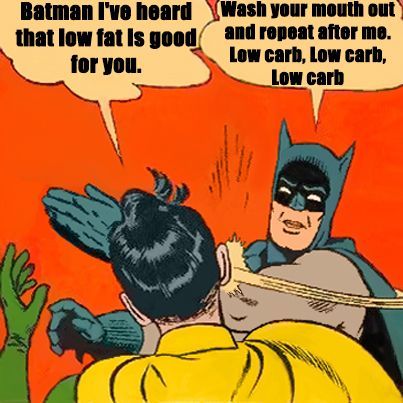


keto batman

In addition I have adopted a Keto style diet as I am trying to get in better shape (43 lbs down so far and still going!)  So this has meant a no to pizza. Yes we have cried crying


Well my wife has been craving pineapple and ham pizza. I know you haters are going to hate, however she enjoys it and quite honestly so do I. I mean if you haven’t tried it, you need to,  i mean look at it:

pineapple pizza

So anyway, I set about on creating a pizza she and I could both enjoy. I have attempted various things as a substitute crust, cauliflower crusts, gluten free tortillas, and so far nothing really gave that awesome, comfort giving pop of flavor in the mouth that comes from real, honest to goodness pizza.

celebrating emoji

However, that all changed this week. I found a gluten free and Keto approved (depending on your choice of toppings)

The crust I made used a Fathead dough recipe (which is below). I refrigerated the dough for about 10 minutes before rolling it out. Place Saran Wrap over it to roll it out, I didn’t lol. It wasn’t difficult to get the parts off the rolling pin, but I am sure the plastic wrap would make it go smoother.

While the crust was in the oven I sliced some fresh pineapple grilled pineappleand put it out on the gas grill. Nothing on the pineapple, and just sprayed the grill.

The pizza sauce was a homemade marinara that I had made previously (I will post recipe late and insert link so check back J)


When the 13 minutes was up on the crust I took it out and let it cool a bit while I finished hamthe pineapple.  From there it was simple. I spread the sauce on the crust. I then sliced some ham and placed on the pizza. I used a nitrate free ham sandwich meat ( I used Natural Choice).


I chopped several slices of the pineapple and covered the ham with it. On top of that I grated mozzarella cheese and placed it back in the oven (be sure to lower temp to 350 from 425 temp used with crust) and waited for the cheese to melt.

It was great! Though the crust tastes amazing, it is a slight different texture than standard bread crust, but it was defiantly pizza.

homemade pizza

glazed pineappleI actually had leftover pineapple slices so I melted some butter and coconut sugar in a skillet with just a splash of water and glazed the remainder pineapple as a dessert for everyone else.


This was a big hit and will definitely be a repeat at our house. I did however learn a few things. I had covered my pizza pan with aluminum foil because I was afraid the dough might slip through the holes in the pan. This would not have been a problem and since I forgot to spray the aluminum foil, it caused some minor sticking issues. Next time I will not use the foil and will probably use my pampered chef stoneware (my wife reminded me about this after the fact, where was she with the great ideas when I started cooking? LOL). She was quiet pleased to have her pizza fix.

I hope you enjoy. You can obviously substitute any toppings you want on this crust.


Fat Head Dough Recipe

Ingredients:

  • 4 oz. cream cheese
  • 1 ½ cup shredded mozzarella
  • 2 eggs
  • ½ tsp garlic powder (or to taste, I add a bit more because I LOVE garlic)
  • 2/3 cup almond flour
  • ¼ cup parmesan cheese

Instructions:

Preheat oven 425

In a double boiler melt the mozzarella and cream cheese. I do not own a microwave (long story for another time) but you could use a microwave for this step. I would suggest about 15-25 seconds at a time and stir.

Add remaining ingredients to the melted cheese.

Mix it well. This will take a bit of stirring as melted mozzarella is interesting to work with. I would have to unstring it from my spoon, but it worked out without too much effort. Next time I will try the dough attachment on my Ninja mixer.

Grease a pizza pan, or use stone ware. Spread dough out in a circle to about ½ “thickness.

Bake 13-15 minutes or until golden brown.

Pile it up with your favorite toppings. If you have not tried it I suggest pineapple and ham. Jalapenos and bacon are another favorite around here.

Nutrition facts :

Serving size, cut pizza in 8 slices and serving size is two slices… because no one eats just one slice of pizza. But if you do, (yeah right) just divide this by 2.

Calories  302

Fat(g)      26.1

Carbs      5

Fiber       1.4

Protein    15.7

As Julia Child would say,

julia child


The Five “One Things”

The Five “One Things”. 

ONE is particular, specific, and separate.

It stands alone. Regarding numbers it is the principle primary number. It emphasizes significance, an unmistakable quality, and total autonomy.

In this crazy passed world, with its ups and downs and multiple things competing for our attention, it is important to pause and consider what is important. Evaluate priorities.

bible-gateway   When I performed a keyword search on the Bible Gateway website, I found the phrase “One Thing” was used 11 to 18  different times in Scripture depending on the English translation.

There are 5 that kept popping up regardless of the translation that really stood out to me that will be the focus of this lesson, The 5 “One Things”

  1. Psalm 27:4

“I have asked one thing from the Lord; it is what I desire:
to dwell in the house of the Lord all the days of my life,
gazing on the beauty of the Lord and seeking Him in His temple.”

King David is often called a “man after God’s own heart.” He chased and pursued man after God'sintimacy with the Father, sought His heart and desired to be made in God’s image over everything else he could want or desire. When He was confronted with his sin and mistakes, unlike Saul who wanted to be honored in front of the people, David was concerned with not losing the presence of God. Something interesting to point out, when David wrote this, the Temple had not been built yet. It seems David had a glimpse of the Temple not made by human hands where he could dwell with God forever. This is the one thing he sought.
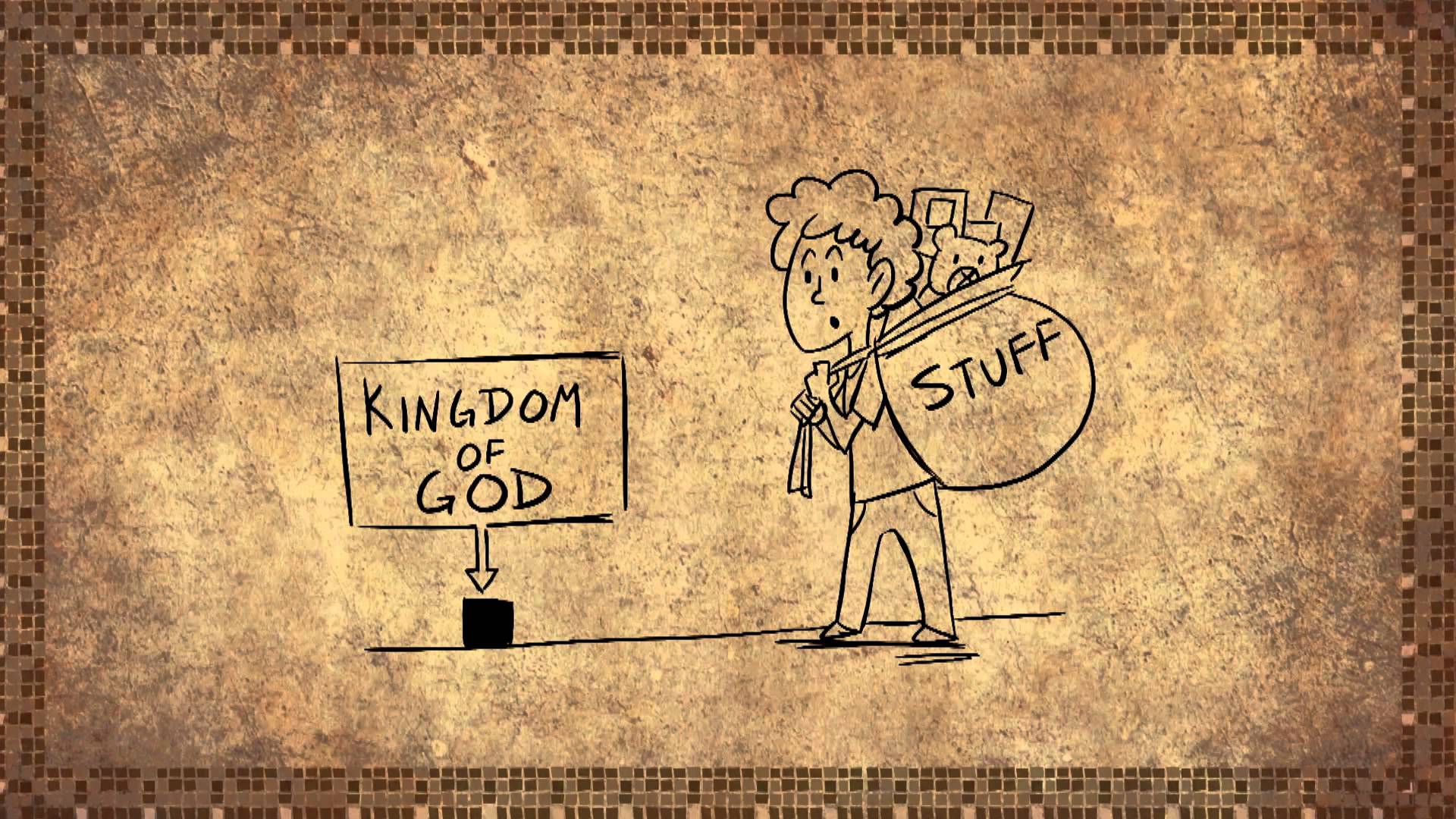
  1. Mark 10:21

21 Then, looking at him, Jesus loved him and said to him, “You lack one thing: Go, sell all you have and give to the poor, and you will have treasure in heaven. Then come, follow Me.”

rich young rulerThe Rich young ruler only lacked one thing. He could not part with his possessions and wealth. There are many reasons this could be, maybe he lacked faith for God’s provision. Maybe it was the fear of losing everything, losing the status his position and wealth brought him. He may have considered, “what might everyone else think?”


 

surrender

Whatever the reason was, he did not give everything to Jesus. One thing He lacked was total submission of every area of his life being given over to Christ.


  1. Luke 10:42

42 but one thing is necessary. Mary has made the right choice, and it will not be taken away from her.”

Mary and Martha are two sisters that were close to Jesus. During a particular gathering at their home, Martha was very busy tending to the things to insure the evening went well as a good host would. However when she complained about her sister, an interesting point was made by Jesus. The one thing that is necessary is being with Jesus. Seek First the kingdom of God and all these things will be added to you. Jesus is the physical representation of God’s Kingdom. So Seeking Jesus is the one thin that is necessary. There is no other way to the Father, except through Him. I have often heard it said, the greatest enemy to great, is good. Martha was doing good things, but Mary had chosen that which was better.mary or martha

Are you Mary or Martha? Click to find out.

  1. John 9:25

25 He answered, “Whether or not He’s a sinner, I don’t know. One thing I do know: I was blind, and now I can see!”

blind but nowWe see the story of a man that was born blind. The religious leaders are stuck on being offended by Jesus healing on the Sabbath and not on the miracle. As they question the man, he doesn’t try to convince them of anything or have a well prepared apologetics response. It is O.K. to tell people I don’t know.  He tells them what he knows. I was blind, and now I see. To all the questions He had one focus. Revelation 12 tells us that they [the saints] overcame by the blood of the Lamb and the word of their testimony. There is no greater apologetics or reply that we can give to anyone besides the truth, especially when that truth is the power of God working in our life. We should focus on what God has done in our lives.


  1. Philippians 3:13

13 Brothers, I do not consider myself to have taken hold of it. But one thing I do: Forgetting what is behind and reaching forward to what is ahead, 14 I pursue as my goal the prize promised by God’s heavenly call in Christ Jesus.

goalsetting5Paul did not let his past determine his future. He had a goal and he went after it with a singular purpose. Nothing was going to keep him from his goal.

These five verses showed 5 different people, from 5 different backgrounds, but at the heart of each story is one thing we need to grasp.

  1. Through David we see that knowing God is at the heart of prayer.
  2. Through the Rich Young Ruler we see that knowing God is at the heart of total surrender.
  3. Through Martha we see that knowing God is at the heart of service.
  4. Through the Blind man we see that knowing God is at the heart of witness.
  5. Through Paul we see knowing that God is at the heart of ambition.

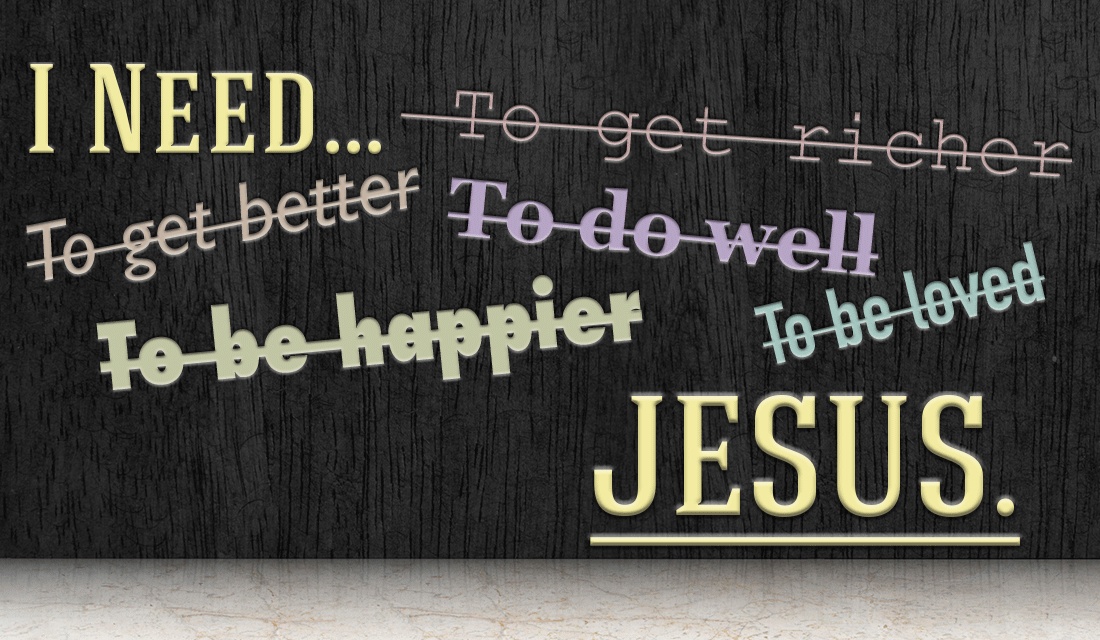
The One Thing we need is a singular focus on Jesus in every aspect of our lives. Not just on Sundays, not just around our church friends, but everyday, everywhere we may be.

need jesus


Lost Art of Listening. A book review of chapters 4, 5 ,& 6

Merriam-Webster defines listening as : to pay attention to sound; to hear something with thoughtful attention; to be alert to catch an expected sound. It is doubtful that anyone does not understand what listening means, and yet there is such a struggle to accomplish this task correctly. Michael Nichols book, The Lost Art of Listening, is sectioned out into four parts. The second part is titled, “ The Real Reasons People Don’t Listen.” Through chapters four, five, and six, Nichols takes a look at barriers to people’s ability to listen.

Chapter four, “When Is It My Turn?”, takes a look at what Nichols calls “the heart of listening” (Nichols, 2009, p.73). This chapter examines the battle everyone faces with ignoring their own needs and focusing on the needs of the speaker. This is not a passive style of listening, but truly finding empathy for the speaker. “The act of listening requires a submersion of the self and immersion in the other” (Nichols, 2009, p. 75). This is not easily done as it requires the listener to set aside their agenda, what they are hoping to accomplish, in order to fully hear what the speaker is saying. So there is a difference between having true interest and faking it. Nichols calls listening a burden. It is setting aside, for the moment, everything and giving your full, undivided, attention to the other. Holding your tongue, not thinking about what you will say next, and just listening. As Nichols puts it, “genuine listening means suspending memory, desire, and judgment-and, for a few moments at least, existing for the other person” (Nichols, 2009, p. 77).

The interesting thing is from all of that you would think a totally selfless person would be a great listener, not according to Nichols. No one is perfect, the Bible is clear in the fact that we all fall short. This very reason comes into play due to the difficulty in sustaining selfless listening all the time and care is not taken, we can fool ourselves into thinking we are better listeners. Seeking to show empathy and connection with phrases such as ,” That reminds me of the time…”; “Oh how awful…”; or “well if I were you…” As well meaning as these seem, they are sending messages that say I can top that, that you pity the speaker, or just giving unwanted advice. The truth is, no one can be selfless all the time, and constantly putting their own needs aside. That isn’t healthy either and it can lead to a break down in communication due to our own hierarchy of needs not being met.

Nichols acknowledges this, “ a good listener may need to set aside his or her own needs to tune in to the other person’s but completely selfless people don’t make good listeners. You have to get listened to yourself to free you up to be receptive “ (Nichols, 2009, p. 81).

Nichols closes out the chapter by asking the question, “Do women listen differently than men?” The author points out the difference in his assertion regarding setting self aside to the ideas promoted by Deborah Tannen. Tannen gives a broad generalization for both sexes stating that “women engage in ‘rapport-talk’ while men specialize in ‘report-talk’” (Nichols, 2009, p. 91). Nichols does not seem to agree that the clash of due to gender differences is always inevitable and emphasizes the importance of listening with out bias. He states being listened to through others bias, and anxiety just leads the listener to feelings of loneliness, not being understood, and leads to alienation. “Those listeners who are more or less always in an unresponsive state find themselves shunned, often with no idea why. They never connect because they never cross the space between themselves and other’s” (Nichols, 2009, p. 93).

I found this an interesting look at differing views. Years ago I read You Just Don’t Understand : Women and Men in Conversation by Deborah Tannen and so am familiar with her ideas on genderlects. It was refreshing to hear someone else not buy completely into the gender stereotypes. I do understand there are obvious differences between men and women, and praise God for them. However I do not buy that certain things are a certain way in regards to our communication styles and personalities just because of our gender. I fear this mentality is at the heart of what we see going on with gender confusion because people relate more to one gender than the other therefore God made a mistake and they are in the wrong type body. I find how I approach communication depends on who it is with and my own past experiences. My wife, she thinks and does certain things more along the lines of what people might think a man would do. She certainly gets along with men much better and struggles to maintain friendships with women. I find myself moving with a more Rapport style communication with my wife. Constantly wanting to connect with her and wondering if everything is okay between us and working to keep it that way. This is a holdover from my previous divorce where I was blind sided that anything was even wrong and just came home to an empty house one day. I do not want to be oblivious and so strive to not make that same mistake. The reality is, I take the pendulum too far the other way and so make all new mistakes allowing my expectations to cloud our communications  this is not the desired outcome since communication is about building relationships and connections. So listening is hearing what the other is saying, not what you want or expect to hear.

“You Hear Only What You Want To Hear,” is the title of chapter 5, and makes a nice transition following the ideas of the previous chapter. Nichols focuses on how the listener’s attitudes and biases can distort what is actually being heard. People’s expectations make us hypersensitive. “The past is alive in memory- and it runs our lives more than we know” (Nichols, 2009, p. 101).  The way our families interacted teaches things such as how to overreact, to be distant. The way our past relationships, even in childhood, have played out trains us into certain patterns that can be transferred to other relationships and cause us to respond in ways that is not even appropriate to the given situation (Nichols, 2009). This leads him to saying “our parents may be the most important unfinished business in our lives” (Nichols, 2009, p. 104).  Our relationships can revert us back to adolescence or childhood when a wife is perceived as nagging and reminds the husband of the belittling and feelings of not measuring up he endured as a child. Nichols states we have sub personalities that create battling inner voices. It is important to remember that “calm fosters unity; conflict fractures it” (Nichols, 2009, p. 105).  It is useful to remember we all have these warring voices and to realize when a person reacts in away that does not make sense to the situation, it may be that they are reacting to the warring voices that have developed due to various experiences.

This is an important idea not only for relationships, but also especially in counseling. So many times what we may first see and experience with a client, whatever the problem is they have come to discuss, it may actually be the symptom and not the true heart of the issue. It will be important to notice and investigate what might be the reason behind certain outburst or feelings regarding situations in order to find the true culprit causing the problem so it can be dealt with and hopefully a workable solution applied. This is exactly the focus of the next chapter.

News Flash: Emotionality makes us defensive. Ok, that is not really breaking news to anyone, and yet it is a pitfall that constantly interrupts true listening. This is the topic of chapter 6, “Why Do You Always Overreact?!”  These emotions, when handled improperly, cause a breakdown in communication. Nichols explains it by comparing it to a radio saying, “Emotional reactivity is like throwing on a switch and having the electricity come on, and instead of music you get static. The static is anxiety” (Nichols, 2009, p. 111). Nichols again takes a look at the interaction between past memories and how we react and deal with present circumstances. Someone overreacting really only looks out of place to us because we can’t see the memories leading to this reaction (Nichols, 2009). All of these experiences build up and create the perspective in which we receive and judge things, which may or may not be a correct evaluation. Often times we are intolerant toward others in the very areas we find ourselves lacking and don’t want to tolerate. The author points out how “we can’t listen well to other people as long as we project the mistaken idea that parts of us aren’t good enough to be loved, respected, and treated fairly” (Nichols, 2009, p.116). This can be a leading cause of conversations becoming arguments. A reaction from one causes a reaction in the other and the next thing both are arguing and not really hearing anything the other is saying. Another cause of arguments is the idea of wanting to prove you are right and the other individual wrong.  If this continues, it will lead to disaster because “when neither party to an exchange is willing to break the spiral of reactivity, both are likely to end up feeling angry and misunderstood” (Nichols, 2009, p. 119).

Responsive listening is designed to help stop arguing. It works by hearing the other person’s side of the story before giving your own. As we all know, there are two sides to every story. This takes practice and self-control. It is not automatically assuming the other is right and just admitting you are wrong, but it is giving fair time to listen and hear what the other is saying instead of just repeating your own position to prove you are right. Some one has to break the pattern, “arguments are like ping-pong games: it takes two to keep them going” (Nichols, 2009, p. 121). Responsive listening is making the conscious decision to draw out the other person’s feelings prior to giving your own response ( Nichols, 2009).   Many factors can contribute to arguments including tone of voice, not feeling listened too, and certain hot topics, etc. it all boils down to what seems obvious at n objective distance,  good listening requires us to resist the urge to overreact, but that is where the struggle truly is, in the heat of the moment. Nichols encourages listeners by stating, “ facing encounters that raise your anxiety tests your maturity, strengthens you if you have the courage to stand fast and let matters unfold” (Nichols, 2009, p. 135).

This whole section spoke to me. I saw my many mistakes I make as well as examples in my own life and reactions that backed up the reality of how our past shapes us and creates our emotional responses that can effect our ability to listen.  A prime example was earlier this week I came home to an empty house,  I had beaten my wife home. She had sent a text telling me she was picking up the kids and so there was a change in our schedule. I felt instant anxiety rise up. Referring back to an incident I mentioned earlier regarding my divorce, I felt a bit of panic and worry. Even though I have been remarried for almost six years and it has been 10 years since my divorce, the fear of rejection and abandonment tried to raise its head.  Remembering 2 Corinthians 10:5, “…taking every thought captive,” I reminded myself this was not the same person, not the same situation, and I had nothing to fear. This is important to realize we have to take control of our thoughts not just to handle our own responses, but to truly be able to listen to others and this will be an important lesson that can help our clients as well.

Check back for the rest of the review…

The Lost Art of Listening. A review of chapters 1, 2 & 3.

Everyone has two ears and one mouth. It might be common sense then that we need to listen twice as much as we speak, and yet that is rarely the case, at least not real listening. There is a difference in hearing what someone says and truly understanding and catching what the mean. This common breakdown in communication, hearing but not truly listening, is what Dr. Michael Nichols discusses and explains how to over come in his book, The Lost Art of Listening.

 Right off the bat Nichols hammers readers with a truth everyone has experienced, “Nothing hurts more than the sense that the people we care about aren’t really listening” (Nichols, 2009, p. 1). Even though most have experienced this hurt, it has not improved the vast majority of people’s true listening skills. This is sad. As Nichols says,” regardless of how much we take it for granted, the importance of listening cannot be overestimated (Nichols, 2009, p 6). The first part of the book, “The Yearning To Be Understood,” examines the desire everyone has for being understood. The three chapters take a look at the importance of listening and why it is important. It examines the interaction between the speaker and the listener and then dives into how breakdowns in communication come about.

The first chapter, “Did You Hear What I Said,” begins with examples of common complaints people express regarding communication between husbands and wives. This illustrates the frustration that comes from not feeling understood or taken seriously by those most important to us. A yearning to be understood and accepted. We are created to be social beings and therefore we desire to bridge the gap between others; to make a connection and us. Just as one desires to reach out to the other, the response can aid or hinder true communication and either allow the connection or hinder it. Therefore “the essence of  good listening is empathy” (Nichols, 2006, p. 10). Combining effort with intuition to make communication work is a necessity. It is this ability that allows bonds to form and connections to happen. This is hugely important. Nichols says, “When deeply felt but unexpressed feelings take shape in words that are voiced and come back clarified, the result is a reassuring sense of being understood and a grateful feeling of shared humanness with the one who understands” (2009, p.10). Therefore, knowing how to listen is key to having successful relationships. We all know it hurts to not be listened too and the author points out most of us think we are better listeners than we really are. We tend to take listening for granted. In spite of how basic listening seems, it as more than one purpose, “taking in information and bearing witness to another’s experience” (Nichols, 2009,p15).  This is what helps people grow up secure in them, having other people validate them and their thoughts as important, being taken seriously. Listening is not just hearing and offering reassurance that everything will be all right, it is actually making an effort to connect and understand why the speaker feels the way they do, showing sympathetic understanding (Nichols, 2009).

Listening is the most important aspect of counseling. Without it, there will be no real progress from sessions and no true connection between the counselor and the counselee. Listening will allow the counselor to catch what is the heart of the problem, not just what is being explicitly said. Sometimes, just listening and understanding can bring healing in of itself without any advice being given. Since helping people work through and deal with problems and issues in their lives, listening is the most important skill. Listening to the client, as well as listening to God’s direction regarding the advice to give.

The second chapter, “Thanks For Listening,” focuses on what connects people to each other and how listening helps to shape us. Nichols explains that, “striking a balance between expression (talking) and recognition (listening) is what allows us and the people we care about to interact as sovereign equals “ (Nichols, 2009, p.25).  Listening is a powerful force for change and in shaping peoples perspectives and relationships lies in the way it allows for shared expression, offering validation or contradiction. So the give and take is very responsible for how people perceive if they are being heard as well as becoming a part of how someone views himself or herself. The old saying “sticks and stones may break my bones, but words will never hurt me,” though often quoted as a shield against bad words unfortunately just isn’t true. Our deepest hurts and even the way in which we learn to view ourselves come from the words we hear from others. The author states that,”…self is not a given. Like having red hair or being tall, but a perspective on awareness, and an interpersonal one at that. The self is how we personify what we are, as shaped by our experience of being responded to by others. Character is formed in relationships and the vitality of the self depends on the quality of listening we receive” (Nichols, 2009, p. 27).  The author looks at how this develops throughout the life cycle of most people.

He lists the time  of this development between birth and two months as the “Here I am” This is when there begins to be an sense of oneself. An infant has needs that they cannot meet themselves, theses needs can only be met if the infant lets someone else know they need something. This is obviously displayed by the only vocalization a baby possesses, crying. This here I am, I need something is how a baby communicates all of it’s needs, even developing a particular culture with certain cries meaning certain things.  Attentive parents help develop this culture through the way in which they listen and respond to their infant. A parent cooing and speaking to a child in ways accrediting certain desires or reasoning behind a babies actions and cries. Obviously they have to be intuitive to their baby’s feelings to understand and meet their needs and desires (Nichols, 2009). Imagine how strong relationships would be if we stayed that attentive to everyone.     The author continues looking a the bonds with the “Hey Look At Me” (two to seven months) where the sense of a core self and autonomy is displayed. He explains that a confident child is developed through listening to the child. Again emphasizing how  the self is built up by the validation of those important in our lives and of course leaving the warning that the opposite would hold true (Nichols, 2009).

From a counseling perspective this is something very important to remember to utilize when dealing with my clients. Even though the connections were examined as in regards to certain ages, even adults adjust and reevaluate self-based on interactions with others. Husbands and wives find most problems arriving due to a communication problems. Being able to listen better will not only help in showing married couples how to interact with each other, but also in providing a safe place for them to tell their story and viewpoint, to discover where the problems exist. As Nichols puts it, “the feeling of not being understood is one of the most painful in human experience (Nichols, 2009, p. 41).  As a counselor, we need to help heal problems, not add to the pain by our own lack of listening and failure to understand. Therefore our own ability to listen in addition to being able to help others learn to listen better is paramount.

Why don’t people listen? A question that most people have probably asked at one time or another also serves as the title to the third chapter. This is where Nichols examines “How Communication Breaks Down” (Nichols, 2009, p. 42). The truth is, there are probably as many answers to that question as there are people who ask it. Being tired, having certain times in which you are ready to listen more than others, current events, what’s going on around you, etc. However, regardless of the distractions, we sometimes just need to put in an effort to communicate. Make an effort to listen is important as is making an effort to talk.  Relationships take investment, which includes investing in being a better listener. Assume people are worth the effort and worth the investment. “The truth is that we become more interesting when we assume interest on the part of the listeners” (Nichols, 2009, P. 44).

The author points out that sometimes the way communication has broken down is due to transference. This is where the speaker has projected certain expectations onto the listener. So many times people look at everyone around through  through lenses tinted by their own experiences and expectations that color everything they see a certain way, which may very well not be reality.  This can lead to what is heard not actually being what was said. This can be exasperated when both parties are doing this, which leaves no wonder why messages get confused and misconstrued leading to misunderstandings and feelings of not being understood. Throw in other possible breakdowns such as The listeners agenda, preconceived notions, emotions, not explicitly saying what is meant, gender differences, and etc., it is a miracle anyone ever understands anyone. This cliff hanger is where the author leaves the chapter , asking the question, “so why are we so sensitive to misunderstanding that we have trouble seeing the other person’s side of things?”  We must tune into the next chapter to discover his answer.

I found myself reading through this book and saying things to myself like,  “oh, I do that…yep, guilty…oh, so that is why she reacted that way.”  These chapters not only highlight the importance of listening for a counseling perspective,     but also I am seeing more deficiencies in my own listening ability that I hope to improve for my wife’s sake as well as other relationships in my life. I am looking forward to finishing this book and applying it to my life personally as it continually leads me to more self-reflection.

Stop back by for the review of the next three chapters…

Coconut Curry


During college there was a lady in the church who would periodically cook for the pastor’spakistani-chicken family with whom I lived. Usually she would bring over what she called Pakistani Chicken. It was a whole chicken in a pot of vegetables with a very yellow color and smelled amazing. The taste was even better.




For years I never knew what the secret spices were that made this chicken so scrumptious. I very pleased to discover it was curry and have since experimented with this wonderful, and yet often different spice.

curry-powder

I say different because depending on the color or  type of curry paste you get,Thai vs Indian the flavors vary.The ingredients in a traditional curry also different depending on the region within the same country.  For example:


green-curry-pasteGreen curry paste (kreung gaeng keo wahn) is a blend of fresh green chilies and herbs and is used mainly to make Green curry, which  is often considered to be the most popular curry in Thailand


red-curry-paste
Red curry paste
(kreung gaeng phet daeng), with a ruddy hue, is made with dried red chilies and is considered the most versatile.


yellow-curryYellow curry (gaeng leung or gaeng karee ) is a Thai version of Indian yellow curry  This richer curry tends to tone down the overall spiciness of the dish, hence its popularity on menus outside of Thailand. cumin, coriander,
turmeric, fenugreek, garlic, salt, bay leaf, lemongrass, cayenne pepper, ginger, mace and cinnamon.

All those are just Thai versions. You also have Indian curry as well as Garam Masala and the list goes on of wonderful spices with which to experiment!!yay


One of my favorite ways to use yellow curry paired with coconut. This has become a family favorite.

The things you will need are:

Coconut Curry Chicken

1-1/4 pounds boneless, skinless chicken breasts, cut into 1/4-inch strips

  • Salt and freshly ground black pepper
  • 2-1/2 teaspoons curry powder, divided
  • 2 Golden Curry cubes (mild or hot your preference)
  • 1 teaspoon turmeric
  • 3 tablespoons olive oil (may substitute red palm oil
  • 1 medium yellow onion, finely chopped
  • 2 tablespoons butter
  • 4 garlic cloves, minced
  • 1 diced stalk of celery
  • 1 tablespoon grated fresh ginger
  • 1 can (14.5 oz) coconut milk
  • 1 can diced tomatoes (I like to use Rotel with chilis to add more spice)
  • 1 tablespoon cornstarch
  • 1 cup frozen peas (no need to thaw)
  • 1/4 cup plain low fat (2%) or whole Greek yogurt (do not use nonfat)


I use both curry powder and curry cubes. The curry cubes I like are made by Golden Curry, it resembles a chocolate bar.

curry-powder-bottle golden-curry golden-curry-cubes-open-package

I like to cover  the chicken pieces in the curry powder, turmeric, salt, pepper and ginger. This gives a nice bit of flavoring to the meat so that the meat is not bland with a flavorful sauce.chicken-curry-seasoning-chicken


Heat the olive oil in a non-stick skillet over medium heat, browning the chicken. Set the chicken to the side and add butter to the pan used with the chicken and sauté the onions, garlic, and celery.

chicken-curry-chicken-almost-cooked

When the vegetables are translucent, add the coconut milk and Greek yogurt, stirring regularly.

Pour the can of diced tomatoes into the mixture.  Next mix the cornstarch with a small amount of warm water to avoid clumps and pour this into the sauce. Return chicken to the sauce and simmer until desired consistency.

You can garnish with coriander, curry leaves, or even cilantro works.

Serve over rice or noodles and dig in!

A Kerala or South Indian chicken curry, which includes tomatoes and coconut milk garnished with coreander and curry leaves and served with salad and rice