Labor Day, Labor, and a Really Good Bowl of Potato Salad

Labor Day has become one of those holidays that can sneak up on us.

For many of us, it means a three-day weekend. It means one more backyard barbecue before summer gives way to fall. It means sales at the stores, football season getting closer, and maybe trying to squeeze in one last trip to the lake.

And, of course, it means somebody is probably firing up the grill.

But Labor Day wasn’t originally about hamburgers, hot dogs, or a long weekend.

It was about people who worked hard and believed that working people deserved to be recognized, respected, and treated fairly.

Before the Barbecue

The first Labor Day celebration took place in New York City on September 5, 1882. Thousands of workers and their families participated in a parade organized by the Central Labor Union. The celebration included a parade, speeches, a picnic, and plenty of food and fellowship.

Labor Day eventually spread throughout the country. By 1894, 23 additional states had recognized the holiday, and on June 28 of that year, President Grover Cleveland signed legislation making the first Monday in September a national holiday.

The holiday grew out of a labor movement that was pushing for better working conditions, better wages, and shorter workdays. At the time, many workers endured extraordinarily long hours. The eight-hour workday became one of the major goals of the movement.

So when we say “Happy Labor Day,” we’re really saying more than, “Enjoy your day off.”

We’re recognizing the people whose work helps keep families, businesses, communities, and this country moving.

That’s worth remembering.

Then We Fire Up the Grill

Of course, Labor Day has changed over the years.

Today’s celebration is much less likely to involve a labor parade and much more likely to involve somebody standing beside a grill saying, “It’s almost ready.”

And I’m perfectly okay with that.

There’s something about a Labor Day cookout that feels almost as American as the holiday itself.

The grill gets fired up. Somebody brings the drinks. Somebody else brings dessert. There are folding chairs in the backyard. Kids are running around. Somebody is arguing about whether the burgers are done.

And there’s usually way too much food.

According to Numerator research, grilling was the top planned Labor Day celebration activity in 2023, with 61% of Labor Day celebrants saying they planned to grill. Among those planning to purchase food, hamburgers were at the top at 83%, followed by hot dogs at 67%, chicken at 60%, and steak at 41%.

So apparently, my suspicion is correct.

Labor Day is basically an excuse to put hamburgers and hot dogs on a grill.

And that’s not necessarily a bad thing.

Because sometimes food isn’t just food.

Sometimes it’s tradition, it’s family and friendship.

Sometimes it’s a reminder of people we miss.

And sometimes it’s a bowl of potato salad sitting beside the grill.

But Let’s Talk About the Potato Salad

I’m going to admit something.

I’m a little particular about potato salad.

First, I like mine cold.

Not room temperature.

Not warm.

Cold.

There is just something about cold potato salad alongside a hot burger or a couple of grilled hot dogs that works.

And I prefer a potato salad that leans more toward the flavors of a deviled egg than toward a sweet picnic salad.

That means mayonnaise.

A little mustard.

Dill pickle relish, definitely not sweet relish.

Purple onion.

Green onion.

Celery seed.

And, most importantly, eggs.

My Great Uncle Standford had a rule about potato salad that I’ve never forgotten:

You use as many eggs as you use potatoes.

Not pounds.

Potatoes.

If you have six potatoes, you use six eggs.

Now, I don’t know if that rule came from some long-standing culinary tradition or if Great Uncle Standford simply really liked eggs.

I’m willing to believe either one.

But I’ve adopted the rule.

Great Uncle Standford’s Rule

So if you’re looking for a Labor Day potato salad that tastes a little more like a deviled egg and a little less like something you bought at the grocery store, here’s my version.

Deviled-Egg Style Labor Day Potato Salad

Ingredients

  • 6 medium Yukon Gold potatoes
  • 6 large eggs
  • 1 to 1½ cups mayonnaise, depending on how creamy you like it
  • ¼ to ⅓ cup finely chopped dill pickle relish
  • 1 small purple/red onion, finely chopped
  • 2–3 green onions, thinly sliced
  • 1–2 tablespoons yellow or Dijon mustard
  • 1 tablespoon pickle juice
  • ½–1 teaspoon celery seed
  • ½ teaspoon paprika, plus a little more for the top
  • Kosher salt, to taste
  • Freshly ground black pepper, to taste

Making It

Start by boiling the potatoes until they are tender but still firm enough to hold their shape. You don’t want mashed potatoes. You want potato salad.

Drain them and allow them to cool.

While the potatoes are cooking, prepare your eggs. Since we’re following Great Uncle Standford’s rule, six potatoes means six eggs.

Once the eggs are cooled, chop them. I like some of the pieces fairly small so they blend into the dressing while leaving a few larger pieces for texture.

For the dressing, combine the mayonnaise, mustard, dill pickle relish, pickle juice, celery seed, paprika, salt, and pepper.

Add the purple onion and green onion.

Then gently fold in the potatoes and eggs.

Taste it.

This is important.

Potato salad is one of those dishes where you have to make it yours. Maybe you want a little more mustard. Maybe you want more pickle. Maybe you want another spoonful of mayonnaise. I like black pepper on mine and you can never go wrong with bacon sprinkled on top

Adjust it until it tastes right to you. Then refrigerate it.

And remember:

Cold.

I cannot emphasize this enough.

Letting the potato salad sit in the refrigerator for a few hours also gives all those flavors time to come together.

Before serving, sprinkle a little paprika over the top. And there you have it.

A bowl of potato salad worthy of a Labor Day cookout.

More Than a Day Off

But here’s the thing I don’t want us to miss.

It’s easy for Labor Day to become just another day on the calendar.

A day off. A sale. A barbecue. The unofficial end of summer.

But the history behind the holiday reminds us that there is dignity in work.

There is dignity in the person who gets up before daylight to go to work.

There is dignity in the nurse working a holiday shift.

There is dignity in the construction worker, teacher, mechanic, truck driver, farmer, restaurant worker, caregiver, technician, first responder, small-business owner, and countless others whose work often goes unnoticed.

And there is also dignity in recognizing that people need rest.

That’s something I think we sometimes forget.

We can become so focused on productivity that we start believing our value comes from what we accomplish.

But you are more than your job.

Your worth isn’t determined by your paycheck.

Your identity isn’t your job title.

And taking a day to rest doesn’t mean you’re lazy.

Sometimes rest is part of healthy living.

So This Labor Day…

Maybe fire up the grill. Make the hamburgers. Cook the hot dogs. Throw some chicken on there.

Make a BIG bowl of potato salad.

Sit outside. Talk to somebody. Laugh.

Remember the people who taught you the traditions you still carry.

And take a moment to appreciate the people who work hard every day.

Because Labor Day began as a celebration of working people, and that’s still worth celebrating.

But maybe it can also remind us of something else:

We weren’t created simply to work.

We were created to live.

To connect.

To rest.

To enjoy one another.

To make memories.

So this Labor Day, enjoy the cookout.

And if somebody asks you to bring the potato salad, remember Great Uncle Standford’s rule.

Six potatoes? Six eggs. And please…

serve it cold.

Week 3: Strong & Broken: Men’s Mental Health at the Foot of the Cross Series

Strong & Broken: The Courage to Ask for Help

We are continuing our series, Strong & Broken: Men’s Mental Health at the Foot of the Cross. In the earlier posts, we have named the enemy’s conspiracy of silence and pulled back the curtain to recognize some of the hidden signs of depression that can manifest uniquely in men. Now we turn our attention to one of the most important steps toward healing: learning to ask for help.

For many men, asking for help can feel like admitting defeat. We have been shaped by a culture that often tells men they are supposed to handle their problems on their own, keep their emotions under control, provide for their families, protect the people around them, and remain strong regardless of what is happening internally. The idea of handling everything alone can sound courageous, and there are certainly times when perseverance and personal responsibility are necessary. But when independence becomes isolation, when strength becomes an inability to admit weakness, and when pride prevents us from receiving help, what looks like strength can actually become a form of bondage.

God’s way has always been different.

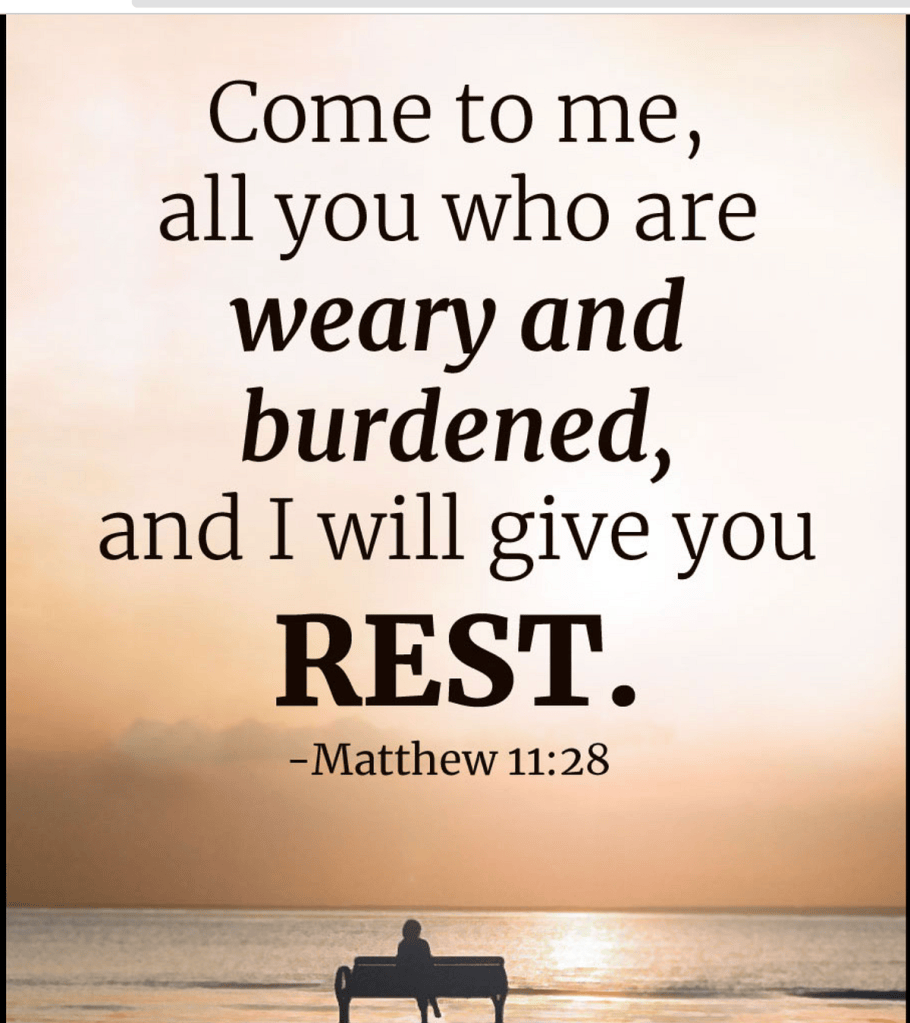
Jesus said in Matthew 11:28, “Come to me, all you that are weary and are carrying heavy burdens, and I will give you rest.” This invitation was not extended to people who had everything figured out. Jesus did not tell the weary to become stronger before approaching Him. He invited those who were already carrying burdens to come as they were.

That is an important Kingdom truth for men to understand: rest is not earned by suffering quietly in the dark. It is received by being willing to come honestly into the light. Asking for help is not the absence of faith. In many circumstances, it can be one of the clearest expressions of faith because it requires us to acknowledge that we were never meant to carry everything by ourselves.

We Were Never Meant to Carry Everything Alone

Throughout Scripture, we see men who reached the limits of their own strength. Their stories remind us that experiencing exhaustion, fear, discouragement, or even moments of despair does not automatically mean that a person has failed God.

Consider Elijah in 1 Kings 19. After one of the greatest spiritual victories of his ministry, Elijah became exhausted, afraid, and overwhelmed. He eventually reached a point where he wanted to die. What is interesting is how God responded to him. God did not begin by rebuking Elijah for his lack of faith. He allowed him to rest. Elijah was given food and water, slept, and was strengthened before God continued dealing with him about his calling and direction.

There is something significant about that order. Elijah needed spiritual direction, but he also needed physical rest and care. God addressed the whole person.

We see something similar when Jesus told His disciples in Mark 6:31, “Come away to a deserted place all by yourselves and rest a while.” The disciples had been serving, teaching, and ministering to others, and Jesus recognized that they needed to step away from the demands around them. Even those who were actively participating in the work of God needed renewal.

That should challenge the way we think about strength. If Elijah needed care, and if Jesus’ disciples needed rest, then perhaps we should stop treating our own need for help as though it were something shameful.

When a man seeks help, he is not necessarily saying, “I am finished.” He may actually be saying, “I recognize that something needs to change, and I am willing to do something about it.”

That is not weakness. That is responsibility. Remember, even the Lone Ranger had Tonto.

What Does Asking for Help Actually Look Like?

Sometimes we talk about getting help in such broad terms that we never take the next practical step. If we want men to become more comfortable seeking help, we need to make the process concrete.

Seeking help may begin with something as simple as breaking isolation and having an honest conversation with a trusted friend. It may mean talking with a pastor, mentor, or mature spiritual leader who is willing to listen without immediately trying to fix everything. For some men, the appropriate next step may be professional counseling with a licensed mental health professional who can help them understand what they are experiencing and develop healthier ways of responding.

There are also accessible tools that can help a person begin gaining some clarity about what is happening. Mental Health America, for example, provides free and confidential online mental health screenings that can be used as an initial point of reflection for concerns such as depression and anxiety. A screening is not the same thing as a professional diagnosis, but it can help someone recognize that the things they have been dismissing may deserve further attention.

For men who are hesitant about walking into a counseling office, telehealth can provide another option. Being able to speak with a counselor from the privacy of your own home can sometimes make that first step feel more manageable.

If you are looking for a counselor, I am a Licensed Professional Counselor in Texas and provide counseling through telehealth. My goal is to provide a safe and confidential environment where men can talk honestly about what they are experiencing without having to pretend that everything is fine. You can learn more about counseling and scheduling through my counseling services.

Seeking help is not an insult to your masculinity. It is an investment in your future, your relationships, and the people who depend on you. Sometimes taking care of yourself is also one of the ways you take care of the people you love.

Stop Waiting for a Crisis

One of the problems with the “handle it yourself” mentality is that it can cause men to wait until a situation becomes a crisis before they acknowledge that something is wrong. By the time they finally seek help, the problem may have already affected their marriage, family, employment, physical health, spiritual life, or relationships.

There is no requirement that you wait until everything falls apart before you ask for help.

You do not have to wait until your marriage is in crisis. You do not have to wait until depression becomes unbearable. You do not have to wait until anxiety begins controlling your decisions. You do not have to wait until alcohol, drugs, anger, pornography, work, or some other coping mechanism has taken over your life.

You can ask for help while you still have the opportunity to make changes.

In fact, one of the healthiest things a man can learn is how to recognize when his current ways of coping are no longer working. There is wisdom in recognizing our limitations. Strength does not mean pretending that we have no limits. Strength also means having the humility to recognize those limits and respond appropriately.

Take One Step

So, rather than allowing this to remain another inspirational message that sounds good but produces no action, I want to challenge you to take one tangible step.

Before the week is over, have one honest conversation with someone you trust. Schedule an appointment with a professional counselor. Complete a mental health screening and use the results as an opportunity to talk with someone. The specific step may look different for each person, but the important thing is to move beyond simply recognizing the problem and begin doing something about it.

You do not have to solve your entire life in one conversation. You do not have to understand everything you are feeling before you reach out. Sometimes the first step toward healing is simply acknowledging that the way you have been coping is no longer working and being willing to take the next right step.

That may begin with three simple words: “I need help.”

There is courage in saying them.

What Does Real Strength Look Like?

Men are often taught that strength means being the provider, the protector, the problem-solver, and the person everyone else can depend on. Those are not bad qualities. In fact, responsibility, perseverance, courage, and sacrificial love are important characteristics of healthy manhood.

But strength was never intended to mean that a man must become emotionally unreachable, spiritually isolated, or psychologically exhausted.

Real strength allows us to acknowledge when we are struggling. It gives us the humility to listen, the wisdom to seek counsel, and the courage to make changes when something in our lives is not working. It allows us to bring our struggles into the presence of God rather than hiding them from Him and from the people who could help us.

You are not less of a man because you are struggling. You are not less of a Christian because you need counseling. Needing help does not mean that you have failed your family or abandoned your faith.

It means you are human.

And God has never asked us to walk through this life alone.

A Prayer for the Man Who Needs Help

Father, thank You that You meet us in our weariness and our burdens. Help us release the shame that keeps us silent and isolated. Give us the courage to acknowledge when we are struggling and the wisdom to recognize when we need help.

Place safe people in our lives who will listen with compassion and walk alongside us. Give pastors, mentors, counselors, clinicians, friends, and family members wisdom as they support those who are hurting. Help us understand that seeking help is not weakness, but can be an act of courage, humility, responsibility, and faith.

For every man who has been carrying more than he can bear, remind him that he does not have to carry it alone. Give him the courage to take the next step toward healing and the faith to trust You along the way.

In the mighty name of Jesus Christ, amen.

You do not have to carry it alone. Sometimes strength begins when we finally have the courage to ask for help.

Series: Strong & Broken: Men’s Mental Health at the Foot of the Cross Week 2

“Signs We Miss – Depression in Men”

Last week, we opened this series by confronting the conspiracy of silence—shattering the fear and stigma that consistently force men into isolation. 

Today, we have to recognize a critical, sobering reality: sometimes the men in our lives aren’t actually fine; they are simply displaying depression differently than we expect.

The Psalmist declares in Psalm 34:17 that the righteous cry out, and the Lord hears them; He delivers them from all their troubles. 

We serve a God who intimately hears the cry of a man, whether that cry comes through literal tears, raw words, or a deep, groaning ache that you cannot fully express in human language. But the danger we face in our homes, our friendships, and our churches is that we often completely miss the cry because it doesn’t look like the textbook definition of sadness.

We must learn to identify the hidden signs of depression that manifest uniquely in masculinity. For many men, depression does not look sad—it looks mad. It shows up as uncharacteristic irritability, a short temper, simmering resentment, or suddenly snapping over minor inconveniences. 

Sometimes it masks itself as aggression or a hyper-controlling behavior, which is rarely a simple “anger issue,” but is actually internal pain desperately trying to force control over an external environment that feels chaotic.For this reason anger is often referred to as a secondary emotion.

When a man is drowning internally, he may turn to reckless risk-taking—overspending, speeding, or operating with a dangerous, numb, “I don’t care” energy, because anything, even adrenaline, feels better than the void of feeling nothing at all. We see it in the rapid escalation of numbing habits and substance use, where alcohol, weed, pornography, over-gaming, or even a socially praised workaholism are weaponized just to quiet a racing, exhausted mind. We see it in subtle withdrawal—not necessarily a dramatic retreat into a cave, but a gradual distancing, fewer deep conversations, less emotional presence, and a constant, defensive posture of being too busy.

Furthermore, depression is physical before it is ever emotional; it wrecks a man’s biology through chronic restlessness, insomnia, oversleeping, and a bone-deep fatigue that a night of sleep cannot fix, ultimately causing him to lose entire interest in the hobbies, passions, and people he used to love.

Hear the decree of the Lord today: depression is not a spiritual defect, it is not a lack of faith, and it is not a masculine weakness. It is a real, heavy condition that requires real, uncompromised support. I am speaking divine hope into this room right now because God is not only capable of comforting your heart; He is fully able to restore your mind. The exact same God who breaks spiritual fear can bring miraculous healing to the precise place where your soul feels heavy.

Your step for this week is to actively check in on a man in your circle. Send a text message that is real, simple, and direct: “Hey Mental Health Struggles are real, How are you doing, really?” Do not approach it like a clinical interview; approach it with genuine, covenant care. And if you are the man sitting under the sound of my voice today who recognizes these symptoms in your own reflection, hear me: do not wait until you hit absolute rock bottom before you have the courage to speak up.

Let us pray.

Father, we ask that You open our eyes today to see the hidden battles we have been missing in the lives of our brothers, our husbands, our fathers, and our sons. By the authority of Your Word, deliver men from the spirit of heaviness and from the prison of hiding. Bring awareness into this house without a single drop of shame, and release divine healing without delay. We enforce the promise of Your scripture, and we claim power, love, and a sound mind over every man today, in the mighty name of Jesus Christ, amen.

Strong & Broken: Men’s Mental Health at the Foot of the Cross :Breaking the Silence

“Breaking the Silence – Why Men Don’t Talk”

Men, who are reading this I need your undivided attention. Today, we are launching a critical Impartation series for the entire month of June titled “Strong & Broken: Men’s Mental Health at the Foot of the Cross.” We are doing this because at the Cross, God doesn’t just deal with what is wrong in your life; He deals with what is hurting. For a vast majority of men in this room and watching online, deep emotional and psychological pain has been hiding under the heavy, exhausting mask of simply being fine.

The Apostle Paul wrote to a young leader in 

2 Timothy 1:7, For that God has not given us a spirit of fear, but of power and of love and of a sound mind.(NKJV)

 I want you to hear that with  today: fear is not your driver. Shame is not your identity. And a sound mind is not a religious fantasy—it is a tangible reality that God builds within you the moment you decide to come to Him with absolute honesty.

To get to that sound mind, we have to confront the cultural and spiritual conspiracy that keeps so many men locked in absolute silence. We live in a world where stigma actively prevents men from reaching out for help. The tragic, clinical reality is that men are significantly more likely to die by suicide than women, and one of the primary drivers behind that statistic is that men do not seek help early. We wait, we carry, we internalize, and we hide until the weight crushes us.

This happens because from boyhood, cultural expectations train us in the art of silence. We are told to be strong, to never cry, and to just man up. We were never meant to do life alone. Remember, even the Lone Ranger had Tonto. We must understand that when you do not give your emotions a safe place to land, they do not miraculously disappear. Instead, they metastasize, which means to spread from one part of the body to another.  Therefore they transform and erupt through chronic anger, irritability, emotional shutdown, dangerous risk-taking, or substance use. Silence eventually breeds isolation, and isolation never heals a man; it only delays his deliverance. Isolation whispers  lies from the enemy into your mind, telling you that no one understands you, that you are entirely alone, and that you are defective. But that is a lie from the pit of hell. God understands your frame, and there are people equipped to help you carry the weight.

If you look closely at Scripture, God consistently met men who were profoundly hurting, not men who looked put-together. David cried out in agonizing despair throughout the Psalms. Elijah, a prophet of fire who called down miracles, sat under a  tree in 1 Kings 19 and begged for his life to end. And Jesus—the Savior of the world, the perfect template of masculinity—spoke out of deep, sorrowful anguish in the Garden of Gethsemane, telling his inner circle that His soul was overwhelmed to the point of death. Bringing your brokenness to light is not about romanticizing pain or wallowing in defeat. It is about recognizing a profound spiritual truth: honesty can be an act of profound faith, and crying out to God can be a pure form of worship.

Therefore, your direct charge for this week and moving forward in your life is simple, real, and urgent: you must break the silence and talk to someone. Reach out to a brother, a pastor, a family member, or a professional—someone who represents a safe place. If you do not know how to initiate the conversation, start with these exact words: “Hey… I’ve been struggling. Can I talk to you?” And to the women and families supporting the men in your lives, your charge is to encourage them with a safe, non-judgmental tone. Do not immediately try to fix him or minimize his reality. Just create an atmosphere where truth can be spoken without penalty.

Let us pray.

Father, we thank You today that You are the God who sees us in our hidden places and the God who heals what is broken. Right now, by the authority of the broken body and spilled blood of Jesus, we break the assignment of shame over the men of this house. We break the spirit of fear, and we shatter the stronghold of silence. Holy Spirit, impart supernatural courage into every man today to be radically honest, and grant them the divine wisdom to find the help they need. In the mighty, unmatchable name of Jesus Christ, Amen.

Watch. Pray. Build.

When the Wall Still Needs to Be Built

There is a simple instruction Jesus gave His disciples in one of the most difficult moments of His life:

“Watch and pray, so that you will not come into temptation. The spirit indeed is willing, but the flesh is weak.”

Matthew 26:41

Those words were spoken in the Garden of Gethsemane. Jesus knew what was coming. The disciples did not fully understand it yet.

Yet His instruction to them was remarkably simple:

Watch. Pray.

As I have reflected on those words alongside the story of Nehemiah rebuilding the walls of Jerusalem, I believe there is another word we need to add:

Build. Watch. Pray. Build.

I believe God is calling us in this season to become people who know how to build without becoming blind, and how to watch without becoming distracted from what God has called us to build.

Watch

When Jesus told His disciples to watch, He was not merely telling them to stay awake.

The idea carries the meaning of remaining alert, being attentive, being vigilant, and paying attention to what is happening around us.

There are seasons when we can become spiritually sleepy.

We can still come to church, still sing., still pray, still serve.

But somewhere along the way, we stop paying attention.

We stop noticing what is happening in our hearts, what is happening in our families.

We stop recognizing the small compromises.

We stop paying attention to the things that are slowly draining our spiritual strength.

And Jesus says:

Watch.

Pay attention. Stay awake. Discern what is happening.

Sometimes the enemy does not need to destroy the whole wall.

He only needs an opening.

That is one reason the story of Nehemiah is so powerful.

The people of God were rebuilding the walls of Jerusalem. They had an assignment, but they also had opposition.

Nehemiah did not tell them to stop building because opposition had appeared.

He told them to keep building while also remaining watchful.

Nehemiah 4 describes a people working on the wall while others stood guard. Those carrying materials worked with one hand while holding a weapon in the other.

Think about that picture. One hand was building. The other was prepared to defend.

They were not going to allow opposition to stop the assignment God had given them.

And there is something important in that picture for us.

There are people who are rebuilding right now.

You may be rebuilding your faith. Your family. Your confidence. Your prayer life. Your finances. Your calling.

Your sense of purpose. You may be rebuilding something God placed in your hands.

And because you have encountered opposition, you may have started wondering whether you should stop.

But opposition does not necessarily mean the assignment is wrong.

Sometimes opposition comes because what you are building matters.

So keep building. But watch.

Do not become so focused on building that you stop paying attention.

Do not become so busy serving that you stop guarding your heart.

Do not become so committed to the assignment that you neglect your relationship with God.

Watch.

Pray

But watching by itself is not enough.

If all we do is watch, we can become fearful.

We can become suspicious.

We can become consumed with everything that could go wrong.

That is why Jesus did not simply say, “Watch.”

He said:

Watch and pray.

Prayer changes our posture.

Prayer says, “God, I see what is happening, but I know You are greater than what I see.”

Prayer keeps our watchfulness connected to God.

This is important because the goal is not to become people who are constantly looking for the devil.

The goal is to become people who are constantly looking toward God.

Watch and pray.

Stay alert, but stay connected.

Pay attention, but do not panic.

Discern, but do not become consumed by fear.

Prayer reminds us that we are not responsible for controlling everything we see.

We are responsible for remaining faithful to the One who sees everything.

When you do not know what to do, pray.

When you are tired, pray.

When you are under pressure, pray.

When you are rebuilding, pray.

When you see a gap, pray.

When opposition appears, pray.

And sometimes, after you pray, God will remind you of something very simple:

Keep building.

Build

Nehemiah’s people did not spend all their time watching the enemy.

They kept building the wall.

They understood that their responsibility was not simply to defend what already existed.

They were also responsible for building what had not yet been completed.

That distinction matters.

Sometimes we can become so focused on what is attacking us that we forget what we are supposed to be building.

We spend so much time talking about the opposition that we lose sight of the assignment.

We analyze every attack.

We discuss every problem.

We watch everything happening around us.

And while we are watching, the wall remains unfinished.

Perhaps this is why we need all three words:

Watch. Pray. Build.

Watch for the gaps.

Pray for strength.

And keep building.

Do not let what is fighting you distract you from what God has called you to build.

Do not let yesterday’s battle consume today’s assignment.

Do not spend so much time watching what the enemy is doing that you forget what God is doing.

The wall still needs to be built.

Stand in the Breach

There is another powerful picture in Ezekiel.

God says:

“I have searched among them for a man to build up the wall and to stand in the breach before me on behalf of the land…”

Ezekiel 22:30

God was looking for someone willing to stand in the gap.

That image should challenge us.

A gap represents vulnerability.

A breach represents a place where something has been broken, weakened, or left unprotected.

And God was looking for someone willing to step into that place.

Not someone who would simply point out the gap.

Someone who would stand in it.

There are plenty of people willing to identify what is wrong.

But God is still looking for people who will say:

“God, send me.”

Who will pray for their families?

Who will stand in the gap for their children?

Who will pray for their churches?

Who will intercede for their communities?

Who will see a broken place and instead of simply criticizing it, ask God what they can do about it?

Who will see the gap and step into it?

That is what watchfulness, prayer, and building look like when they become more than words.

God Is Calling Us to Wake Up

I believe God wants to awaken His people.

Not simply to make us more aware of darkness, but to make us more aware of Him.

He wants to awaken people who can discern.

People who can pray.

People who can stand.

People who can build.

People who can recognize the breach without becoming consumed by it.

People who can acknowledge opposition without surrendering their assignment.

People who can remain vigilant without living in fear.

That is the balance.

Watch without fear.

Pray without ceasing.

Build without quitting.

So, What Are You Building?

Maybe that is the question we should ask ourselves.

What has God placed in your hands?

What are you building right now?

Perhaps it is your marriage.

Perhaps it is your family.

Perhaps it is your relationship with God.

Perhaps it is your character.

Perhaps it is a ministry.

Perhaps it is a business.

Perhaps it is your calling.

Perhaps you are rebuilding something that was damaged.

Perhaps you are building something that has never existed before.

Whatever it is, do not allow opposition to convince you that you should abandon the assignment.

Watch.

Pay attention.

Guard your heart.

Discern the gaps.

Pray.

Stay connected to God.

Seek His wisdom.

And then build.

Keep building.

Because the presence of opposition does not automatically cancel the assignment.

Sometimes it confirms that what you are building matters.

Watch. Pray. Build.

So I want to leave you with these three words:

Watch what God is doing.

Watch what is happening in your heart.

Watch for the places where there are openings.

Pray when you do not know what to do.

Pray when you are tired.

Pray when you are under pressure.

Pray when you are rebuilding.

Pray when you are standing in the gap.

And keep building.

The wall still needs to be built.

The family still needs to be strengthened.

The calling still needs to be pursued.

The purpose still needs to be fulfilled.

So, Father, awaken us.

Wake us up spiritually.

Give us eyes to see what we need to see.

Give us discernment without fear.

Give us vigilance without anxiety.

Teach us to pray.

Teach us to stand in the gap.

And give us the strength to keep building even when there is opposition.

Make us a people who watch.

Make us a people who pray.

And make us a people who build.

In Jesus’ name.

Amen.

Watch. Pray. Build.

The Prodigal Father


Text: Luke 15:1-3, 11b-32

If you open up your Bibles to Luke chapter 15, you are going to see a heading right above verse 11. In almost every translation sitting in your laps or on your phones, that heading reads: “The Parable of the Prodigal Son.”


We know this story.

We’ve painted it on church walls, we’ve sung songs about it, we’ve heard it preached since we were children in Sunday School. It is so deeply embedded in our religious subconscious that we think we know exactly what it’s about. We look at that heading and we say, “Ah, yes. The story of the rebellious kid who blew it, and the good father who let him back in.”


But I want to start this morning with a bit of a shock to our system: Those headings in your Bible are lying to you.


Well, let me rephrase that. They aren’t lying, but they are editorial additions.

They were written by publishers and translators centuries after Luke penned these words under the inspiration of the Holy Spirit. Jesus never gave this story a title. And by focusing entirely on the word “prodigal” as an accusation against a rebellious teenager, we have missed the entire point of the explosive bomb Jesus dropped into the middle of first-century religious culture.


Let’s talk about that word: Prodigal.


If I asked you to define “prodigal” right now, most of you would use words like sinful, rebellious, wayward, dirty, or wicked. But that’s actually not what the word means.

If you open up the Merriam-Webster Dictionary, the primary definition of “prodigal” is this: recklessly wasteful; extravagant; spending resources to a degree that is completely unmeasured and unrestrained.
Now, it’s true that the younger son was deeply prodigal with his sin. He was recklessly wasteful with his inheritance, his character, and his family heritage.


I want to invite you to look past the subtitle in your Bible and look at the actual mechanics of the story. Because if “prodigal” means recklessly wasteful, extravagant, and lavishly unrestrained, then I submit to you that the most prodigal character in this entire story is not the son.


The son wastes an inheritance; the Father wastes mercy.
The son spends money; the Father spends grace.
The son is extravagant in his rebellion; the Father is reckless in His love.


Welcome to the story of The Prodigal Father.


To understand how shocking this story truly is, we have to understand why Jesus told it. Look at how Luke chapter 15 begins. This is the setup for the trap Jesus is about to spring:


“Now all the tax collectors and sinners were coming near to listen to him. And the Pharisees and the scribes were grumbling and saying, ‘This fellow welcomes sinners and eats with them.’” — Luke 15:1-2


Picture the scene. You have two distinct groups of people standing around Jesus.


On one side, you have the “sinners.” These are the tax collectors—not the white-collar accountants of our day, but state-sanctioned thieves who extorted their own people for Roman profit. You have the prostitutes, the ritualistically unclean, the people who haven’t been inside a synagogue in decades. They know they are dirty. They know they don’t deserve God. Yet, they are drawn to Jesus. They are crowding around Him.


On the other side, you have the Pharisees and scribes. These are the religious elites. They have memorized the Torah, which is the 1st 5 books of the O.T. They don’t miss the tithe. They have built an entire lifestyle around flawless performance and rigid personal control. And they are absolutely furious. They are muttering under their breath: “Why does He spend time with people like that? Why does He eat with them?”

See, In the ancient East, eating a meal with someone wasn’t just a casual lunch; it was an act of covenantal acceptance. They were saying, “Jesus, by validating them, You are insulting us.”


So Jesus decides to tell a story. Actually, He tells three stories in a row: a lost sheep, a lost coin, and finally, a story about a father with two sons.


Notice that. We always call it the story of the single prodigal son, but verse 11 begins: “There was a man who had two sons.”


Jesus is setting a trap. He knows the tax collectors and sinners are going to identify perfectly with the younger brother. And He knows the Pharisees are going to look at the older brother and say, “That’s right, that’s a good, hardworking boy, his mamma must sure be proud.”
And right when both groups are fully locked into the story, Jesus turns the mirror on all of them—and on us.


Let’s look at the younger brother first. Verse 12 tells us he comes to his father and says: “Father, give me the share of the estate that belongs to me.”


In the cultural context of the ancient Middle East, this request is seismic. It is an unthinkable insult. In that culture, an inheritance was only distributed after the patriarch died. By asking for his share now, the younger son is fundamentally saying to his father: “Dad, I wish you were dead. I don’t want you. I just want what you can give me.”


How many of us do the exact same thing with God?


We want the blessings, but we don’t want the Father. We want peace, we want purpose, we want financial security,maybe a good looking ministry, we want a ticket to heaven when we die—but we don’t want intimacy. We don’t want The LORD in absolute control of everything in our life. We want the inheritance without total surrender.


And the father in the story does something terrifying: instead of looking at him and saying what you talking about Willis.? He lets him go.

A traditional Middle Eastern patriarch would have struck the boy across the face and driven him out of the house empty-handed. He lets him go. He divides the property; the eldest son always got double portion inheritance and gives the boy his freedom. Because love cannot be forced. God will let you walk away if that’s what your heart insists on.


Psalm 37:4. delight yourself in the lord and He will give you the desire s of your heart. Be careful what you wish for.


The Bible says the boy takes everything, goes to a “far country,” and dissipates his life on loose, decadent living. The money flows. The parties are loud. The friends are plenty. The world applauds.
But here is the unchanging law of living like that: Eventually, the money runs out.

Verse 14 says a severe famine hit that country, and he began to be in need. He ends up taking a job feeding pigs. For a first-century Jewish audience listening to Jesus, this is the absolute rock bottom. The pig was the ultimate symbol of defilement. He is sitting in a pigpen, starving, filthy, covered in mud and animal waste, looking at the pods the pigs are eating, wishing he could fill his stomach with them

The people who loved his money are gone. The applause has stopped. The illusion of freedom has turned into absolute slavery. Sin always over-promises and under-delivers. It advertises a penthouse; it leaves you in a pigpen. then comes verse 17, one of the most beautiful phrases in all of Scripture: “When he came to himself…”

Sin is a form of spiritual insanity. It convinces us that independence from God is freedom, and that rebellion is wisdom. But eventually,hopefully, reality hits. The boy looks at his life and realizes, “My father’s hired servants have more than enough bread, and here I am dying of hunger!”

So he prepares a speech. He builds a self-defense mechanism made of shame and legalism. He says, “I will get up and go to my father, and I will say to him, ‘Father, I have sinned against heaven and in your sight; I am no longer worthy to be called your son; make me as one of your hired servants.’”


Notice his expectation. He knows he has burned his bridges. He knows he has embarrassed the family name. He knows what he deserves. He expects strict judgment, a probationary period, legalistic conditions, and total exclusion from the family circle. He is banking on becoming a servant because he knows sonship is completely off the table.


And many of you are sitting today with that exact same speech running through your head. You think God tolerates you, but doesn’t love you. You think you’ve crossed a line, exhausted His patience, or used up your expiration date on grace. You have been approaching God like a harsh employer, waiting to work off your debt.


But watch the narrative take a breathtaking, scandalous turn. Verse 20:


“So he got up and went to his father. But while he was still a long way off, his father saw him and was filled with compassion. He ran, threw his arms around his neck, and kissed him.” — Luke 15:20


How did the father see him while he was still a long way off?


Because the father had been looking. Every single day. Every sunrise, every sunset, the father would walk out to the edge of his property, shield his eyes, and look down that long, dusty road, wondering, “Is today the day my boy comes home?” The son may have forgotten the father for a while, but the father had never, for one single moment, forgotten the son.


And then, the father does something that would have caused the Pharisees listening to Jesus to gasp out loud: The father runs.


In the ancient Middle East, a dignified patriarch never ran. It was considered deeply humiliating. To run, a man would have to lift up his long robes, exposing his ankles and legs, completely compromising his patriarchal dignity. Middle Eastern fathers walked slowly and majestically. Children ran. Servants ran. Desperate people ran. Wealthy landowners did not run. It was considered deeply shameful.


Why did the father run?


Certainly out of love, yes. But historical context tells us something deeper. In that culture, if a Jewish boy lost his family’s inheritance among Gentiles and tried to return home, the village would perform a ceremony called the Kezazah. The cutting off ceremony. The villagers would gather, smash a clay pot at the boy’s feet, and yell, “You are cut off from your people!” He would be publicly shamed and ostracized, excommunicated forever.


The father sees his boy walking over the hill. He looks at his son’s torn clothes, his bare feet, his posture of defeat. The father realizes that if the village sees him first, they will destroy him. That is what the world does, it kicks you when you are down. So the father lifts up his robes, shatters his own dignity, and sprints down the dirt road. He reaches the boy before the village can get to him. He intercepts the shame. He absorbs the disgrace.


The son tries to start his rehearsed speech: “Father, I have sinned… I am no longer worthy…”
But before he can even finish the sentence, before he can say “make me a hired servant,” grace cuts him off. The Father interrupts him with an outpouring of extravagant restoration.


He yells to the servants: “Quick! Bring out the best robe and put it on him!” The robe represents honor and righteousness; it’s the father’s own garment. “Put a ring on his finger!” The ring was the family signet ring, representing authority and full reinstatement into the family business. “Put sandals on his feet!” Servants went barefoot; only sons wore shoes. “And bring the fattened calf and slaughter it, and let’s celebrate with a feast!”


This is not calculated, measured forgiveness. This is reckless, wasteful, extravagant grace. The son expected probation; he received a party. He expected rejection; he received a ring. He expected to be a servant; he was restored as a son.


Grace always arrives before worthiness.


If the story ended there, it would be a beautiful, comforting message. But Jesus doesn’t stop. He turns his gaze directly to the Pharisees, because now it’s time to talk about the second lost son.


The older brother is out in the field. He walks back toward the house, and he hears music and dancing. He calls one of the servants and asks what’s going on.

The servant says, “Your brother has come, and your father has slaughtered the fattened calf because he has received him back safe and sound.”


Look at verse 28: “But he became angry and was not willing to go in.”


This is also a massive cultural insult in their day.
Think about it, because the younger brother already spent his entire 1/3 portion, everything remaining belongs to the elder brother. The older brother is furious because the father is literally throwing a party using assets (the calf, the food, the resources) that now legally belong to him


The younger brother was lost in rebellion, but the older brother was lost in religion. One left home physically; one left home emotionally. One broke all the rules; one worshipped the rules. One was far away geographically; one was far away spiritually while standing right in the backyard.

The father leaves the party—notice the grace of the father here again, he leaves the celebration to pursue the older son just like he ran to meet the younger son—and he begins to plead with him.


Listen to the older brother’s bitter response in verse 29:
“Look! For so many years I have been serving you and I have never neglected a command of yours; and yet you have never given me a young goat, so that I might celebrate with my friends; but when this son of yours came, who has devoured your wealth with prostitutes, you slaughtered the fattened calf for him.”


Look at his language. It high lughts his frustration and lack of respect. He doesn’t say “Father.” He says, “Look!” He doesn’t say “my brother.” He says, “this son of yours.”
His entire identity is rooted in his performance. “I have served you. I have never disobeyed. Look at my track record! Look at my resume!” It’s almost like He views his father’s house as a servant quarters rather than a home. He doesn’t seem to want the father either; he just wanted a goat to party with his friends. He wanted recognition based on achievement.


And because his heart was filled with self-righteousness, he was absolutely offended by grace. See Grace always offends people who think they have earned their way to the table. The older brother is furious because the father is giving away for free what he had spent his entire life trying to earn. I am sure no one here has ever gotten frustrated looking at what The father was blessing someone else with in comparison to what they have…Jesus is only talking to the Pharisees here right?


Let me tell you This is the great danger for those of us who have been in church a long time. You can have proximity without intimacy. You can do the duty without ever having the delight. You can keep all the rules and still completely miss the Father’s heart.


The father looks at this bitter, religious boy, and speaks with unbelievable tenderness: “Son, you are always with me, and all that is mine is yours.”


He reminds him of his position. He doesn’t answer his resentment with rejection. He invites him into the joy.


Church, this is not just an ancient Middle Eastern story told to shock first-century leaders. This is an active, living reality happening right now in our world.


I want to share a story:
There once was a young man , who like many young men, had found himself discontent with how his parents had run things so as soon as he could, he moved out. Don’t get me wrong, his parents raised him in church, he had grown up as involved in pretty much everything that was ever going on at the church. However, the flip side was that in spite of all this the home life was still very dysfunctional in many ways and he was ready for a fresh start where he could just follow all his own rules.

So one week before his 18th birthday, this young man got in his loaded up car and set out from Biloxi, Ms. Heading to Texas. Things were planned out and he was going to be his own man. Earlier in the year he had gone through MEPS and had signed a delayed entry for the Marine Corps. All he had to do was bide his time until Feb. His plan was to attend a Junior College for one semester, because this allowed him to go into the Service as a Lance Corporal

. Yep Life was planned out and no one was going to tell Him what to do anymore. He even had his own garage apartment waiting for him because this nice pastor and his family invited him to live with them in Texas. Well for a while things were going pretty good, he was his own man. Sure the pastor kept giving him chores to do, but since he was living in the garage apartment rent free it was the least he could do. In reality it was a lot like bartering.


Well one day this young man got caught up with his friends and pretty much goofed off all day instead of taking care of the list of things he was supposed to do at the church. When he got home that evening the pastor asked him to sit with him out on the front porch.

It was a nice early evening, the pastor sat in the porch swing and the young man sat in a rocking chair across from the porch swing. As you would expect the pastor asked him why he had not taken care of the things at the church. So the young man eloquently explained to him how things had come up that in all reality were out of his control that drew him away from the church and he just never got back to it in time.

Well the pastor sat there nodding and seemed to understand perfectly, but then he got a quizzical look on his face and said, You are lying to me” Of course the young man denied it, but then the pastor said, “no the Holy Spirit is telling me you are lying to me.” The young man thought, “really now you want to start talking to people again God, and about this, seriously?”

You could see the color changing in the pastors face like a thermometer rising. HE was mad. He looks at the young man and says, “Stand Up” Well the young man knew what was coming next, he had been on the receiving end of anger many times before and he was done with it.

So he stood up, arms at his side and with fists clinched, stared right into the pastor’s eye fully thinking he knew what was coming next.

So there I was, yes if you have not already guessed, the young man was me, there I was standing with fists clenched staring at the pastor. I remember thinking this is it, if this pastor lays a hand on me I am knocking him off this porch and I am gone. I am tired of giving myself time after time to just have it blow up in my face.What happened next blew me away.

He took a step toward me and pulled me into one of the strongest, warmest hugs I have ever experienced. I stood there dumbfounded as he explained to me how he loved me and thought of me as his son and could not throw me out any more than he could one of his daughters and for the very same reasons was why he had high expectations and standards for me. This was something new and unexpected.


I experienced something profound, I experienced the overwhelming, never-ending, reckless love of a prodigal God. My external circumstances didn’t fix themselves overnight. I still had bills to pay; I still had broken relationships to navigate. But the definitive turning point of my life had begun and a change happened on that day that set forth a new path for my life, even in regards to the military. I ended up spending the next two years living with this family, learning daily what it means to receive the unconditional love of the Prodigal Father.


The Bible guarantees this truth for every single one of us. In Acts chapter 10, verse 34, Peter stands up and declares: “Now I really understand that God doesn’t show favoritism.”


What the Father did for both sons in the parable, what he has done and still does for me, and what He has done for millions of broken travelers throughout human history, I’m telling you He is standing ready to do for you here today.


Jesus ends this parable with one of the most brilliant literary moves in history: He leaves it on a cliffhanger.
We know the younger son put on the robe and went inside. But the story ends with the father standing outside in the yard, pleading with the older brother to drop his pride and come into the party. We never find out if the older brother swallowed his resentment and joined the celebration, or if he stayed outside in the cold, holding onto his self-righteousness.


Do you know why Jesus left the story open-ended?
My thoughts are because He was looking right at the Pharisees—just like He is looking right at you and me today—and He is saying, “How do you want the story to end?”
This parable forces us to look squarely into the mirror this morning and ask a definitive question: Which son are you?


Some of you reading are like the younger son. You are living in a far away country. Maybe physically, maybe emotionally, maybe secretly while sitting in these chairs. You have wasted years, you have burned bridges, you carry deep, heavy shame, and you are terrified of rejection. You’ve been trying to clean yourself up before you approach God.


Hear me clearly: Stop trying to fix yourself. You do not need to be clean to come to the Father; the Father embraces you in your filth and cleanses you with His love. Turn around. He is already running down the road toward you.


Others of you are more like the older brother. You don’t miss a Sunday. You know the scriptures. You work hard. But your heart has grown cold and hard. You are bitter, you are judgmental, you are comparing your performance to everyone else’s flaws, you are living in religion instead of relationship. You need to repent just as much as the rebellious wanderer needs to repent.


Whether your sin is obvious like the younger brother or hidden like the older brother, the invitation from the Prodigal Father is exactly the same today: Come home.


The road is open. The cross of Jesus Christ was God running down the road to absorb your shame. The empty tomb is the confirmation that the feast is ready. The robe of righteousness is waiting, the ring of authority is available, and heaven is waiting to throw a party over you.
How do you want your story to end?

Zacchaeus

I got to spend two entire summers living in Queretaro, Mexico. The first summer I stayed and worked at an orphanage, The second summer I lived and worked at the Bible house. This was when  I met  Mariano. He was a Guatemalan and lived in the bible house with me. Mariano was extremely outgoing, an ex stripper, and very funny.  Most of the time this was due to him constantly doing the unexpected. There are two main things I remember about him. The first was one of the nights it was my time to cook. I made just simple ham and egg omelets, which by the way purchasing eggs by the kilo is an interesting thing.

If you didn’t know, 1 kilo of eggs is about 20 eggs.  Anyway I digress, Mariano fell in love with omelets and this became his request every time It was my time to cook. The other thing I remember, was when we were both in  the States he had a wonderful panache  for inviting himself over for dinner. He would walk up to you at the end of church and say “ you need to take me to dinner “ or “ I’m coming to your house for dinner today.” 

He wouldn’t just do it to me, his old room mate, but would do it to my parents, the pastors, he never ever thought someone wouldn’t want him to come over.

The passage I am looking at today made me remember Mariano. Jesus invites himself to Zacchaeus’ house for dinner. 

Luke 19:1-10 

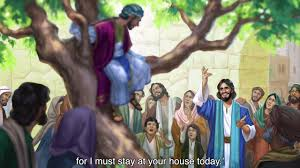
19 He entered Jericho and was passing through it. 2 A man was there named Zacchaeus; he was a chief tax collector and was rich. 3 He was trying to see who Jesus was, but on account of the crowd he could not, because he was short in stature. 4 So he ran ahead and climbed a sycamore tree to see him, because he was going to pass that way. 5 When Jesus came to the place, he looked up and said to him, “Zacchaeus, hurry and come down, for I must stay at your house today.” 6 So he hurried down and was happy to welcome him. 7 All who saw it began to grumble and said, “He has gone to be the guest of one who is a sinner.” 8 Zacchaeus stood there and said to the Lord, “Look, half of my possessions, Lord, I will give to the poor, and if I have defrauded anyone of anything, I will pay back four times as much.” 9 Then Jesus said to him, “Today salvation has come to this house, because he, too, is a son of Abraham. 10 For the Son of Man came to seek out and to save the lost.”

I can imagine the thoughts going through Zacchaeus mind Much like when Mariano would invite himself over.. what am I going to make, do I have enough, have I even  made anything.

Is the house clean? Whether Zacchaeus had any of these thoughts  we don’t know, but we do see his excitement.

Now I know you have to all be familiar with this story, even if from nothing more than the song. Most of us who grew up in church know this little song, and any mention of Zacchaeus starts playing in our brains. Zacchaeus was a wee little man and a  wee little man was he…

The story of Zacchaeus climbing a tree is fun to share with young children; especially because they are also ‘wee little’ people. Yet there is so much to learn about him beyond the fact that he was a short guy who hung out in trees.

However, I want to take a different approach to this story. Zacchaeus was a tax collector .They were not well liked. I will go more into tax collectors in another writing, but suffice it to say they were hated as many were not fair in their dealings.  However, I want to focus on this particular verse: 

“Zacchaeus stood there and said to the Lord, “Look, half of my possessions, Lord, I will give to the poor, and if I have defrauded anyone of anything, I will pay back four times as much.”

Is Zacchaeus’ declaration of his financial dealings in verse 8 a promise of future action in response to Jesus’ visit, or is it a report on his present behavior? Grammatically speaking Are the present tense verbs in verse 8 to be understood, in fact, as present tense, thereby describing the current and ongoing behavior of Zacchaeus (as in the RSV and KJV )? Or shall we give them a future cast, describing Zacchaeus’ penitent pledge of future behavior (as in the NRSV and NIV)?Scholars, as well as translators, are divided, because it is correct to translate it as I will give or I give.”

1 If the former, then this is a classic repentance story; if the latter, it is something else entirely. Most of us have heard the general repentance story that preaches so easily from this story…

It has a nice flow of action — Jesus honors Zacchaeus, which prompts his changed behavior, which Jesus then acknowledges — it also plays well with the theology most of us hold: repentance precedes forgiveness. It is therefore easy to conclude — and preach — that in the presence of Jesus all manner of unimagined things can happen, even a wealthy tax collector might give away half his wealth. Or we might deduce — and proclaim — that our repentance must include matters of the wallet as well as the heart, that makes a great sermon on giving. Yet let’s take a look at the entire context of Luke, he has already shown that Jesus has an affect on the sinful tax collector like ole Levi, who later goes by Matthew.

 So a synopsis of what we read here:

Jesus, near the end of his journey to Jerusalem, is passing through the border town of Jericho. In that town is a man named Zacchaeus who is not just a tax collector but a chief tax collector which means, as Luke’s Gospel explains, that he is rich. He wants to see Jesus, but because he is short he cannot see over the crowds, so he climbs a tree. When Jesus arrives at the place where Zacchaeus has perched himself, he calls him down and invites himself to Zacchaeus’ home, which simultaneously brings Zacchaeus joy and scandalizes the crowd, because they know that Zacchaeus is a sinner.

This story is only told by Luke, and there are  several details that stand out, particularly in relation to passages that have come just before this one. First, sight is important.  Earlier, in Luke’s story of the lepers, it is the tenth leper’s recognition that he has been healed that causes him to alter his course, when he saw that he was healed (17:15). In the passage immediately before what we have read today a blind man receives sight and, in response, follows Jesus and glorifies God. Now, Zacchaeus desires to see Jesus, but even as he is trying to catch a glimpse of this prophet Jesus looks up, calls him down, and honors him by coming to dinner and staying at his home.

A second significant detail is wealth. Luke, more than any other gospel writer, is consistently concerned about matters of wealth and treatment of the poor. In the previous chapter a rich man, when asked to give away all he had, departs Jesus in sadness. When Jesus declares that it is nearly impossible for the rich to enter the kingdom of God, the disciples — who like most of their time believe wealth is a sign of God’s favor — are shocked. In contrast, in this story another rich man receives Jesus with joy and gives (or promises to give) half of his wealth to the poor and restores (or promises to restore) fourfold any amount he may have defrauded, and Jesus announces that the impossible has now happened as “salvation has come to this house” (19:9).

Zacchaeus is short, not just in physical stature, but also in terms of his moral standing among his neighbors who, no doubt, despised him; hence their reaction when Jesus invites himself to Zacchaeus’ home. This is not the first time bystanders have been outraged by Jesus’ behavior. Think of Simon’s reaction that Jesus would allow a woman all seem to know has a poor reputation to wash his feet with her tears (7:39) or the reaction of the Pharisees to the sinners and tax collectors who love to listen to Jesus (15:1-2). Nor is this the first time tax collectors have figured prominently in Jesus’ ministry. it is  their delight in Jesus’ teaching that prompts the grumbling that in turn Jesus’ “lost” parables. And chapter 17:14 it is the penitent tax collector, not the righteous Pharisee, who returns home justified.

What is Luke’s overall point, is he just repeating the same old tune?

 Notice that Zacchaeus neither confesses his sin nor repents. Admittedly, one can view Zacchaeus’ pledge of future behavior as repentance, but it remains a view point and contrasts starkly with the previous verbal penitence, for instance, of the tax collector at the Temple (18:13). Nor does Jesus commend Zacchaeus’ penitence, or his faith, or his change of heart. He merely pronounces blessing, blessing based not on anything Zacchaeus has done but simply because he, like those grumbling around him, is an Israelite, a son of Abraham. Further, Zacchaeus does not offer his financial disclosure in response to anything Jesus has said; rather, it falls on the heels of the grumbling of the crowd. Perhaps it is a response to Jesus’ presence, but perhaps it is his bewilderment at the crowd’s complaint or a defense of his reputation. In either case, I suspect that Zacchaeus is not turning over a new leaf as much as he is lifting up an old one for all to see. which also matches correct interpretation :

The amplified reads Zacchaeus stopped and said to the Lord, “See, Lord, I am [now] giving half of my possessions to the poor, and if I have cheated anyone out of anything, I give back four times as much.”

What if instead of another tax collector repenting this is a story  in which Jesus does the unexpected. Like somebody inviting themselves to dinner.

Called By NameNotice that Jesus calls this chief tax collector by name. “Zacchaeus, come down; for I must stay at your house today.” There is both intentionality and urgency in Jesus’ summons. From the outset of Luke’s gospel and throughout its narrative, Jesus sides with those on the margin, those considered down and out, those not accounted as much in the eyes of the world. While Zacchaeus is rich, he is nevertheless despised by his neighbors, counted as nothing, even as worse than nothing. Yet Jesus singles him out. Why? Might he know of Zacchaeus’ exemplary behavior? We cannot know. Yet by seeing him, calling him, staying with him, and blessing him, Jesus declares for all to hear that this one, even this chief tax collector, is a child of Abraham…and child of God. Perhaps Jesus is again at work seeking out those who are lost (whether through their own actions or those around them) in order to find, save, and restore them.

Or perhaps Zacchaeus serves as yet further evidence of the manifold possibilities present in Jesus’ presence. Thus far, almost everything about this story seems impossible — that a chief tax collector would want to see Jesus; that Jesus would stay in his home; that it would be revealed that this sinner exceeded the law by his generosity; that Jesus would declare not just him but his whole household saved? Yet just earlier Jesus declared that what is impossible for mortals is nevertheless possible for God (18:27). It would make sense for Luke to then show Jesus doing exactly what he said?

Perhaps Zacchaeus is one more example of the impossible possibility that Jesus embodies and regularly manifests.

Or perhaps Zacchaeus simply represents the chief attribute of all disciples: a desire to see Jesus and a corresponding joy in his presence. Zacchaeus cannot see Jesus because he is too short and so the crowds impede his sight. Yet this rich chief tax collector is so desperate to see that he will not be deterred and humiliates himself by climbing a tree like a child in order to glimpse over the crowd and see Jesus. Much like the woman with the issue of blood not being deterred but pushing through the crowd in Luke 8. Read this way, this story is not about formulas regarding repentance and forgiveness — indeed, as in other places in Luke, it calls into question any attempts to reduce the miracle of salvation to a formula like his being anointed by the “sinful woman” Luke 7  Rather, it embodies the promise that anyone — anyone! — who desires to see Jesus will. More than that, anyone who desires to see Jesus will, in turn, be seen by Jesus and in this way have their joy made complete. Imagine, you want to see Jesus, and instead of just seeing him, you have dinner with Him?

WOW. ANYONE can hang out with  Jesus. If we want to see Jesus, we can, but more than that, He WILL see us. He knows us, and will call us by name.

Maybe we should ask who among us, both in our congregation and outside, are those who have been left on the margin, who have been ruled out of bounds, who might surprise us by their generosity and faith, and who just want to see Jesus but have been kept at bay. If we are willing to ask — and dare answer — such questions, we might see both Zacchaeus and Jesus in a whole new light that changes us just as much as having dinner with Jesus would change people in the Bible.

Sauce Piquant

Sauce Piquant , with its silent q and nasal “a”  sound is pronounced pee-kuhnt. Its literal meaning is spicy sauce in French. Its original origins are hard to pin down, but the Cajun and Creole variant traces its roots to French and Haitian cuisine. 

When describing this rich flavorful sauce, imagine a rich red hue that is bursting with the flavors of tomatoes accented with the underplay of a bold and nutty flavor. Then, keeping with its name there is a bit of kick that accompanies this dance of savory and spice across your taste buds. 

This sauce is very similar to the Mother sauces utilized in classic French Cuisine. In other words, this is a sauce that can be paired with many things to create a meal. The meat used with this sauce ranges from chicken and seafood to turtle, rabbit, gator, or pretty much anything you can get your hands on.  It can be used as a dip for nice toasted crisp baguettes or more traditionally served over rice. 

As with many Cajun and Creole dishes, there are about as many different recipes as there are Mamas, Papas, and Grandma-mas out there making the dish, each claiming theirs is authentic and the best. They are probably all correct. 

One thing remains the same across the board, It’s spicy. Even though Spicy does not always mean heat,  for example Creole sauce is flavorful with spice  but not necessarily Hot Spicy, Sauce Piquant is supposed to live up to its name.

Chef Paul Prudhomme says “if you don’t hover between pleasure and pain when you eat it, chances are you haven’t made your sauce piquant hot enough!”

I have also heard of recipes that do not use a roux in their sauce piquant. Maybe I’m stuck in my ways, but the beginning of every Cajun or Creole recipe is found in the phrase, “first you make a roux.” 

So on to the recipe. 

Heat a pot or large skillet over low heat. a cast Iron Dutch oven, or if you are lucky enough to have a Magnolite pot, by all means use that. When the pot or skillet is warm add your butter/oil/or grease (it’s OR not and). Butter is more in line with Creole style, the oil/or grease is generally more of the historical Cajun style. Check my earlier post, Cajun vs Creole, for more in depth explanation on the differences.

When the oil is warm add the flour. Now my wife has Celiac Disease. This is an autoimmune disease, but it is easiest described as a severe gluten allergy. She can’t have anything made with wheat, flour, etc. Ergo I have experimented with various gluten free flour alternatives. There is a gluten free flour mix that works well and almond flour makes a good roux adding to the complex nutty flavor that is naturally developed when making a roux. That is the only two I personally would recommend for making a roux if you need a gluten free alternative.

That being said, making a good roux is a labor of love, it is not a super quick endeavor, but the difference in flavor is phenomenal. Cook until the mixture begins to darken. Various different colors of roux are used for different dishes. Keep stirring and be sure not to burn it. Black flecks and burnt smell indicate you need to try again. Just be patient and keep stirring. For Sauce Piquant, i se a lighter color roux. similar to peanut butter color that gives off a nice nutty aroma. My gumbo will use a much darker roux. It can take up to 45 minutes. Be careful, you will be tempted to raise the temp, but this increases the likelihood of burning if you are not careful. When the roux is ready, remove from heat and set to the side. 

You will want to sauté your Holy Trinity, that is your onion, bell pepper, and celery with the Pope (garlic) lol. Deglaze the pot you were just using with a little water or stock while sautéing the Trinity (onions, bell pepper, celery).  Those begin to get soft, add the garlic (the Pope lol)  and jalapeno then sauté another minute. Add the various seasonings and sauté another minute. Add the stock, tomatoes, Tomato paste, and Worcestershire sauce. Raise to medium and stir while bringing to a light boil. Reincorporate the roux in slowly, stirring to mix.. Reduce the heat to low and simmer for 20-30 minutes, stirring occasionally, until the sauce has thickened to your desired consistency. you can add your favorite hot sauce at this time, or save for

each individual to add per their own desire. I personally do both. It is Sauce Piquant after all. My favorite with this is Louisiana or Texas Pete. Tabasco also works, especially the Chipotle which adds a bit more of a smoke flavor. I used some Louisiana and some Gator Drool by Stale Cracker this time around.

Adjust seasoning to your taste. Prep whichever protein you are using accordingly during this time and add to the sauce when it has reached the desired thickness. Most game and chicken can be lightly floured and browned if desired. I actually like grilled chicken with this and I have also used leftover fried chicken with the sauce before. Crawfish and shrimp I just dust in some Cajun seasoning and throw it in. Crabmeat, NOT IMITATION, pairs well with crawfish in this sauce. Serve over rice or use it as a dip for your favorite bread. I have also seen it used as a sauce over potatoes, personally not my thing.

This time when I cooked it , it was a bit of a hodge podge with what we had. I threw a few sausages and some chicken tenders on the grill. I also sautéed some shrimp in butter and white wine.

It really turned out good , even if I do say so myself. Give it a try sometime and tell me what you think. If you grew up with Cajun influence, let me know did your family have a Sauce Piquant recipe, if so how did it differ?

Ingredients:

  • 3 tablespoons butter, oil, or bacon grease
  • 3 tablespoons all-purpose flour ( can substitute a gluten free version)
  • 1 small onion, finely chopped
  • 1 green bell pepper, finely chopped
  • 2 celery ribs, finely chopped
  • 3 garlic cloves, minced
  • 1 can crushed tomatoes (14 ounces)
  • 1 tablespoon Tomato paste
  • 1 cup chicken, seafood, or vegetable broth
  • 1 teaspoon paprika
  • ½ teaspoon crushed red peppers
  • 1 teaspoon Cajun/ Creole Seasoning of Choice (I prefer low sodium)
  • 1 teaspoon cayenne pepper
  • 1 Jalapeno Chile Minced (may be omitted if afraid of too spicy)
  • 1 teaspoon thyme
  • 2 bay leaves
  • 1 Tablespoon Worcestershire sauce
  • Favorite Hot Sauce to taste 
  • Salt and black pepper, to taste
  • If your meat is seafood, add juice of half a lemon
  • ¼ cup cut fresh parsley (for garnish)
  • 1 chopped green onion (optional garnish). 

ENJOY!!!!

 Don’t Live for the Likes. 


Love it or hate it, Social Media is a huge part of society. With apps like Facebook, Instagram, Twitter, SnapChat, YouTube, WhatsApp, TikTok, WeChat, Pinterest, Linkedin, and a host of others, there is something for everyone. You can even make a decent educated guess regarding someone’s age group based on the social media they use the most. It is a great way to stay connected, network, and just have fun, however it can also lead to drama and cause people to have a tendency to live for the likes. What I mean by this is to be worried about how many followers, what people think about them, are people liking their posts, how much interaction are they getting, it can be overwhelming. We all have a tendency to want to be liked to some degree or another, after all We are created as social beings and we really can’t do life alone, even the Lone Ranger had Tonto.  Now though scripture does not mention social media, it does have some things that are applicable to this topic. 

Take a look at  Matthew 23:1-12

“Then Jesus said to the crowds and to his disciples, “The scribes and the Pharisees sit on Moses’ seat; therefore, do whatever they teach you and follow it; but do not do as they do, for they do not practice what they teach. They tie up heavy burdens, hard to bear, and lay them on the shoulders of others; but they themselves are unwilling to lift a finger to move them. They do all their deeds to be seen by others; for they make their phylacteries broad and their fringes long. They love to have the place of honor at banquets and the best seats in the synagogues, and to be greeted with respect in the marketplaces, and to have people call them rabbi. But you are not to be called rabbi, for you have one teacher, and you are all students. And call no one your father on earth, for you have one Father—the one in heaven. Nor are you to be called instructors, for you have one instructor, the Messiah. The greatest among you will be your servant. All who exalt themselves will be humbled, and all who humble themselves will be exalted.”

]

Believe it or not, October is just around the corner. This means Halloween and  All saints Day is just around the corner.  I find this scripture selection ironic considering the way society celebrates  Halloween, where people dress up, pretend to be people and things they are not, wearing  masks etc because this

scripture is about the hypocrisy of the religious leaders of Israel. Their dress, their deportment, their teaching, their demand for salutations that curry honor from the people, and even their very presence is a magnificent pretense, offensive to God and painfully imprisoning for those who follow them.

Are we who we portray ourselves to be? And does it matter?

In Hamlet: The Tragedy of the Prince of Denmark, Polonius, the chief counsel to the murderous King Claudius, tells us his son, Laertes:

“This above all: to thine own self be true, And it must follow, as the night the day, Thou canst not then be false to any man.”[1]

“To thine own self be true,” is a rebuke to Laertes who is in a disastrous contest for Ophelia. 

Many 12 step programs as they work with people to break the cycle of addiction use this as a reminder , To thine own self be true.

I often have issues with this, Yes we need to be true to ourselves and not fall into the Rat Race of impressing others, doing things for the sake of how it looks, but scripturally, there isn’t much in of ourselves that is good to be true to  outside of Christ and so it needs a caveat, to thine own self in Christ be true. 

We generally know ourselves according to the manner in which we  think of ourselves. Others usually see us differently. If we are completely honest, we do not always view our own selves correctly. I find myself looking in the mirror and not always recognizing who looks back as changes happen through the years. 

One of the goals of personal and spiritual growth is to know who we are, as we are, as we are known, as God desires us to be, and to make sure there is truth in what is shown.You know me as a pastor. In a sense, I have worked to have you to know me as such. I have been working on an education and being credentialed for this role. Is it for self or for God? And with such a role comes expectations.

Perhaps, you say to yourself when you see me, “If he is a pastor he must hold to all those characteristics that Paul speaks of in 1 Timothy 3.” Beyond Biblical expectations, there are social or we might say “cultural” expectations. He is faithful to His Word, His wife, His family, and he is devoted to God. 

Or, does  your own cultural experience lead you to think  Christian minister equals a fraud. , an Elmer Gantry.   Elmer Gantry is a movie from the 60’s starring Burt Lancaster and Shirley Jones. However, Sinclair Lewis published the novel Elmer Gantry in 1927 at the height of the roaring twenties and Prohibition (the Volstead Act creating the 18th Amendment of the U.S. Constitution, 28 October 1919), Both the law and Sinclair was influenced by the moral zeal of Midwestern evangelicals. So, Lewis left his native northeastern suburbs for Kansas City. He went to church. He watched preachers. The Methodist Episcopal Church South was the largest denomination in the land and very prominent in Kansas City. So, the famous and sometimes infamous author crafted a character based not upon his observations of ministers in Kansas City, but upon his own prejudice against evangelical Christianity. His disdain for pastors is undeniable as you read the last lines of Elmer Gantry. Having been sued for $50,000 by an angry husband of a woman under the spell of Gantry, and with his association with distillers made known, Lewis ends with this scene:

“Oh, my friends!” cried Elmer, “do you believe in my innocence, in the fiendishness of my accusers? Reassure me with a hallelujah!” The church thundered with the triumphant hallelujah, and in a sacred silence Elmer prayed “O Lord, thou hast stooped from thy mighty throne and rescued thy servant from the assault of the mercenaries of Satan! Mostly we thank thee because thus we can go on doing thy work, and thine alone! Not less but more zealously shall we seek utter purity and the prayer-life, and rejoice in freedom from all temptations! He turned to include the choir, and for the first time he saw that there was a new singer, a girl with charming ankles and lively eyes, with whom he would certainly have to become well acquainted. But the thought was so swift that it did not interrupt the oæan of his prayer “Let me count this day, Lord, as the beginning of a new and more vigorous life, as the beginning of a crusade for complete morality and the domination of the Christian church through all the land. Dear Lord, thy work is but begun! We shall yet make these United States a moral nation!”[2]

So, is the truth of Elmer Gantry that the character is flawed, evangelical Christianity is a sham? Or could it not be that the author is flawed?

Yet, what about you? How does the public person and the private person that you are  compare to each other.? Do they? And why does it matter?

 Well mainly because It matters to God. The Lord has condemned It. Jesus called the Leaders of his day out of it frequently. Pointing out their Hypocrisy. In our scripture today he says to listen to them, but don’t do as they do. Sinclair Lewis’ Gantry has nothing on these guys. . And how the world has changed since SInclairs days. 

Parents often catch themselves saying things like, “Do as I say not as I do”, however plenty of studies show that the example watched often holds more power than the words, therefore it is important to work toward walking out what you say. 

And so hypocrisy continues, it is part of the fallen human condition. We want people to see us in a good light, often to think of us better than we think of ourselves. 

To seek the approval of others has always been a struggle for humanity, and in Today’s society the Rat Race pushes many to seek approval of others in ways previous generations could not have even imagined. 

In our algorithmically driven age, everything is done for attention. Nothing is safe. Whether it’s posting a picture of your food or sharing a video detailing your morning grooming routine, or documenting every detail of your best, worst, or most mundane moment, all of human life exists for display. People post pictures hoping to get others to like them. I do it, it is an easy way to share and keep up with friends and family, but we need to be mindful of the driving force beyond why we do it. 

 This isn’t new to our species – merely amplified by technology. God has a different, simpler, and humbler plan.  

It isn’t that he never wants us to be exalted, to get atta boys, but get them for the right reasons and most importantly the right way. See we are not to Lord things over others, and do you know why? Because we are all equal in God’s eyes. Yes equal in worth, equal in the love he has for us, but also equally screwed up. Equally in need of a savior, equally separated from Him outside of His son Jesus. There is none good, no not one. And so in my opinion a better phrase to remember beside to thine own self be true is except for the grace of God there go I. Anytime we look at someone and think How we are better off, remember it has nothing to do with ourselves and everything to do with the Grace and Love of God.

The greatest among you will be your servant. All who exalt themselves will be humbled, and all who humble themselves will be exalted.  God wants us to allow Him to exalt us, let His work in us and through us be what brings glory, praise, exaltation. Since he is the only one worthy of all praise, it is the appropriate way. Being liked is a good thing, but let’s get likes because we share Jesus in our lives to others and not get our view of our self worth from the status of our social media. You are loved by the creator, you already have worth, regardless of the likes your posts get. Never forget that!

Let Go of Your Comfort Zone

In 1 Corinthians 9:16-23, Paul writes, “If I proclaim the gospel, this gives me no ground for boasting, for an obligation is laid on me, and woe to me if I do not proclaim the gospel! For if I do this of my own will, I have a reward; but if not of my own will, I am entrusted with a commission. What then is my reward? Just this: that in my proclamation I may make the gospel free of charge, so as not to make full use of my rights in the gospel. For though I am free with respect to all, I have made myself a slave to all, so that I might win more of them. To the Jews I became as a Jew, in order to win Jews. To those under the law I became as one under the law (though I myself am not under the law) so that I might win those under the law. To those outside the law I became as one outside the law (though I am not free from God’s law but am under Christ’s law) so that I might win those outside the law. To the weak I became weak, so that I might win the weak. I have become all things to all people, that I might by all means save some. I do it all for the sake of the gospel, so that I may share in its blessings.”

Ministry carries Paul all over the place. For a middle class kid from Tarsus, he experiences a broad swath of life on behalf of God. He transforms himself into all things for all people in order to reach as many folks as possible. Following Jesus sometimes means letting go of our comfortable bubbles and putting ourselves where God needs us.  I want you to ask yourself: What is your passion, what drives you, are you compelled in your Christian mission?

 Paul in his Second Letter to the Corinthians chapter 5, declares, “For Christ’s love compels us, because we are convinced that one died for all and therefore all died.  And He died for all, that those who live should no longer live for themselves, but for Him who died for them and was raised again.”  The love of Jesus compels us.”

As it relates to this text, what is it in our relationship with Jesus Christ that will not let us rest? Paul is saying that our love for Jesus , the understanding of what He did for us individually should excite us, even drive us to do things to demonstrate our love for Jesus, not to try and earn what we already have. So what is it that we are passionate about? I keep asking this because oftentimes these areas , where our passions lie, are opportunities for ministry that we might not be aware of. Ministry isn’t just standing in a pulpit, or going door to door. Not everyone is called to be on the street corner witnessing. Besides, in today’s culture this isn’t the most effective way to reach people anyway. 

One of the interesting testimonies of Dr.Martin Luther King Jr.  was that upon his graduation from Crozier Theological Seminary in Pennsylvania, and his PHD at Boston University, his goal was to serve as a teaching professor in academia in one of the nation’s highly revered Seminaries.  A career that might be somewhat removed in relative seclusion and isolation from the realities of those suffering under the sweltering heat of an oppressive inequality,away from the  racial and social injustice in a majority of urban America cities of the deep south.

But the Spirit of the Lord was upon King, it seized Martin’s very soul, it would not let him rest until he answered the call to return to the Deep South and stand in solidarity with those ready and waiting for leadership to guide them in addressing the need for social as well as some soul transformation in our nation.

Jesus’ journey to Calvary during his final week and hours is called the Passion of the Christ, because it would not let him go, until He had fulfilled His mission here on planet earth in giving His life in order to buy our souls back for Satan, sin, hell, death and the grave.  He once said on His way to Calvary, “I must work the works of Him who sent me while it is day, for the night comes when no one can work”  (John 9:4).

Because He was passionate about dying for us, in our place, God moved Charles Wesley to write that memorable tune, O For A Thousand Tongues To Sing which reminds us “He breaks the power of canceled sin, He sets the prisoner free; His blood can make the foulest clean; His blood availed for me.”  Jesus was passionate in His mission to save us from ourselves.

So do you love Jesus enough to step out of your comfort zone? Are you willing to take a look at the areas you are passionate about and see how it could be used to bring glory to God? If you are not passionate about anything, are you willing to ask God to give you a passion? It’s time for us all to move outside of our God Box and serve in different ways than we ever imagined.