
Strong & Broken: The Courage to Ask for Help
We are continuing our series, Strong & Broken: Men’s Mental Health at the Foot of the Cross. In the earlier posts, we have named the enemy’s conspiracy of silence and pulled back the curtain to recognize some of the hidden signs of depression that can manifest uniquely in men. Now we turn our attention to one of the most important steps toward healing: learning to ask for help.

For many men, asking for help can feel like admitting defeat. We have been shaped by a culture that often tells men they are supposed to handle their problems on their own, keep their emotions under control, provide for their families, protect the people around them, and remain strong regardless of what is happening internally. The idea of handling everything alone can sound courageous, and there are certainly times when perseverance and personal responsibility are necessary. But when independence becomes isolation, when strength becomes an inability to admit weakness, and when pride prevents us from receiving help, what looks like strength can actually become a form of bondage.
God’s way has always been different.
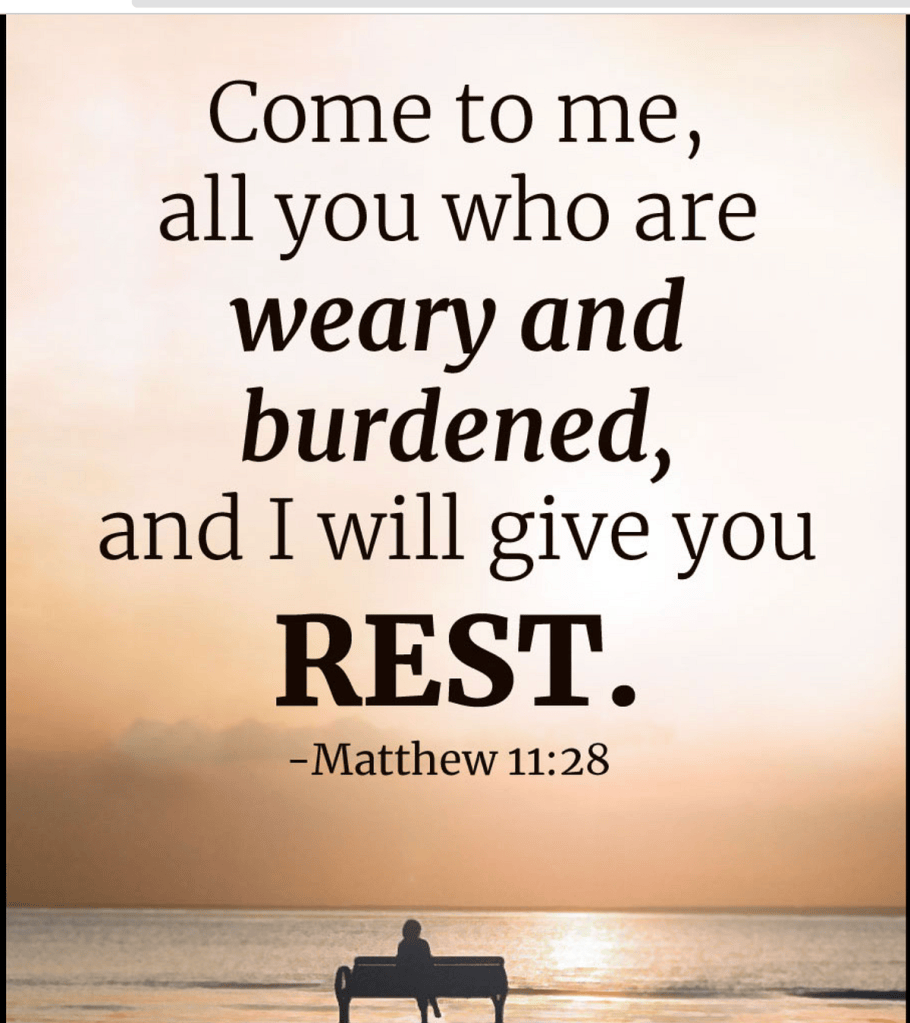
Jesus said in Matthew 11:28, “Come to me, all you that are weary and are carrying heavy burdens, and I will give you rest.” This invitation was not extended to people who had everything figured out. Jesus did not tell the weary to become stronger before approaching Him. He invited those who were already carrying burdens to come as they were.
That is an important Kingdom truth for men to understand: rest is not earned by suffering quietly in the dark. It is received by being willing to come honestly into the light. Asking for help is not the absence of faith. In many circumstances, it can be one of the clearest expressions of faith because it requires us to acknowledge that we were never meant to carry everything by ourselves.
We Were Never Meant to Carry Everything Alone
Throughout Scripture, we see men who reached the limits of their own strength. Their stories remind us that experiencing exhaustion, fear, discouragement, or even moments of despair does not automatically mean that a person has failed God.
Consider Elijah in 1 Kings 19. After one of the greatest spiritual victories of his ministry, Elijah became exhausted, afraid, and overwhelmed. He eventually reached a point where he wanted to die. What is interesting is how God responded to him. God did not begin by rebuking Elijah for his lack of faith. He allowed him to rest. Elijah was given food and water, slept, and was strengthened before God continued dealing with him about his calling and direction.
There is something significant about that order. Elijah needed spiritual direction, but he also needed physical rest and care. God addressed the whole person.
We see something similar when Jesus told His disciples in Mark 6:31, “Come away to a deserted place all by yourselves and rest a while.” The disciples had been serving, teaching, and ministering to others, and Jesus recognized that they needed to step away from the demands around them. Even those who were actively participating in the work of God needed renewal.
That should challenge the way we think about strength. If Elijah needed care, and if Jesus’ disciples needed rest, then perhaps we should stop treating our own need for help as though it were something shameful.

When a man seeks help, he is not necessarily saying, “I am finished.” He may actually be saying, “I recognize that something needs to change, and I am willing to do something about it.”
That is not weakness. That is responsibility. Remember, even the Lone Ranger had Tonto.
What Does Asking for Help Actually Look Like?
Sometimes we talk about getting help in such broad terms that we never take the next practical step. If we want men to become more comfortable seeking help, we need to make the process concrete.

Seeking help may begin with something as simple as breaking isolation and having an honest conversation with a trusted friend. It may mean talking with a pastor, mentor, or mature spiritual leader who is willing to listen without immediately trying to fix everything. For some men, the appropriate next step may be professional counseling with a licensed mental health professional who can help them understand what they are experiencing and develop healthier ways of responding.
There are also accessible tools that can help a person begin gaining some clarity about what is happening. Mental Health America, for example, provides free and confidential online mental health screenings that can be used as an initial point of reflection for concerns such as depression and anxiety. A screening is not the same thing as a professional diagnosis, but it can help someone recognize that the things they have been dismissing may deserve further attention.
For men who are hesitant about walking into a counseling office, telehealth can provide another option. Being able to speak with a counselor from the privacy of your own home can sometimes make that first step feel more manageable.
If you are looking for a counselor, I am a Licensed Professional Counselor in Texas and provide counseling through telehealth. My goal is to provide a safe and confidential environment where men can talk honestly about what they are experiencing without having to pretend that everything is fine. You can learn more about counseling and scheduling through my counseling services.
Seeking help is not an insult to your masculinity. It is an investment in your future, your relationships, and the people who depend on you. Sometimes taking care of yourself is also one of the ways you take care of the people you love.
Stop Waiting for a Crisis
One of the problems with the “handle it yourself” mentality is that it can cause men to wait until a situation becomes a crisis before they acknowledge that something is wrong. By the time they finally seek help, the problem may have already affected their marriage, family, employment, physical health, spiritual life, or relationships.
There is no requirement that you wait until everything falls apart before you ask for help.

You do not have to wait until your marriage is in crisis. You do not have to wait until depression becomes unbearable. You do not have to wait until anxiety begins controlling your decisions. You do not have to wait until alcohol, drugs, anger, pornography, work, or some other coping mechanism has taken over your life.
You can ask for help while you still have the opportunity to make changes.
In fact, one of the healthiest things a man can learn is how to recognize when his current ways of coping are no longer working. There is wisdom in recognizing our limitations. Strength does not mean pretending that we have no limits. Strength also means having the humility to recognize those limits and respond appropriately.
Take One Step
So, rather than allowing this to remain another inspirational message that sounds good but produces no action, I want to challenge you to take one tangible step.
Before the week is over, have one honest conversation with someone you trust. Schedule an appointment with a professional counselor. Complete a mental health screening and use the results as an opportunity to talk with someone. The specific step may look different for each person, but the important thing is to move beyond simply recognizing the problem and begin doing something about it.
You do not have to solve your entire life in one conversation. You do not have to understand everything you are feeling before you reach out. Sometimes the first step toward healing is simply acknowledging that the way you have been coping is no longer working and being willing to take the next right step.
That may begin with three simple words: “I need help.”
There is courage in saying them.
What Does Real Strength Look Like?
Men are often taught that strength means being the provider, the protector, the problem-solver, and the person everyone else can depend on. Those are not bad qualities. In fact, responsibility, perseverance, courage, and sacrificial love are important characteristics of healthy manhood.
But strength was never intended to mean that a man must become emotionally unreachable, spiritually isolated, or psychologically exhausted.
Real strength allows us to acknowledge when we are struggling. It gives us the humility to listen, the wisdom to seek counsel, and the courage to make changes when something in our lives is not working. It allows us to bring our struggles into the presence of God rather than hiding them from Him and from the people who could help us.
You are not less of a man because you are struggling. You are not less of a Christian because you need counseling. Needing help does not mean that you have failed your family or abandoned your faith.
It means you are human.
And God has never asked us to walk through this life alone.
A Prayer for the Man Who Needs Help

Father, thank You that You meet us in our weariness and our burdens. Help us release the shame that keeps us silent and isolated. Give us the courage to acknowledge when we are struggling and the wisdom to recognize when we need help.
Place safe people in our lives who will listen with compassion and walk alongside us. Give pastors, mentors, counselors, clinicians, friends, and family members wisdom as they support those who are hurting. Help us understand that seeking help is not weakness, but can be an act of courage, humility, responsibility, and faith.
For every man who has been carrying more than he can bear, remind him that he does not have to carry it alone. Give him the courage to take the next step toward healing and the faith to trust You along the way.
In the mighty name of Jesus Christ, amen.
You do not have to carry it alone. Sometimes strength begins when we finally have the courage to ask for help.

