
Wake Up, Throw Off Darkness, Put On Christ
A reflection on Romans 13:8–14
“Owe no one anything, except to love one another, for the one who loves another has fulfilled the law… The night is far gone; the day is near. Let us then throw off the works of darkness and put on the armor of light… Instead, put on the Lord Jesus Christ, and make no provision for the flesh, to gratify its desires.”
— Romans 13:8–14
Jesus once summarized the entire law in two commands: love God and love your neighbor.
Most of us have no problem saying, “Amen.”
Then we drive out of the parking lot.

“Love your neighbor” sounds wonderful until your neighbor lets their dog ruin your yard. Loving people sounds holy until someone at work takes credit for your work, a family member spreads a rumor, or someone you love touches an old wound they promised never to touch again.
Suddenly, love is no longer a word on a coffee mug. It becomes difficult, uncomfortable, and deeply personal.
What do we do when the person God commands us to love is the person we’d rather avoid? What happens when our emotional tank is empty and someone is still asking us for grace?
I’ve sat in my car and said it myself:
Lord, I am completely out of love. I have nothing left for this person.
Romans 13 offers an answer, but it is not simply, “Try harder.”
Paul gives us a different way to think about the Christian life. He begins with a debt we can never finish paying, calls us to wake up to the reality of how we are living, and then tells us to change what we are wearing.
Love Is Not the Same as Nice
Before getting to Paul’s three movements, we need to understand what biblical love actually means.
One of the great misunderstandings in the modern church is that love and niceness are the same thing. They aren’t.
Biblical love does not mean being agreeable all the time or avoiding difficult conversations. Sometimes love means telling the truth. Sometimes it means confronting what is wrong. Sometimes it means establishing a boundary rather than continuing to enable unhealthy behavior.

Jesus demonstrated this perfectly. He showed compassion to hurting people while also calling people to repentance. He protected the woman caught in adultery from condemnation while telling her to leave her life of sin.
Love does not ignore what is harmful. It seeks what is genuinely good for another person.
That is part of what Paul is getting at in Romans 13. The commandments against murder, stealing, adultery, and coveting are not arbitrary restrictions. They protect people from harm. Love fulfills the law because genuine love does not seek to destroy, exploit, or diminish another person.
But that raises an important question:
How do we love people when we don’t feel like loving them?
The Debt We Never Finish Paying
For years, many of us have tried to solve that problem with willpower.
I’m going to be more patient.
I’m going to stop getting angry.
I’m going to be nicer to that difficult coworker.
I’m not going to let them get to me anymore.
How long does that usually last?

Maybe until Tuesday afternoon.
Willpower has limits. We can discipline our behavior for a while, but eventually what is inside us finds its way back out.
That is why Romans 13:8 is so important:
“Owe no one anything, except to love one another.”
Think about how ordinary debt works. You pay off the car. You pay off the mortgage. You pay off the credit card. Eventually, you reach the point where you can say, “I don’t owe you anything anymore.”

We often approach relationships the same way.
We keep a ledger.
I called them three times. They never called me back.
I forgave them twice. They did it again.
I was there for them when they needed me. They weren’t there for me.
At some point, we decide the account is closed.
But Paul turns that way of thinking upside down. There is one debt the Christian never gets to mark “paid in full”: the debt of love.
Why?
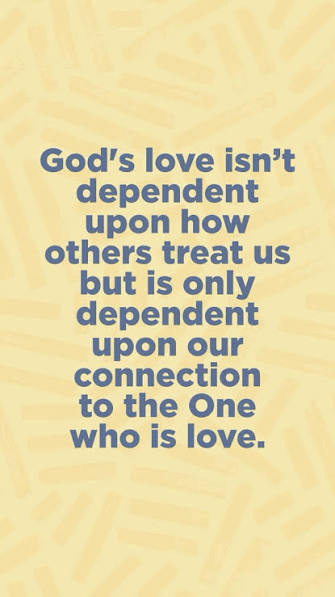
Because our obligation to love is not determined by how other people treat us. It is rooted in what Christ has already done for us.
Romans 5:8 reminds us that Christ died for us while we were still sinners. He did not wait until we had cleaned ourselves up, apologized for everything, or become easy to love.
He loved us first.
That changes the way we look at difficult people.
At some point, we have to recognize that we have been the difficult person too. We have been the one who needed patience, mercy, forgiveness, and another chance. We have received grace we could never have earned.
When we remember that, the resentment ledger begins to lose its authority.
We don’t love because the other person has earned it.
We love because Christ loved us.
That doesn’t mean there are no boundaries. It doesn’t mean we tolerate abuse or pretend harmful behavior is acceptable. It means that even when wisdom requires distance, our hearts do not have to become places of hatred and vengeance.
The debt of love remains.

Wake Up
Paul then makes an unexpected shift.
He’s not writing to people who have never heard of Jesus. He’s writing to the church:
“You know the time, that the hour has come for you to wake from sleep.”
— Romans 13:11
You can belong to Jesus and still be spiritually sleepwalking.
Sleep makes us unaware of what is happening around us. Spiritually, something similar can happen. We become so absorbed in temporary things that we lose sight of eternal realities.
Money begins to feel permanent.
Career begins to define us.
Comfort becomes our highest priority.
Petty offenses become major battles.
We can still attend church, know Scripture, and speak the language of faith while gradually becoming less attentive to the things of God.
Spiritual sleep is often subtle.
Prayer becomes rushed and eventually optional.
Scripture becomes something we occasionally read instead of something that continually shapes us.
Conviction begins to feel like irritation.
Sin becomes something we explain rather than something we confess.
Other people begin to feel like interruptions instead of opportunities to love.
Paul’s command is simple:
Wake up.
He gives the command urgency because our time matters.
“Salvation is nearer to us now than when we first believed” (Romans 13:11).
The Christian life is not merely about getting through today. We are living toward something. Christ has already accomplished our salvation, He is transforming us now, and we look forward to the day when He will make all things new.
That perspective changes what deserves our attention.
If we are living with eternity in view, we don’t have to spend our limited time rehearsing every offense someone has committed against us. We don’t have to keep reopening old arguments. We don’t have to make every disagreement a battle.
There are more important things to do.
We have people to love.
We have grace to extend.
We have lives to live faithfully.
The call to wake up is really a call to become aware again of what matters.
Change Your Clothes
Paul doesn’t stop with telling us what not to do. He gives us something to do.

“Let us then throw off the works of darkness and put on the armor of light… put on the Lord Jesus Christ.”
— Romans 13:12, 14
Paul uses the language of clothing because Christianity isn’t simply about stopping bad behavior. Something has to replace it.
First, cast off what belongs to darkness.
Take off the garments of bitterness, jealousy, gossip, resentment, retaliation, and whatever else keeps us living contrary to Christ.
Then Paul gives another command that deserves our attention:
“Make no provision for the flesh.”
In other words, don’t feed what you are asking God to remove.
Temptation often begins long before the moment when we finally give in.
The affair may begin with a conversation that should have remained public.
The angry outburst may begin with resentment that has been rehearsed for weeks.
The addiction may begin with the decision to put ourselves in a situation where we already know we are vulnerable.
The bitterness we eventually express may have been quietly nourished for months.
Sometimes the wisest response to temptation is not to prove how strong we are. It is to stop making room for what we know can pull us away from Christ.
Before sending the angry message, ask:
Am I trying to win this argument, or am I trying to reflect Jesus?
Before reopening the mental file of old grievances, ask:
Why am I feeding something I am asking God to heal?
Before stepping into a situation that repeatedly leads me into temptation, ask:
Why am I making provision for something I claim I want to overcome?
And then Paul gives us the positive command:
Put on Christ.
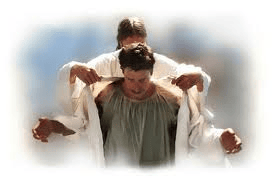
This is more than trying to imitate Jesus from the outside. The Christian life is participation in Christ through the work of His Spirit within us.
We don’t simply put on better behavior.
We put on Christ.
That changes how we enter our marriages, workplaces, friendships, churches, and communities.
In marriage, it means we stop keeping score and begin looking for opportunities to extend grace.
At work, it means we refuse to participate in gossip even when everyone else is doing it.
In the church, it means we stop treating minor offenses like major wars and remember that the person sitting across from us is someone Christ loves.
Putting on Christ means allowing His character to shape our responses.
Our Hope Isn’t Trying Harder
This is where the whole passage comes together.
Our hope was never that we could become good enough through stronger discipline.
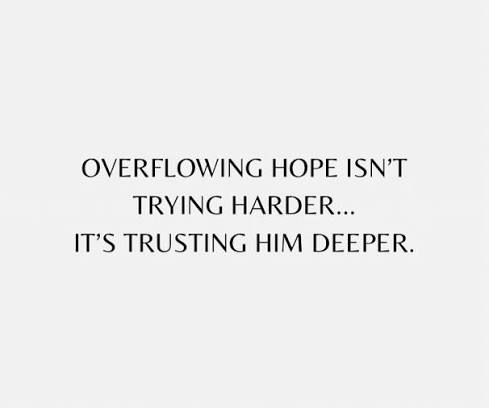
Our hope is Christ.
He perfectly loved His Father and His neighbor. He remained faithful when others failed Him. He walked as the Light of the World in the middle of darkness. And when we could not overcome our own sin, He carried it to the cross.
The Christian life is not imitation before it is participation.
We don’t wake up every morning, put on our own strength, and hope we can somehow manage to act like Jesus.
We put on Christ because He is already at work within us.
So if you’re exhausted from trying to love someone out of an empty tank, perhaps the answer isn’t to squeeze harder.
Perhaps it’s time to remember where your love comes from.
If you’re carrying a ledger of offenses, hand it over.
If you’ve become spiritually numb, wake up.
If you’ve been making room for the very things you’re asking God to remove, close the door.
And if you’ve been trying to look like Jesus through your own strength, remember that Christ has invited you into something deeper than imitation.
He invites you to put Him on.

That’s the debt of love.
It’s the one debt we never get to mark “paid in full,” because it was never ours to pay in the first place.
Love because He loved you.
Wake up because He awakened you.
Put on Christ because He has clothed you.
That is the life Romans 13 calls us to live.
Keep the Conversation Going
Adjusting to change is rarely a one-time decision. It is an ongoing process of learning, reflecting, and discovering healthier ways to move forward. Whether you are navigating a major transition, working through difficult emotions, or simply trying to become more intentional about the life you are building, you do not have to figure it all out alone.
If this post connected with something you are experiencing, I invite you to continue the conversation. At ScottCatchot.com, you can find resources, articles, and information about counseling, coaching, and ministry designed to help you move toward greater clarity, growth, and purpose.
Take the next step when you are ready.
Visit ScottCatchot.com to learn more and explore ways we can move forward together.

