
Zacchaeus

I got to spend two entire summers living in Queretaro, Mexico. The first summer I stayed and worked at an orphanage, The second summer I lived and worked at the Bible house. This was when  I met  Mariano. He was a Guatemalan and lived in the bible house with me. Mariano was extremely outgoing, an ex stripper, and very funny.  Most of the time this was due to him constantly doing the unexpected. There are two main things I remember about him. The first was one of the nights it was my time to cook. I made just simple ham and egg omelets, which by the way purchasing eggs by the kilo is an interesting thing.

If you didn’t know, 1 kilo of eggs is about 20 eggs.  Anyway I digress, Mariano fell in love with omelets and this became his request every time It was my time to cook. The other thing I remember, was when we were both in  the States he had a wonderful panache  for inviting himself over for dinner. He would walk up to you at the end of church and say “ you need to take me to dinner “ or “ I’m coming to your house for dinner today.” 

He wouldn’t just do it to me, his old room mate, but would do it to my parents, the pastors, he never ever thought someone wouldn’t want him to come over.

The passage I am looking at today made me remember Mariano. Jesus invites himself to Zacchaeus’ house for dinner. 
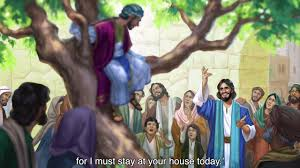
Luke 19:1-10 

19 He entered Jericho and was passing through it. 2 A man was there named Zacchaeus; he was a chief tax collector and was rich. 3 He was trying to see who Jesus was, but on account of the crowd he could not, because he was short in stature. 4 So he ran ahead and climbed a sycamore tree to see him, because he was going to pass that way. 5 When Jesus came to the place, he looked up and said to him, “Zacchaeus, hurry and come down, for I must stay at your house today.” 6 So he hurried down and was happy to welcome him. 7 All who saw it began to grumble and said, “He has gone to be the guest of one who is a sinner.” 8 Zacchaeus stood there and said to the Lord, “Look, half of my possessions, Lord, I will give to the poor, and if I have defrauded anyone of anything, I will pay back four times as much.” 9 Then Jesus said to him, “Today salvation has come to this house, because he, too, is a son of Abraham. 10 For the Son of Man came to seek out and to save the lost.”

I can imagine the thoughts going through Zacchaeus mind Much like when Mariano would invite himself over.. what am I going to make, do I have enough, have I even  made anything.

Is the house clean? Whether Zacchaeus had any of these thoughts  we don’t know, but we do see his excitement.

Now I know you have to all be familiar with this story, even if from nothing more than the song. Most of us who grew up in church know this little song, and any mention of Zacchaeus starts playing in our brains. Zacchaeus was a wee little man and a  wee little man was he…

The story of Zacchaeus climbing a tree is fun to share with young children; especially because they are also ‘wee little’ people. Yet there is so much to learn about him beyond the fact that he was a short guy who hung out in trees.

However, I want to take a different approach to this story. Zacchaeus was a tax collector .They were not well liked. I will go more into tax collectors in another writing, but suffice it to say they were hated as many were not fair in their dealings.  However, I want to focus on this particular verse: 

“Zacchaeus stood there and said to the Lord, “Look, half of my possessions, Lord, I will give to the poor, and if I have defrauded anyone of anything, I will pay back four times as much.”

Is Zacchaeus’ declaration of his financial dealings in verse 8 a promise of future action in response to Jesus’ visit, or is it a report on his present behavior? Grammatically speaking Are the present tense verbs in verse 8 to be understood, in fact, as present tense, thereby describing the current and ongoing behavior of Zacchaeus (as in the RSV and KJV )? Or shall we give them a future cast, describing Zacchaeus’ penitent pledge of future behavior (as in the NRSV and NIV)?Scholars, as well as translators, are divided, because it is correct to translate it as I will give or I give.”

1 If the former, then this is a classic repentance story; if the latter, it is something else entirely. Most of us have heard the general repentance story that preaches so easily from this story…

It has a nice flow of action — Jesus honors Zacchaeus, which prompts his changed behavior, which Jesus then acknowledges — it also plays well with the theology most of us hold: repentance precedes forgiveness. It is therefore easy to conclude — and preach — that in the presence of Jesus all manner of unimagined things can happen, even a wealthy tax collector might give away half his wealth. Or we might deduce — and proclaim — that our repentance must include matters of the wallet as well as the heart, that makes a great sermon on giving. Yet let’s take a look at the entire context of Luke, he has already shown that Jesus has an affect on the sinful tax collector like ole Levi, who later goes by Matthew.

 So a synopsis of what we read here:

Jesus, near the end of his journey to Jerusalem, is passing through the border town of Jericho. In that town is a man named Zacchaeus who is not just a tax collector but a chief tax collector which means, as Luke’s Gospel explains, that he is rich. He wants to see Jesus, but because he is short he cannot see over the crowds, so he climbs a tree. When Jesus arrives at the place where Zacchaeus has perched himself, he calls him down and invites himself to Zacchaeus’ home, which simultaneously brings Zacchaeus joy and scandalizes the crowd, because they know that Zacchaeus is a sinner.

This story is only told by Luke, and there are  several details that stand out, particularly in relation to passages that have come just before this one. First, sight is important.  Earlier, in Luke’s story of the lepers, it is the tenth leper’s recognition that he has been healed that causes him to alter his course, when he saw that he was healed (17:15). In the passage immediately before what we have read today a blind man receives sight and, in response, follows Jesus and glorifies God. Now, Zacchaeus desires to see Jesus, but even as he is trying to catch a glimpse of this prophet Jesus looks up, calls him down, and honors him by coming to dinner and staying at his home.

A second significant detail is wealth. Luke, more than any other gospel writer, is consistently concerned about matters of wealth and treatment of the poor. In the previous chapter a rich man, when asked to give away all he had, departs Jesus in sadness. When Jesus declares that it is nearly impossible for the rich to enter the kingdom of God, the disciples — who like most of their time believe wealth is a sign of God’s favor — are shocked. In contrast, in this story another rich man receives Jesus with joy and gives (or promises to give) half of his wealth to the poor and restores (or promises to restore) fourfold any amount he may have defrauded, and Jesus announces that the impossible has now happened as “salvation has come to this house” (19:9).

Zacchaeus is short, not just in physical stature, but also in terms of his moral standing among his neighbors who, no doubt, despised him; hence their reaction when Jesus invites himself to Zacchaeus’ home. This is not the first time bystanders have been outraged by Jesus’ behavior. Think of Simon’s reaction that Jesus would allow a woman all seem to know has a poor reputation to wash his feet with her tears (7:39) or the reaction of the Pharisees to the sinners and tax collectors who love to listen to Jesus (15:1-2). Nor is this the first time tax collectors have figured prominently in Jesus’ ministry. it is  their delight in Jesus’ teaching that prompts the grumbling that in turn Jesus’ “lost” parables. And chapter 17:14 it is the penitent tax collector, not the righteous Pharisee, who returns home justified.

What is Luke’s overall point, is he just repeating the same old tune?

 Notice that Zacchaeus neither confesses his sin nor repents. Admittedly, one can view Zacchaeus’ pledge of future behavior as repentance, but it remains a view point and contrasts starkly with the previous verbal penitence, for instance, of the tax collector at the Temple (18:13). Nor does Jesus commend Zacchaeus’ penitence, or his faith, or his change of heart. He merely pronounces blessing, blessing based not on anything Zacchaeus has done but simply because he, like those grumbling around him, is an Israelite, a son of Abraham. Further, Zacchaeus does not offer his financial disclosure in response to anything Jesus has said; rather, it falls on the heels of the grumbling of the crowd. Perhaps it is a response to Jesus’ presence, but perhaps it is his bewilderment at the crowd’s complaint or a defense of his reputation. In either case, I suspect that Zacchaeus is not turning over a new leaf as much as he is lifting up an old one for all to see. which also matches correct interpretation :

The amplified reads Zacchaeus stopped and said to the Lord, “See, Lord, I am [now] giving half of my possessions to the poor, and if I have cheated anyone out of anything, I give back four times as much.”

What if instead of another tax collector repenting this is a story  in which Jesus does the unexpected. Like somebody inviting themselves to dinner.

Called By NameNotice that Jesus calls this chief tax collector by name. “Zacchaeus, come down; for I must stay at your house today.” There is both intentionality and urgency in Jesus’ summons. From the outset of Luke’s gospel and throughout its narrative, Jesus sides with those on the margin, those considered down and out, those not accounted as much in the eyes of the world. While Zacchaeus is rich, he is nevertheless despised by his neighbors, counted as nothing, even as worse than nothing. Yet Jesus singles him out. Why? Might he know of Zacchaeus’ exemplary behavior? We cannot know. Yet by seeing him, calling him, staying with him, and blessing him, Jesus declares for all to hear that this one, even this chief tax collector, is a child of Abraham…and child of God. Perhaps Jesus is again at work seeking out those who are lost (whether through their own actions or those around them) in order to find, save, and restore them.

Or perhaps Zacchaeus serves as yet further evidence of the manifold possibilities present in Jesus’ presence. Thus far, almost everything about this story seems impossible — that a chief tax collector would want to see Jesus; that Jesus would stay in his home; that it would be revealed that this sinner exceeded the law by his generosity; that Jesus would declare not just him but his whole household saved? Yet just earlier Jesus declared that what is impossible for mortals is nevertheless possible for God (18:27). It would make sense for Luke to then show Jesus doing exactly what he said?

Perhaps Zacchaeus is one more example of the impossible possibility that Jesus embodies and regularly manifests.

Or perhaps Zacchaeus simply represents the chief attribute of all disciples: a desire to see Jesus and a corresponding joy in his presence. Zacchaeus cannot see Jesus because he is too short and so the crowds impede his sight. Yet this rich chief tax collector is so desperate to see that he will not be deterred and humiliates himself by climbing a tree like a child in order to glimpse over the crowd and see Jesus. Much like the woman with the issue of blood not being deterred but pushing through the crowd in Luke 8. Read this way, this story is not about formulas regarding repentance and forgiveness — indeed, as in other places in Luke, it calls into question any attempts to reduce the miracle of salvation to a formula like his being anointed by the “sinful woman” Luke 7  Rather, it embodies the promise that anyone — anyone! — who desires to see Jesus will. More than that, anyone who desires to see Jesus will, in turn, be seen by Jesus and in this way have their joy made complete. Imagine, you want to see Jesus, and instead of just seeing him, you have dinner with Him?

WOW. ANYONE can hang out with  Jesus. If we want to see Jesus, we can, but more than that, He WILL see us. He knows us, and will call us by name.

Maybe we should ask who among us, both in our congregation and outside, are those who have been left on the margin, who have been ruled out of bounds, who might surprise us by their generosity and faith, and who just want to see Jesus but have been kept at bay. If we are willing to ask — and dare answer — such questions, we might see both Zacchaeus and Jesus in a whole new light that changes us just as much as having dinner with Jesus would change people in the Bible.

A living Sacrifice, Are You Using Your Gifts?

Today’s society is getting better at realizing everyone in some way has worth. However, many times the pendulum swings way too far and it has become a world of people getting trophies and accolades just for showing up, not for actually doing a great job. Just the other day I drove past a Karate Dojo whose sign read, “Everybody is a Winner, Every kid is special.” I get the sentiment, but couldn’t help hearing Syndrome from the first Incredibles movie, “Everyone can be super, and when everyone’s super, no one will be.”  Though the driving idea behind it is probably good, That idea too far in of itself can be damaging as well because of its lack to prepare people for the realities of life as well as the fact you should be doing everything to the best of your ability. A key truth that was evident in my 15 years of teaching school, you needed to raise expectations for kids and they would meet them, when you lowered the bar, well they just quit trying as hard.  Thus the motivating factor  has more to do with personal integrity than pleasing others.

Nevertheless I digress. Where I am going with these thoughts today starts in the book of Romans, 12:1-8, which reads: 

1I appeal to you therefore, brothers and sisters, by the mercies of God, to present your bodies as a living sacrifice, holy and acceptable to God, which is your spiritual worship. 2Do not be conformed to this world, but be transformed by the renewing of your minds, so that you may discern what is the will of God—what is good and acceptable and perfect.

3For by the grace given to me I say to everyone among you not to think of yourself more highly than you ought to think, but to think with sober judgment, each according to the measure of faith that God has assigned. 4For as in one body we have many members, and not all the members have the same function, 5so we, who are many, are one body in Christ, and individually we are members one of another. 6We have gifts that differ according to the grace given to us: prophecy, in proportion to faith; 7ministry, in ministering; the teacher, in teaching; 8the exhorter, in exhortation; the giver, in generosity; the leader, in diligence; the compassionate, in cheerfulness.”

I have really enjoyed the Sister Act movies over the years, going back and maybe not watching the entire movie , though I have, but also through the magic of YouTube re-watching specific clips. The main actress,  Whoopi Goldberg has for many years co-hosted a comedy show called Comic Relief. It is a charity event whose purpose is to help the nation’s homeless and is only one of the many charitable projects in which she is involved. She was asked in a reader’s digest interview why she is so charitable. She answered,  “I fear waking up in the morning and finding out my life was all for nothing. We are here for a reason. I believe a bit of the reason is to throw little torches out to lead people through the dark.”
Though Whoopi Goldberg is far from being a theologian, and I rarely agree with her opinion on many topics. Nevertheless her  comment has truth to it. We are all  driven to search for significance. We Want our lives to count for something. All the attention, all the wealth, all the notoriety the world has to offer really doesn’t satisfy that need. Solomon said, “God has set eternity in the heart.” So ultimate significance is found only in giving one’s self to Jesus Christ because only Jesus Christ can grant eternal life.


Only Jesus Christ can satisfy that spiritual hunger of the soul and only Jesus Christ is really the torch to lead people out of darkness into the light. I pray Whoopi discovers that truth. Jesus said, “Whoever will seek to save his life will lose it but whoever will lose his life for my sake and the gospel’s will find it.”


That is the context we need to remember  as we look at the earlier  scripture in light of God’s provision. This passage talks about a proper evaluation of our strengths, our talents, which are to be used for a purpose,  God’s glory. If we understand and apply four principles from this section, it will really help us to find eternal significance.

God has provided for us what we need, when we need it, from unexpected places and in infinite ways. God has filled the world with people who can each do their own amazing things. No one can do everything, but collectively, we can do anything. Each one of these abilities are their own miracle. The body of Christ is there to help each other and meet needs in the world.  When  you run up against something that you can’t do, and it is going to happen time and time again,  God has provided someone else out there, who can. So why do we see so many needs not being met? Well the first of this verse talks about there being a proper way to use them. This is where the principles come in that I mentioned. 


Number 1: Set the right  priorities.

Verse 1: “Therefore I urge you brothers, in view of God’s mercy, to offer your bodies as living sacrifices, holy and pleasing to God. This is your spiritual act of worship.”


God could have disowned us but instead He chose us, He adopted us, He redeemed us, He sealed us as His very own. This love should lead us to desire to please Him, not to impress people. He says, “Don’t conform any longer to the pattern of this world.” In other words, “don’t let the world mold you, but be transformed by the renewing of your mind and then you will prove what God’s will is, his good, pleasing and perfect will.”


You see, the world around us is obsessed with image. What will people say? What will people think? But the active Christian renews the mind. We change our thinking. What becomes important is what God thinks. Is this activity on my calendar pleasing to Him? Is this check I am writing good stewardship of his money? Is this conversation accomplishing His will? Is this thought pattern honoring Him? When we seek the praise of God more than the praise of man, some people in the world will not understand and they will try to squeeze us back into their mold.


Jerome Hines was an extremely gifted singer and as a young man his goal was to sing in the opera. He made all the necessary sacrifices. He took lessons. He learned several different languages until he realized his dream and sang with the Metropolitan Opera. But one day, Jerome Hines heard George Beverly Shea sing in that mellow voice, “I’d rather have Jesus than anything the world affords today.” The Holy Spirit  got to Hines and led him to give his life to Jesus Christ. From that time on, he continued to sing in the opera but he no longer sang for the advancement of Jerome Hines or to please people. He looked for an opportunity to give glory to God.


Several years later, Jerome Hines was offered a role he had always wanted. He signed the contract. He practiced for months. But when he went to the opera house for the first rehearsal, he was surprised to witness a lewd dance in the performance. When he inquired about it, he was informed that they had modernized the opera and that dance was a part of the new choreography. Hines said, “I won’t sing if they have that dance.”


The general manager of the Metropolitan Opera informed him if he did not participate he was breaking his contract and he would be ostracized by management and blackballed from the opera but Hines stood his ground and he withdrew. He said, “I won’t use my talent to draw people in to see something like that.” His stance cost him hundreds of thousands of dollars and the role of a lifetime. He had decided that he really would rather have Jesus than anything the world affords today.


Does God have this kind of priority in your life? If you put God first in the use of your talent, you will be in  God’s will but the world may not understand. So when it comes to the use of your talent, remember your priorities. You use your gift to please God, not to impress people.


Number 2: Evaluate your gifts realistically.


Verse 3 says: “Do not think of yourself more highly than you ought. But rather think of yourself with sober judgment in accordance with the measure of faith God has given you.”


Oftentimes people think more highly of themselves than they ought. We have all been around these kinds of people, seen them on TV, or even acted that way at times. When you think too highly of your talent, it can actually be detrimental.  Proverbs 16:18 warns pride goes before destruction and a haughty spirit before a fall.

It’s important to have a balance in this area, False humility, or even actually  thinking too low of yourself can be a detriment to the gift as well. Do you remember when God challenged Moses to go before Pharaoh and demand the release of the Israelite slaves? Moses felt inadequate and he said, “Oh no, God, they won’t believe me. I am not a very good speaker. Would you send somebody else.” The Bible does not say that God was pleased with Moses because of his humility. It says the wrath of God was kindled against Moses because of his lack of faith. An inferiority complex is not humility. Humility is finding out what God has gifted you to do and doing it with abandonment for His glory and not your own.


I read a great anecdote that made me laugh so I want to share. David Stephens of the Dallas Morning News tells a story about Frank Samansky, a Notre Dame center back in the 40s. Samansky had been called in as a witness in a civil suit at South Bend. The judge asked him, “Are you on the Notre Dame football team?” And Samansky said, “Yes, your Honor, I am.” The judge said, “What position do you play.” He said, “I am a center.” The judge asked, “Are you any good?” And Samansky squirmed and finally he said, “Your Honor, I am the best center Notre Dame has ever had.”


Coach Frank Leahey was really surprised. He said Samansky had always been modest and unassuming. So when the proceedings were over, Leahey took Samansky aside and said “Why would you say you are the best center that Notre Dame ever had?” Samansky, blushing, said, “I hated to do it, coach, but after all I was under oath.”


In order to perform well there has to be some degree of confidence and belief in one’s self. Sir Lawrence Olivier, the actor, was asked what it took to be a good actor and he said, “Humility enough to prepare and confidence enough to pull it off.” So we have a responsibility as God’s people not to think too highly of ourselves or too lowly of ourselves but we are to think of ourselves objectively. Think of yourself with sober judgment in accordance with the measure of faith God has given you. If  you are not sure what your gifts and talents are, there are a variety of different aptitude tests such as Myers-Briggs Personality Assessment, Spiritual gift inventories, and other things if you are interested I can point you toward. The main thing is realizing you have gifts, and god wants you to use them. 


Number 3 : Don’t  compare yourself with other people.


Just as each of us has one body with many members and these members do not all have the same function, so in Christ we who are many form one body and each member belongs to all the others. We have different gifts according to the grace given us. One of the primary reasons people  feel insignificant is due to comparing ourselves to others.

I can be guilty of this. Looking at preachers like Billy Graham, John Maxwell,  TD Jakes, .


even ones closer to home like  Jeff Collins, Bill Byers, or Danny Rodriguez I can easily feel like I don’t measure up.

Now when I compare myself to other preachers I often  get down on myself. Wonder why my ministry isn’t like this? Why is my path harder and no ( insert whatever here). We all have a tendency to compare ourselves with those in our field who have more influence or more popularity or a bigger title or somebody who is making more money. As a result, we are never satisfied. We are jealous. Never quite feeling as significant as we would like. But this passage urges us not to fall into that trap of comparing and competing with one another because just as a body has different members with different functions, so we have different gifts but one body. 


When God created this physical body He knew exactly what He was doing. He gave us two eyes so we would have peripheral vision. He gave us two ears so we could hear in stereo. He gave us two nostrils so that even in the midst of allergy season  we would have a 50/50 chance of breathing out of one of them. He knew  what he was doing when he created this physical body and He knew what He was doing when He created His church. Like members of the body we all have different gifts. I can’t minister to all the people in all the places that you can. You have areas of influence and connections no one else could ever reach.


So some are gifted to preach, some to serve, some to teach, some to encourage, some to make money and give, some to lead, some to show mercy. Once you understand that, you are more likely to quit competing with others.


But we not only have different gifts — we have different measures of the same gift. He says in verse 6, if a man’s gift is prophesying, let him use it in proportion to his faith. Some have the gift of preaching with five talents and some the gift of preaching with one talent. Some people are so gifted in singing they ought to sing on national television and some people are gifted enough to sing in the choir while others just make a joyful noise and should keep the loud songs to the shower.


We need to evaluate not only where our strengths are but to have a realistic assessment of the degree of our gift. The one Talent person should not be comparing himself with a five talent person or else he is always going to feel jealous. The five Talent person should not be comparing herself with the one Talent person or she is going to get lazy or have a condescending spirit. We have different measures of the same gift.


Final One (Number 4) : Remain focused in the area of your strength.


Romans 12:6 does it say the following? “If a man’s gift is prophesying then let him learn to serve. If a man’s gift is teaching, let him go on to encourage. If a woman is good with giving encouragement then let her learn to contribute to the needs of others.” 

That is not what it says, is it? It says if your gift is prophesying, that is what you are supposed to do. Prophesy. If your gift is teaching, you stay with teaching.
It goes on to say you do it generously. You do it diligently. You do it cheerfully. That sounds so basic but it is amazing how many people get off focus. When you have discovered your primary area of giftedness, stay focused in your area of strength and your area of passion and you will be fulfilled.


I saw school teachers who are excellent in the classroom so they get bumped up to counseling and then to administration. They don’t feel quite as comfortable in that role but they get paid more money so they stay with it. It reminds me of in the Original Star Trek movies,

Kirk is promoted to Admiral. He has definitely earned it. HE hates it. The best thing that happens to him is he gets demoted to Captain and put back on a Starship where his talents  shine, even if the actors were a bit over the top. 


Whatever God has gifted you to do and whatever is your passion in life, you focus on that and develop that to the best of your ability. Find your gift and your passion in life and give yourself diligently and cheerfully to it. It may not be what others want for you. It may not be what you dreamed about when you were a child but if it is what God ordained and gifted you to do you will find significance and be energized by it. I read an interesting phrase this week, “We can’t be anything we want to be. But we must be what God ordained us to be.”


I think we do our children a real disservice when we tell them “you can be anything you want to be and you can do anything you want to do” because that is not true. They may not be intellectually gifted enough to be a doctor, hands not steady enough to be a surgeon.  They may not be talented enough to be the artist that they dream of being. They may not be big enough or agile enough physically to be the professional athlete that they would like to be. I had a student one time who told me she was going to be a nurse and maybe go on to be a doctor. I told her I doubt it, especially the current  way she was going. She got so mad and said, Who are you to tell me that? “I said I am the teacher who grades your assignments, or should I say lack thereof? Unless you make major changes in your work and study ethic, you won’t become a nurse or doctor because it requires too much.

Hard work only carries us so far if there is a lack of talent. I loved basketball, wanted to play, was even on a team for a while, granted it was a grocery store league, but I was not that good regardless of how much I wanted to be good. 

We can’t be just anything we want to be. We must be what God has gifted us and ordained us to be. The flip side is we shouldn’t ignore and squander the gifts we are given by not using them,

In addition, we should not be a hindrance to other people using their gift because it is a gift you don’t understand.

Let me tell you another Story. It is about buying a vintage Volkswagen Beetle. It was a great deal and I  really wanted it. It would have been the perfect first car for our daughter.  My wife had a dream about it and said the purchase did not sit easy with her.  I was upset. I really wanted the vehicle. However, I  acknowledged her concern and honored her wishes as we are a family together. I  later got a call saying that the entire oil pan dropped off the vehicle and other issues happened that messed it up. Honoring and recognizing my wife’s gift saved us a lot of trouble. 

God has provided for us in infinite ways through the body of Christ, each of us are a part of the infinite provision through  — the gifts God has given — and then giving ourselves fully in that area for the glory of God and not self.


I want to close with a thought from Rick Warren. Regardless of your thoughts on him, this was solid advice. He said, God gave me the gift to preach not for my benefit but for yours. If I don’t use my gift, I will cheat you. God gave you a gift, not for your benefit but for other people. If you don’t use your gift, you cheat others.


God has given different gifts to the body for the building up of the body. When you use your gift fully for the glory of God, you begin to light little torches along the way to show people through the darkness to the light of Jesus Christ and become part of how he provides what we need, when we need it, from unexpected places, in infinite ways.

 Don’t Live for the Likes. 


Love it or hate it, Social Media is a huge part of society. With apps like Facebook, Instagram, Twitter, SnapChat, YouTube, WhatsApp, TikTok, WeChat, Pinterest, Linkedin, and a host of others, there is something for everyone. You can even make a decent educated guess regarding someone’s age group based on the social media they use the most. It is a great way to stay connected, network, and just have fun, however it can also lead to drama and cause people to have a tendency to live for the likes. What I mean by this is to be worried about how many followers, what people think about them, are people liking their posts, how much interaction are they getting, it can be overwhelming. We all have a tendency to want to be liked to some degree or another, after all We are created as social beings and we really can’t do life alone, even the Lone Ranger had Tonto.  Now though scripture does not mention social media, it does have some things that are applicable to this topic. 

Take a look at  Matthew 23:1-12

“Then Jesus said to the crowds and to his disciples, “The scribes and the Pharisees sit on Moses’ seat; therefore, do whatever they teach you and follow it; but do not do as they do, for they do not practice what they teach. They tie up heavy burdens, hard to bear, and lay them on the shoulders of others; but they themselves are unwilling to lift a finger to move them. They do all their deeds to be seen by others; for they make their phylacteries broad and their fringes long. They love to have the place of honor at banquets and the best seats in the synagogues, and to be greeted with respect in the marketplaces, and to have people call them rabbi. But you are not to be called rabbi, for you have one teacher, and you are all students. And call no one your father on earth, for you have one Father—the one in heaven. Nor are you to be called instructors, for you have one instructor, the Messiah. The greatest among you will be your servant. All who exalt themselves will be humbled, and all who humble themselves will be exalted.”

]

Believe it or not, October is just around the corner. This means Halloween and  All saints Day is just around the corner.  I find this scripture selection ironic considering the way society celebrates  Halloween, where people dress up, pretend to be people and things they are not, wearing  masks etc because this

scripture is about the hypocrisy of the religious leaders of Israel. Their dress, their deportment, their teaching, their demand for salutations that curry honor from the people, and even their very presence is a magnificent pretense, offensive to God and painfully imprisoning for those who follow them.

Are we who we portray ourselves to be? And does it matter?

In Hamlet: The Tragedy of the Prince of Denmark, Polonius, the chief counsel to the murderous King Claudius, tells us his son, Laertes:

“This above all: to thine own self be true, And it must follow, as the night the day, Thou canst not then be false to any man.”[1]

“To thine own self be true,” is a rebuke to Laertes who is in a disastrous contest for Ophelia. 

Many 12 step programs as they work with people to break the cycle of addiction use this as a reminder , To thine own self be true.

I often have issues with this, Yes we need to be true to ourselves and not fall into the Rat Race of impressing others, doing things for the sake of how it looks, but scripturally, there isn’t much in of ourselves that is good to be true to  outside of Christ and so it needs a caveat, to thine own self in Christ be true. 

We generally know ourselves according to the manner in which we  think of ourselves. Others usually see us differently. If we are completely honest, we do not always view our own selves correctly. I find myself looking in the mirror and not always recognizing who looks back as changes happen through the years. 

One of the goals of personal and spiritual growth is to know who we are, as we are, as we are known, as God desires us to be, and to make sure there is truth in what is shown.You know me as a pastor. In a sense, I have worked to have you to know me as such. I have been working on an education and being credentialed for this role. Is it for self or for God? And with such a role comes expectations.

Perhaps, you say to yourself when you see me, “If he is a pastor he must hold to all those characteristics that Paul speaks of in 1 Timothy 3.” Beyond Biblical expectations, there are social or we might say “cultural” expectations. He is faithful to His Word, His wife, His family, and he is devoted to God. 

Or, does  your own cultural experience lead you to think  Christian minister equals a fraud. , an Elmer Gantry.   Elmer Gantry is a movie from the 60’s starring Burt Lancaster and Shirley Jones. However, Sinclair Lewis published the novel Elmer Gantry in 1927 at the height of the roaring twenties and Prohibition (the Volstead Act creating the 18th Amendment of the U.S. Constitution, 28 October 1919), Both the law and Sinclair was influenced by the moral zeal of Midwestern evangelicals. So, Lewis left his native northeastern suburbs for Kansas City. He went to church. He watched preachers. The Methodist Episcopal Church South was the largest denomination in the land and very prominent in Kansas City. So, the famous and sometimes infamous author crafted a character based not upon his observations of ministers in Kansas City, but upon his own prejudice against evangelical Christianity. His disdain for pastors is undeniable as you read the last lines of Elmer Gantry. Having been sued for $50,000 by an angry husband of a woman under the spell of Gantry, and with his association with distillers made known, Lewis ends with this scene:

“Oh, my friends!” cried Elmer, “do you believe in my innocence, in the fiendishness of my accusers? Reassure me with a hallelujah!” The church thundered with the triumphant hallelujah, and in a sacred silence Elmer prayed “O Lord, thou hast stooped from thy mighty throne and rescued thy servant from the assault of the mercenaries of Satan! Mostly we thank thee because thus we can go on doing thy work, and thine alone! Not less but more zealously shall we seek utter purity and the prayer-life, and rejoice in freedom from all temptations! He turned to include the choir, and for the first time he saw that there was a new singer, a girl with charming ankles and lively eyes, with whom he would certainly have to become well acquainted. But the thought was so swift that it did not interrupt the oæan of his prayer “Let me count this day, Lord, as the beginning of a new and more vigorous life, as the beginning of a crusade for complete morality and the domination of the Christian church through all the land. Dear Lord, thy work is but begun! We shall yet make these United States a moral nation!”[2]

So, is the truth of Elmer Gantry that the character is flawed, evangelical Christianity is a sham? Or could it not be that the author is flawed?

Yet, what about you? How does the public person and the private person that you are  compare to each other.? Do they? And why does it matter?

 Well mainly because It matters to God. The Lord has condemned It. Jesus called the Leaders of his day out of it frequently. Pointing out their Hypocrisy. In our scripture today he says to listen to them, but don’t do as they do. Sinclair Lewis’ Gantry has nothing on these guys. . And how the world has changed since SInclairs days. 

Parents often catch themselves saying things like, “Do as I say not as I do”, however plenty of studies show that the example watched often holds more power than the words, therefore it is important to work toward walking out what you say. 

And so hypocrisy continues, it is part of the fallen human condition. We want people to see us in a good light, often to think of us better than we think of ourselves. 

To seek the approval of others has always been a struggle for humanity, and in Today’s society the Rat Race pushes many to seek approval of others in ways previous generations could not have even imagined. 

In our algorithmically driven age, everything is done for attention. Nothing is safe. Whether it’s posting a picture of your food or sharing a video detailing your morning grooming routine, or documenting every detail of your best, worst, or most mundane moment, all of human life exists for display. People post pictures hoping to get others to like them. I do it, it is an easy way to share and keep up with friends and family, but we need to be mindful of the driving force beyond why we do it. 

 This isn’t new to our species – merely amplified by technology. God has a different, simpler, and humbler plan.  

It isn’t that he never wants us to be exalted, to get atta boys, but get them for the right reasons and most importantly the right way. See we are not to Lord things over others, and do you know why? Because we are all equal in God’s eyes. Yes equal in worth, equal in the love he has for us, but also equally screwed up. Equally in need of a savior, equally separated from Him outside of His son Jesus. There is none good, no not one. And so in my opinion a better phrase to remember beside to thine own self be true is except for the grace of God there go I. Anytime we look at someone and think How we are better off, remember it has nothing to do with ourselves and everything to do with the Grace and Love of God.

The greatest among you will be your servant. All who exalt themselves will be humbled, and all who humble themselves will be exalted.  God wants us to allow Him to exalt us, let His work in us and through us be what brings glory, praise, exaltation. Since he is the only one worthy of all praise, it is the appropriate way. Being liked is a good thing, but let’s get likes because we share Jesus in our lives to others and not get our view of our self worth from the status of our social media. You are loved by the creator, you already have worth, regardless of the likes your posts get. Never forget that!

Don’t Second Guess God

While reading my devotional this morning, I was reminded of something important. We shouldn’t second guess God. As I am embarking on a new journey, having stopped being bi-vocational and am now doing full time ministry. I find myself praying, “Lord, please don’t let me screw this up.” Now while on one hand it is a good thing to keep in mind, let’s also not sell short the calling God has placed on our lives. Take Moses for example:

Exodus 4:10 But Moses said to the Lord, “O my Lord, I have never been eloquent, neither in the past nor even now that you have spoken to your servant, but I am slow of speech and slow of tongue.” 11 Then the Lord said to him, “Who gives speech to mortals? Who makes them mute or deaf, seeing or blind? Is it not I, the Lord? 12 Now go, and I will be with your mouth and teach you what you are to speak.” 13 But he said, “O my Lord, please send someone else.” 14 Then the anger of the Lord was kindled against Moses, and he said, “What of your brother Aaron, the Levite? I know that he can speak well; even now he is coming out to meet you, and when he sees you his heart will be glad. 15 You shall speak to him and put the words in his mouth, and I will be with your mouth and with his mouth and will teach you what you shall do. 16 He indeed shall speak for you to the people; he shall serve as a mouth for you, and you shall serve as God for him. 17 Take in your hand this staff, with which you shall perform the signs.”

Moses Returns to Egypt

18 Moses went back to his father-in-law Jethro and said to him, “Please let me go back to my own people in Egypt and see whether they are still living.” And Jethro said to Moses, “Go in peace.” 19 The Lord said to Moses in Midian, “Go back to Egypt, for all those who were seeking your life are dead.” 20 So Moses took his wife and his sons, put them on a donkey, and went back to the land of Egypt, and Moses carried the staff of God in his hand.

21 And the Lord said to Moses, “When you go back to Egypt, see that you perform before Pharaoh all the wonders that I have put in your power, but I will harden his heart, so that he will not let the people go. 22 Then you shall say to Pharaoh, ‘Thus says the Lord: Israel is my firstborn son. 23 I said to you, “Let my son go that he may serve me.” But you refused to let him go; now I will kill your firstborn son.’  (NRSVUE from BibleGateway).”

We see Moses arguing with God about his ability to take on the  job God was calling him to, citing his inability to be an effective speaker. Does that sound familiar? We are great about thinking of our shortcomings when often asked to do some important job by others, and especially by God. Though it is a little cliché, the saying holds true, “God does not call the qualified, He qualifies the called.” To Moses,  God suggests Aaron to work as Moses’ spokesperson. If you notice , God points out , “even now he is coming out to meet you.” God knew, and was already taking care of it. It is the same way for us. God already knows our strengths and weaknesses. 

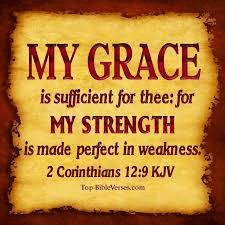
We need to change our understanding. It is faith in God, not ourselves that we boast of anyway. As Paul wrote in his letter to the Corinthians, “ but he said to me, “My grace is sufficient for you, for power is made perfect in weakness.”

So I will boast all the more gladly of my weaknesses, so that the power of Christ may dwell in me.  Therefore I am content with weaknesses, insults, hardships, persecutions, and calamities for the sake of Christ, for whenever I am weak, then I am strong (9-10,NRSVUE).”

See initially Moses took a backseat to his brother Aaron. That wasn’t the arrangement God intended. He pointed out to Moses, Moses was to perform the miracles as God called him (Exodus 4:21a) “When you go back to Egypt, see that you do before Pharaoh all the miracles that I have put in your power (emphasis mine).” 

God has called us to a specific purpose. He uses the analogy of the human body with Christ as the head for a reason. The hand is  not designed to do what our elbow does. Each person has influence in areas and skills that others don’t. This means there are specific callings we can accomplish that others would not be as effective in. Do you know what your calling is?

God does not want us to sit back and miss out on what He has planned for us. What opportunities, circumstances or situations do you steer clear of out of fear of rejection or feelings of inadequacy? It is time to grab the bull by the horns! Hiding will never make it go away. Go to the Lord. 1 John 4: 18 says, “18 There is no fear in love, but perfect love casts out fear; for fear has to do with punishment, and whoever fears has not reached perfection in love (NRSVUE).” We need to surrender to God, turn our fear over to Him so we can be set free and step into the calling He has placed on our lives. 

In the New Testament, when Stephen is speaking about Moses he states this as recorded in Acts, “ So Moses was instructed in all the wisdom of the Egyptians and was powerful in his words and deeds (22, NRSVUE).” Now this may seem a contradiction to what we read Moses saying earlier, but not really. A true contradiction has to be mutually exclusive. In other words, both cannot be true at the same time. It is very possible to be powerful in speech and deeds due to authority, and not be eloquent. However, I personally look at it a bit differently.

We often sell ourselves short, and what we read earlier was Moses who had been hiding in the desert ever since he fled Egypt giving his impression of himself. In addition, I truly believe that as Moses stepped into his God given calling, God did what He always does, brought perfection in Moses weakness. Speech is most definitely an ability that is developed, I used to teach speech classes. So My belief is that Moses grew into his ability as he gave over to God’s calling and so by Stephen’s day, and no one there disagreed with him as we know of his comments on Moses, Moses was remembered as a man who was powerful in speech and deed.

Are you ready to step into what God is calling you into?  There is no better day than today.

Be blessed, God loves you and so do I!

Pentecost

pentecost-300x188Pentecost Sunday is a remembrance and celebration of when God poured out His Holy Spirit upon the early church. When He did this, he was fulfilling what John the Baptist foretold when he said there would come later one who baptized with the Holy Spirit and with fire (Matthew 3:11).

 

This was also a fulfillment of the promise Jesus made to His disciples regarding HimJohn 14 image sending a comforter, the Holy Spirit (John 14:26).
But neither of those are the reason it is called Pentecost. For this reason we need to look back at the foundation of the Christian belief, Judaism. Jesus and the disciples were Jewish. They observed and celebrated the Jewish Feasts.  There are seven feasts celebrated, but three main feasts. The three main feasts are: Pesach (Passover), Shavuot (Weeks or Pentecost), and Sukkot (Tabernacles, Tents, or Booths).

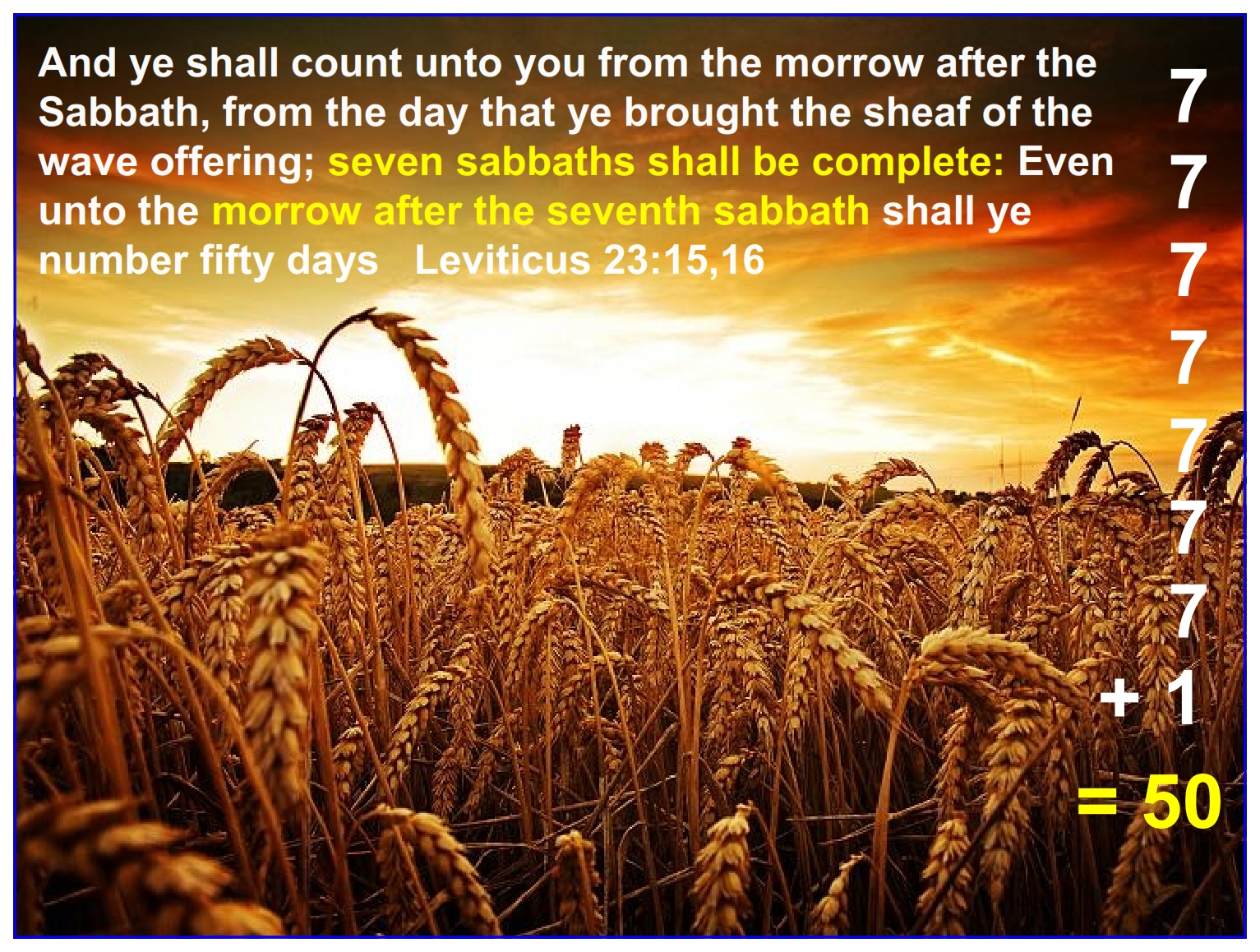
feast of weeksCelebrating the Feast of Pentecost is why the Apostles and other disciples of Jesus were gathered together in the upper room. The word Pentecost comes from  Greek Πεντηκοστή (Pentēkostē) meaning “fiftieth” (50th). It is called this because this feast takes place 50 days following Pesach (Passover).
Biblically speaking this feast is tied to the grain harvest, specifically wheat.  This harvest lasted seven weeks and was considered a time of joy (see Exodus 34:22, Deut. 16: 9-11, Isa. 9: 2 Jer. 5:24). It was the first day that the people could bring the first fruits as an offering to the Lord.

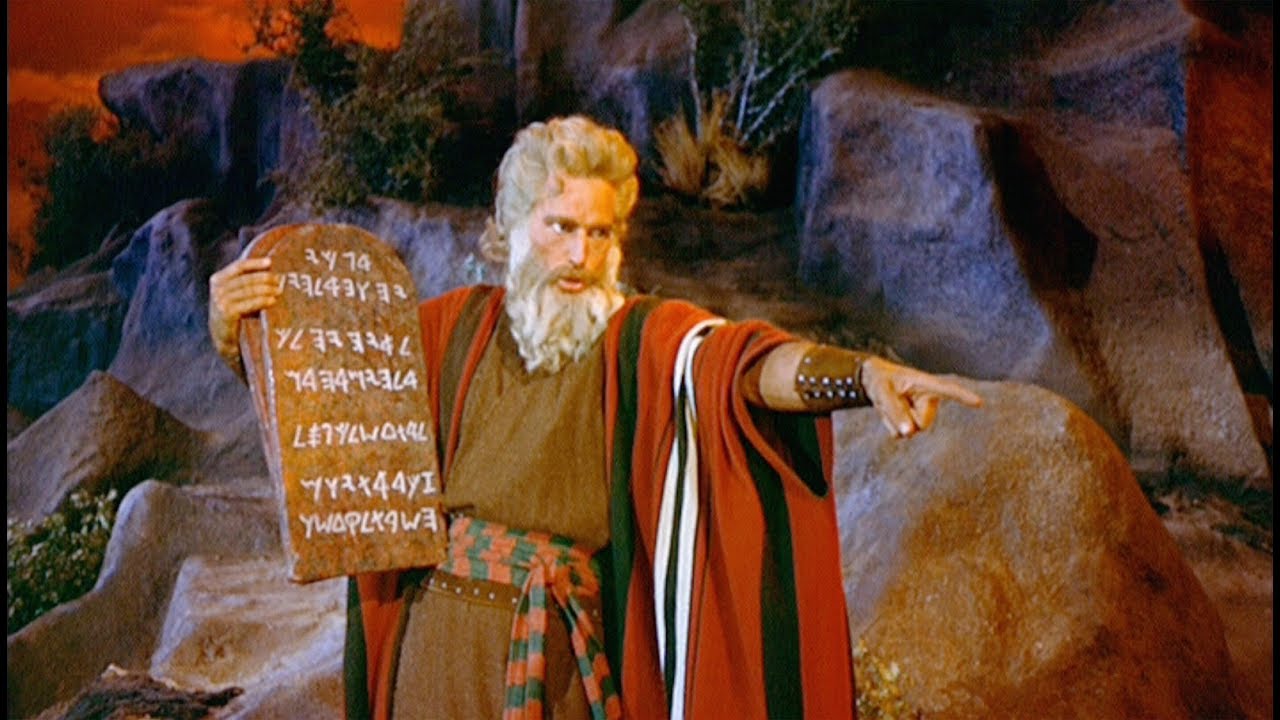
Later in time it would become associated with the giving of the Torah, or Law, to Israel at mosesMt. Sinai, following their salvation from Egypt. This is largely because of its association with Pesach (Passover) and the obvious ties to the Exodus through Moses and the subsequent giving of the Torah to the Israelites.


acts-birth-of-a-churchIn the New Testament, Pentecost is looked at as the birth of the church. It was this event that Jesus referred to when He told the disciples,  “Do not leave Jerusalem, but wait for the gift my Father promised, which you have heard me speak about.  For John baptized with water, but in a few days you will be baptized with the Holy Spirit” (Acts 1:4, HCSB).

The 1st chapter of Acts tells us there were 120 gathered together. Luke then describes in tongues of firechapter two the Holy Spirit falling upon them with what looked like tongues of fire. It says they were all baptized with the Holy Spirit and spoke in other languages or tongues. Peter later testifies in front of the crowd that this gift of the Holy Spirit is the fulfillment of Joel 2:38-32.

“this is what was spoken through the prophet Joel: And it will be in the last days, says God, that I will pour out My Spirit on all humanity; then your sons and your daughters will prophesy, your young men will see visions, and your old men will dream dreams. I will even pour out My Spirit on My male and female slaves in those days, and they will prophesy. I will display wonders in the heaven above and signs on the earth below: blood and fire and a cloud of smoke. The sun will be turned to darkness and the moon to blood before the great and remarkable Day of the Lord comes. Then everyone who calls on the name of the Lord will be saved” (Acts 2:16-21)

foxes-book-martyrs-470x246-01Foxe’s Book of Martyrs

The gift of the Holy Spirit is the catalyst that changed the disciples forever.  The truth of the resurrection was burned into their hearts and the group of men who scattered during the arrest and crucifixion, the men who denied with cussing that they even knew Jesus, went on to each give their lives, literally, to see the world turned upside down. Check out the above link for how each disciple gave their life as well as other Christians.

This was the birth of the church, we were to grow and prosper since that time. In many ways we have, in others we have grown stagnant. We need a fresh infilling of the Holy Spirit in order to truly live out the final instructions of Jesus to His church. It is a because of having access to the Holy Spirit that we will be able to do the things Jesus did, and even more, as according to what Jesus said in John 14.

This is why we celebrate the gift that is the Holy Spirit on Pentecost Sunday. May it be more than a side comment or even a potluck dinner to commemorate it. Let it be a push to seek for more of the Holy Spirit and fire operating in our life so that we can make a difference in the world.

change

The Five “One Things”

The Five “One Things”. 

ONE is particular, specific, and separate.

It stands alone. Regarding numbers it is the principle primary number. It emphasizes significance, an unmistakable quality, and total autonomy.

In this crazy passed world, with its ups and downs and multiple things competing for our attention, it is important to pause and consider what is important. Evaluate priorities.

bible-gateway   When I performed a keyword search on the Bible Gateway website, I found the phrase “One Thing” was used 11 to 18  different times in Scripture depending on the English translation.

There are 5 that kept popping up regardless of the translation that really stood out to me that will be the focus of this lesson, The 5 “One Things”

  1. Psalm 27:4

“I have asked one thing from the Lord; it is what I desire:
to dwell in the house of the Lord all the days of my life,
gazing on the beauty of the Lord and seeking Him in His temple.”

King David is often called a “man after God’s own heart.” He chased and pursued man after God'sintimacy with the Father, sought His heart and desired to be made in God’s image over everything else he could want or desire. When He was confronted with his sin and mistakes, unlike Saul who wanted to be honored in front of the people, David was concerned with not losing the presence of God. Something interesting to point out, when David wrote this, the Temple had not been built yet. It seems David had a glimpse of the Temple not made by human hands where he could dwell with God forever. This is the one thing he sought.

  1. Mark 10:21

21 Then, looking at him, Jesus loved him and said to him, “You lack one thing: Go, sell all you have and give to the poor, and you will have treasure in heaven. Then come, follow Me.”

rich young rulerThe Rich young ruler only lacked one thing. He could not part with his possessions and wealth. There are many reasons this could be, maybe he lacked faith for God’s provision. Maybe it was the fear of losing everything, losing the status his position and wealth brought him. He may have considered, “what might everyone else think?”


 

surrender

Whatever the reason was, he did not give everything to Jesus. One thing He lacked was total submission of every area of his life being given over to Christ.


  1. Luke 10:42

42 but one thing is necessary. Mary has made the right choice, and it will not be taken away from her.”

Mary and Martha are two sisters that were close to Jesus. During a particular gathering at their home, Martha was very busy tending to the things to insure the evening went well as a good host would. However when she complained about her sister, an interesting point was made by Jesus. The one thing that is necessary is being with Jesus. Seek First the kingdom of God and all these things will be added to you. Jesus is the physical representation of God’s Kingdom. So Seeking Jesus is the one thin that is necessary. There is no other way to the Father, except through Him. I have often heard it said, the greatest enemy to great, is good. Martha was doing good things, but Mary had chosen that which was better.mary or martha

Are you Mary or Martha? Click to find out.

  1. John 9:25

25 He answered, “Whether or not He’s a sinner, I don’t know. One thing I do know: I was blind, and now I can see!”

blind but nowWe see the story of a man that was born blind. The religious leaders are stuck on being offended by Jesus healing on the Sabbath and not on the miracle. As they question the man, he doesn’t try to convince them of anything or have a well prepared apologetics response. It is O.K. to tell people I don’t know.  He tells them what he knows. I was blind, and now I see. To all the questions He had one focus. Revelation 12 tells us that they [the saints] overcame by the blood of the Lamb and the word of their testimony. There is no greater apologetics or reply that we can give to anyone besides the truth, especially when that truth is the power of God working in our life. We should focus on what God has done in our lives.


  1. Philippians 3:13

13 Brothers, I do not consider myself to have taken hold of it. But one thing I do: Forgetting what is behind and reaching forward to what is ahead, 14 I pursue as my goal the prize promised by God’s heavenly call in Christ Jesus.

goalsetting5Paul did not let his past determine his future. He had a goal and he went after it with a singular purpose. Nothing was going to keep him from his goal.


These five verses showed 5 different people, from 5 different backgrounds, but at the heart of each story is one thing we need to grasp.

  1. Through David we see that knowing God is at the heart of prayer.
  2. Through the Rich Young Ruler we see that knowing God is at the heart of total surrender.
  3. Through Martha we see that knowing God is at the heart of service.
  4. Through the Blind man we see that knowing God is at the heart of witness.
  5. Through Paul we see knowing that God is at the heart of ambition.

The One Thing we need is a singular focus on Jesus in every aspect of our lives. Not just on Sundays, not just around our church friends, but everyday, everywhere we may be.

need jesus


Do You Know The Master?

My Church was doing a Wednesday night series over the Parables of Jesus. Last night I shared over the Parable of the Talents and wanted to post it as I learned some really great things during this study.

The Parable of the Talents Matthew 25:
14 “For it is just like a man going on a journey. He called his own slaves and turned over his possessions to them. 15 To one he gave five talents;[c] to another, two; and to another, one—to each according to his own ability. Then he went on a journey. Immediately 16 the man who had received five talents went, put them to work, and earned five more. 17 In the same way the man with two earned two more. 18 But the man who had received one talent went off, dug a hole in the ground, and hid his master’s money.
19 “After a long time the master of those slaves came and settled accounts with them. 20 The man who had received five talents approached, presented five more talents, and said, ‘Master, you gave me five talents. Look, I’ve earned five more talents.’
21 “His master said to him, ‘Well done, good and faithful slave! You were faithful over a few things; I will put you in charge of many things. Share your master’s joy!’
22 “Then the man with two talents also approached. He said, ‘Master, you gave me two talents. Look, I’ve earned two more talents.’
23 “His master said to him, ‘Well done, good and faithful slave! You were faithful over a few things; I will put you in charge of many things. Share your master’s joy!’
24 “Then the man who had received one talent also approached and said, ‘Master, I know you. You’re a difficult man, reaping where you haven’t sown and gathering where you haven’t scattered seed. 25 So I was afraid and went off and hid your talent in the ground. Look, you have what is yours.’
26 “But his master replied to him, ‘You evil, lazy slave! If you knew that I reap where I haven’t sown and gather where I haven’t scattered, 27 then[d] you should have deposited my money with the bankers. And when I returned I would have received my money[e] back with interest.
28 “‘So take the talent from him and give it to the one who has 10 talents. 29 For to everyone who has, more will be given, and he will have more than enough. But from the one who does not have, even what he has will be taken away from him. 30 And throw this good-for-nothing slave into the outer darkness. In that place there will be weeping and gnashing of teeth.’

I am sure many have heard this story before. I have heard it shared many times in the past and have read and reread it multiple times since, especially the past few weeks. I have also read more commentaries on it than I care to remember. The usual message I have heard on it relates to God giving us talents that we are to put to use for His glory. This is a great message, biblically sound because that is exactly what we are to do with our talents.

There is more to this parable than a great message on using our talents for Jesus. As a matter of fact if you look at the etymology of the English word talent, that’s a fancy word meaning the study of the origin of words, our usage of the word talent actually comes from the common interpretations and teaching on this parable. The only problem is that was not the meaning of the word in Jesus’ Day or how it is used in this parable.
Obviously the story uses talents to represent money. But parables have a purpose which is to illustrate a moral or spiritual lesson. So there is more to this story than meets the eye. The original definition of talent is that it was an ancient unit of weight. A talent in of itself is not a unit of currency.

The talent was the heaviest or largest biblical unit of measurement for weight. There is some debate over the actual modern equivalent due to different cultures having a different weight associated with their talent but an average estimate is around 75 lbs would be the weight equivalent of 1 talent. So when using talents you would have a talent of gold, silver, copper, etc. In the parable it just says he gave one 5 talents, one two, and the last only one. It does not say if it is gold, silver or copper. Regardless it was a considerable amount all across the board. One was given 375 lbs, another 150 lbs, and another 75 lbs. This is not something you just walk around with in your pocket. Some scholars estimate the monetary amount could have been up to 20 years salary.

So the master has called these slaves and has given his possessions over to them. Some translations say property. I need to mention the importance of property. Property to the Israelites was tied to the promises of God. It might trace back to the inheritance given when entering the promise land. It definitely represented what was the inheritance to be given to family when one passed away.

Considering this I find it interesting that Jesus does not specify an amount but stresses that a weight was given to each or dare I say a responsibility or a measure of something was given to each.

Now most commentaries and messages focus on what the talents represent. Which is where I began my study into this parable. It says they were given to each according to his own ability. Well regardless of how truthful and how great the interpretation is regarding using our talents for Jesus, It doesn’t make much sense that abilities were given according to abilities.

I spent a lot of time researching and praying over what God wanted me to share about this parable. In this parable Jesus uses a comparison between how the different slaves handled their talents. Two put the talents to good use, One hid the talent. The two were rewarded, the one, not so much. I studied the context of how the parable was told. Jesus is actually speaking to his disciples. They have questioned him about the end times, when to expect everything to come to pass. This parable is set between two other parables and they are all giving examples of what the Kingdom of heaven is like.

The verse preceding this , verse 13 says,
”3 “Therefore be alert, because you don’t know either the day or the hour.[b]
then continues into 14
“For it is just like a man going on a journey.

SO the importance of this parable is tied in part to Jesus stressing being alert in the end times. So what are we to understand the talents to represent? I continued to study digging into the greek for the words ability and at how the comparisons between the different slaves played out. Two put the money to use and one hid his away. They were rewarded and punished accordingly to what they did it seems.

But an important thing to remember in studying the Bible, is context. Everything must be understood in context with the rest of scriptures as well as in its’ own chapter.

But If the point of Jesus’ teaching in the parable of the talents is indeed the effort, faithfulness, or works, then based solely upon the context of this parable, one is confronted with the alarming possibility that the difference between those who enter the joy of the master from those who are cast into outer darkness is simply diligent labor. In short, if these interpretations are taken to their extreme, logical conclusion, they are ultimately teaching a works-based salvation, or if the notion of outer darkness is downplayed, then a works-based way to become more righteous. This is against all that the Bible teaches regarding Grace.

But in looking at all of these things I realized there was something that did fit all this criteria and that the talents could very well represent faith.

ROMANS 12:3
3 For by the grace given to me, I tell everyone among you not to think of himself more highly than he should think. Instead, think sensibly, as God has distributed a measure of faith to each one.

Everyone is given a measure of faith, the more we use our faith, the more it increases. It is our faith that leads us to do works. It is by faith that we are saved and the bible even tells us that faith without works is dead and it is impossible to please God without faith. Even looking at the other parables in Chapter 25, the similarities underscore a message of faith.All of them deal with Jesus at his return; they cover judgement, accountability and the separation of two groups. So they are each in their own way showing how to be ready for when the master returns and keeping faith.

It was at this point The Holy Spirit highlighted something specific to me that I was missing. What he pointed out to me, took this parable to a whole other level.

There is a lot to gain looking at this parable and relating the talents to faith. And honestly we can teach great messages out of this making the talents represent many things, abilities, using money for god’s purpose, opportunities we are given. But The most important aspect in this parable isn’t what they were given, but what they did with what they were given and more importantly why. The motivation behind what caused the slaves to respond and act the way they did is the true gem of this parable.

Jesus’ relating of the servant’s actions and the master’s response showed that this was not a parable about work, money, or getting rewards. Instead, the parable of the talents is a story about motivation and the condition of one’s heart.

This was not a story about money but a parable about relationship. So now let’s look at this parable through that lens.

It says the first went immediately to work, the second did the same but the last hid his away. After a long time the master came and settled accounts. So the first two put that faith to use, the other did not, why the difference in what they did?

The man who had received five talents approached, presented five more talents, and said, ‘Master, you gave me five talents. Look, I’ve earned five more talents.’
21 “His master said to him, ‘Well done, good and faithful slave! You were faithful over a few things; I will put you in charge of many things. Share your master’s joy!’
22 “Then the man with two talents also approached. He said, ‘Master, you gave me two talents. Look, I’ve earned two more talents.’
23 “His master said to him, ‘Well done, good and faithful slave! You were faithful over a few things; I will put you in charge of many things. Share your master’s joy!’

ok let’s observe even though they both were given a different amount, they both put it to use and therefore saw an increase. And they both received the same thing. They were both told well done, good and faithful slave.
Ok a slave doing a job for his master, even a trusted slave as these obviously were, has no rightful expectation of keeping any profit or getting anything in return. He is merely doing what is expected.

What does the master go on and say?

You were faithful over a few things,I will put you in charge of many things. A few? well it is obvious the Master has an abundance . Remember the monetary equivalent we mentioned. But more importantly he said Share your master’s Joy!

So they just got promoted, And then asked to share in the Master’s Joy ? The relationship between them just changed. They were just invited to a closer intimacy. Well this is a parable that uses comparison to highlight it’s point so let’s compare the last slaves actions.
24 “Then the man who had received one talent also approached and said, ‘Master, I know you. You’re a difficult man, reaping where you haven’t sown and gathering where you haven’t scattered seed. 25 So I was afraid and went off and hid your talent in the ground. Look, you have what is yours.’

This slave goes on to explain why he did what he did.

But the Master does not agree or disagree with him in regard to his judgement of his character. Instead he uses the slaves own words against him.
26 “But his master replied to him, ‘You evil, lazy slave! If you knew that I reap where I haven’t sown and gather where I haven’t scattered, 27 then[d] you should have deposited my money with the bankers. And when I returned I would have received my money[e] back with interest.
28 “‘So take the talent from him and give it to the one who has 10 talents.
Telling him,If you believed this, then you Should have put the money in the bank and allowed interest to grow. He was called evil, lazy and tossed out of relationship with the master.

Why did this slave respond differently than the other two who were eager and went to work immediately ?

There is one thing he said that is important to note. He was afraid. Why was he afraid ? He says it was because he knew the master.But is his assessment of the Master true? The master didn’t have to give them anything to use while he was away, he could have even chosen other slaves. If he truly expected to gain where he had no right to gain, he would not have then rewarded the slaves and definitely not ask them into a closer relationship. and share in his joy.

It’s possible this Slave may not have even truly believed what he was saying, but was just making excuses because his actions did not back up what he was saying according to the master. The truth is this slave did not really know his master and therefore allowed his fear to keep him from putting his faith to use. He claimed he thought his master would expect something from nothing and yet he still did nothing. His improper understanding of his master affected how he responded to what the Master truly wanted and therefore his talent, or his unused faith did not produce anything for him because he hid it.

In the same way, for each of us, our understanding of the master, our understanding of who Jesus is affects how we relate to him and therefore affects how we respond to him. Lot’s of things can cause us to have a misunderstanding of who Jesus is, Things that happen in the past, relationship with our parents, or spouses.Events going on around us. Anything that can cause us to think Jesus is a certain way or shake our understanding.

The Bible is the ruler and guide by which we are to learn who the master is.The entire Bible from Genesis to Revelation is the story of a personal God seeking to restore relationship with mankind. The very reason Jesus came was to restore relationship between God and man. This parable shows us what the kingdom of God is like. A master who has left his slaves in charge, left them with a measure of faith.

Our view of God affects our relationship with him. We either trust him and act in a way that shows we trust him and therefore use our faith. Or our picture of who the master is causes us to hold on to our faith allowing fears to keep things hidden away out of sight, not being used , unable to increase. This is something that can affect so many different aspects of our life. Are we willing to take a chance with God?

Truly the word Talent can represent many things: But what do we know about the master? Can we trust him with our our talents, our abilities, our money, our faith, opportunities we are given. our lives, our health, or whatever. Or do we have an understanding of the master that allows fear to cause us to hide these things from him, like the slave who buried the talent

Are we going to put our faith in him and thereby find ourselves invited into a closer relationship?

So the choice is ours. What will we believe about Jesus? Will we use our faith, taking hold of opportunities that we are presented with, will we trust in what kind of master we have and get to share in the master’s Joy or allow fear to cause us to hide our faith away. Do not allow a misunderstanding of who Jesus really is to cause you to do nothing and ultimately miss out. Having faith and then putting it to use brings opportunities for an even closer relationship with Jesus, hiding it will cause even what faith we have to be lost. It is a true use it or loose it situation. What do you know about the Master?