A living Sacrifice, Are You Using Your Gifts?

Today’s society is getting better at realizing everyone in some way has worth. However, many times the pendulum swings way too far and it has become a world of people getting trophies and accolades just for showing up, not for actually doing a great job. Just the other day I drove past a Karate Dojo whose sign read, “Everybody is a Winner, Every kid is special.” I get the sentiment, but couldn’t help hearing Syndrome from the first Incredibles movie, “Everyone can be super, and when everyone’s super, no one will be.”  Though the driving idea behind it is probably good, That idea too far in of itself can be damaging as well because of its lack to prepare people for the realities of life as well as the fact you should be doing everything to the best of your ability. A key truth that was evident in my 15 years of teaching school, you needed to raise expectations for kids and they would meet them, when you lowered the bar, well they just quit trying as hard.  Thus the motivating factor  has more to do with personal integrity than pleasing others.

Nevertheless I digress. Where I am going with these thoughts today starts in the book of Romans, 12:1-8, which reads: 

1I appeal to you therefore, brothers and sisters, by the mercies of God, to present your bodies as a living sacrifice, holy and acceptable to God, which is your spiritual worship. 2Do not be conformed to this world, but be transformed by the renewing of your minds, so that you may discern what is the will of God—what is good and acceptable and perfect.

3For by the grace given to me I say to everyone among you not to think of yourself more highly than you ought to think, but to think with sober judgment, each according to the measure of faith that God has assigned. 4For as in one body we have many members, and not all the members have the same function, 5so we, who are many, are one body in Christ, and individually we are members one of another. 6We have gifts that differ according to the grace given to us: prophecy, in proportion to faith; 7ministry, in ministering; the teacher, in teaching; 8the exhorter, in exhortation; the giver, in generosity; the leader, in diligence; the compassionate, in cheerfulness.”

I have really enjoyed the Sister Act movies over the years, going back and maybe not watching the entire movie , though I have, but also through the magic of YouTube re-watching specific clips. The main actress,  Whoopi Goldberg has for many years co-hosted a comedy show called Comic Relief. It is a charity event whose purpose is to help the nation’s homeless and is only one of the many charitable projects in which she is involved. She was asked in a reader’s digest interview why she is so charitable. She answered,  “I fear waking up in the morning and finding out my life was all for nothing. We are here for a reason. I believe a bit of the reason is to throw little torches out to lead people through the dark.”
Though Whoopi Goldberg is far from being a theologian, and I rarely agree with her opinion on many topics. Nevertheless her  comment has truth to it. We are all  driven to search for significance. We Want our lives to count for something. All the attention, all the wealth, all the notoriety the world has to offer really doesn’t satisfy that need. Solomon said, “God has set eternity in the heart.” So ultimate significance is found only in giving one’s self to Jesus Christ because only Jesus Christ can grant eternal life.


Only Jesus Christ can satisfy that spiritual hunger of the soul and only Jesus Christ is really the torch to lead people out of darkness into the light. I pray Whoopi discovers that truth. Jesus said, “Whoever will seek to save his life will lose it but whoever will lose his life for my sake and the gospel’s will find it.”


That is the context we need to remember  as we look at the earlier  scripture in light of God’s provision. This passage talks about a proper evaluation of our strengths, our talents, which are to be used for a purpose,  God’s glory. If we understand and apply four principles from this section, it will really help us to find eternal significance.

God has provided for us what we need, when we need it, from unexpected places and in infinite ways. God has filled the world with people who can each do their own amazing things. No one can do everything, but collectively, we can do anything. Each one of these abilities are their own miracle. The body of Christ is there to help each other and meet needs in the world.  When  you run up against something that you can’t do, and it is going to happen time and time again,  God has provided someone else out there, who can. So why do we see so many needs not being met? Well the first of this verse talks about there being a proper way to use them. This is where the principles come in that I mentioned. 


Number 1: Set the right  priorities.
Verse 1: “Therefore I urge you brothers, in view of God’s mercy, to offer your bodies as living sacrifices, holy and pleasing to God. This is your spiritual act of worship.”


God could have disowned us but instead He chose us, He adopted us, He redeemed us, He sealed us as His very own. This love should lead us to desire to please Him, not to impress people. He says, “Don’t conform any longer to the pattern of this world.” In other words, “don’t let the world mold you, but be transformed by the renewing of your mind and then you will prove what God’s will is, his good, pleasing and perfect will.”


You see, the world around us is obsessed with image. What will people say? What will people think? But the active Christian renews the mind. We change our thinking. What becomes important is what God thinks. Is this activity on my calendar pleasing to Him? Is this check I am writing good stewardship of his money? Is this conversation accomplishing His will? Is this thought pattern honoring Him? When we seek the praise of God more than the praise of man, some people in the world will not understand and they will try to squeeze us back into their mold.


Jerome Hines was an extremely gifted singer and as a young man his goal was to sing in the opera. He made all the necessary sacrifices. He took lessons. He learned several different languages until he realized his dream and sang with the Metropolitan Opera. But one day, Jerome Hines heard George Beverly Shea sing in that mellow voice, “I’d rather have Jesus than anything the world affords today.” The Holy Spirit  got to Hines and led him to give his life to Jesus Christ. From that time on, he continued to sing in the opera but he no longer sang for the advancement of Jerome Hines or to please people. He looked for an opportunity to give glory to God.


Several years later, Jerome Hines was offered a role he had always wanted. He signed the contract. He practiced for months. But when he went to the opera house for the first rehearsal, he was surprised to witness a lewd dance in the performance. When he inquired about it, he was informed that they had modernized the opera and that dance was a part of the new choreography. Hines said, “I won’t sing if they have that dance.”


The general manager of the Metropolitan Opera informed him if he did not participate he was breaking his contract and he would be ostracized by management and blackballed from the opera but Hines stood his ground and he withdrew. He said, “I won’t use my talent to draw people in to see something like that.” His stance cost him hundreds of thousands of dollars and the role of a lifetime. He had decided that he really would rather have Jesus than anything the world affords today.


Does God have this kind of priority in your life? If you put God first in the use of your talent, you will be in  God’s will but the world may not understand. So when it comes to the use of your talent, remember your priorities. You use your gift to please God, not to impress people.


Number 2: Evaluate your gifts realistically.


Verse 3 says: “Do not think of yourself more highly than you ought. But rather think of yourself with sober judgment in accordance with the measure of faith God has given you.”


Oftentimes people think more highly of themselves than they ought. We have all been around these kinds of people, seen them on TV, or even acted that way at times. When you think too highly of your talent, it can actually be detrimental.  Proverbs 16:18 warns pride goes before destruction and a haughty spirit before a fall.
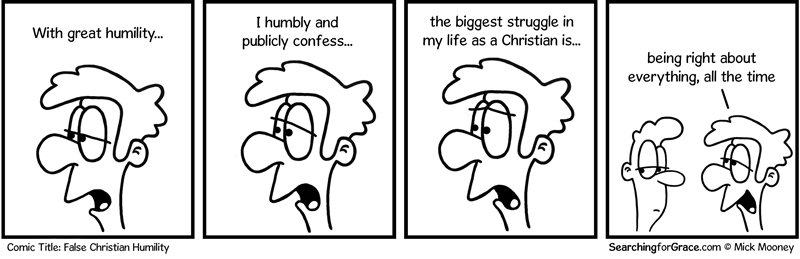
It’s important to have a balance in this area, False humility, or even actually  thinking too low of yourself can be a detriment to the gift as well. Do you remember when God challenged Moses to go before Pharaoh and demand the release of the Israelite slaves? Moses felt inadequate and he said, “Oh no, God, they won’t believe me. I am not a very good speaker. Would you send somebody else.” The Bible does not say that God was pleased with Moses because of his humility. It says the wrath of God was kindled against Moses because of his lack of faith. An inferiority complex is not humility. Humility is finding out what God has gifted you to do and doing it with abandonment for His glory and not your own.


I read a great anecdote that made me laugh so I want to share. David Stephens of the Dallas Morning News tells a story about Frank Samansky, a Notre Dame center back in the 40s. Samansky had been called in as a witness in a civil suit at South Bend. The judge asked him, “Are you on the Notre Dame football team?” And Samansky said, “Yes, your Honor, I am.” The judge said, “What position do you play.” He said, “I am a center.” The judge asked, “Are you any good?” And Samansky squirmed and finally he said, “Your Honor, I am the best center Notre Dame has ever had.”


Coach Frank Leahey was really surprised. He said Samansky had always been modest and unassuming. So when the proceedings were over, Leahey took Samansky aside and said “Why would you say you are the best center that Notre Dame ever had?” Samansky, blushing, said, “I hated to do it, coach, but after all I was under oath.”


In order to perform well there has to be some degree of confidence and belief in one’s self. Sir Lawrence Olivier, the actor, was asked what it took to be a good actor and he said, “Humility enough to prepare and confidence enough to pull it off.” So we have a responsibility as God’s people not to think too highly of ourselves or too lowly of ourselves but we are to think of ourselves objectively. Think of yourself with sober judgment in accordance with the measure of faith God has given you. If  you are not sure what your gifts and talents are, there are a variety of different aptitude tests such as Myers-Briggs Personality Assessment, Spiritual gift inventories, and other things if you are interested I can point you toward. The main thing is realizing you have gifts, and god wants you to use them. 


Number 3 : Don’t  compare yourself with other people.


Just as each of us has one body with many members and these members do not all have the same function, so in Christ we who are many form one body and each member belongs to all the others. We have different gifts according to the grace given us. One of the primary reasons people  feel insignificant is due to comparing ourselves to others.

I can be guilty of this. Looking at preachers like Billy Graham, John Maxwell,  TD Jakes, .


even ones closer to home like  Jeff Collins, Bill Byers, or Danny Rodriguez I can easily feel like I don’t measure up.
Now when I compare myself to other preachers I often  get down on myself. Wonder why my ministry isn’t like this? Why is my path harder and no ( insert whatever here). We all have a tendency to compare ourselves with those in our field who have more influence or more popularity or a bigger title or somebody who is making more money. As a result, we are never satisfied. We are jealous. Never quite feeling as significant as we would like. But this passage urges us not to fall into that trap of comparing and competing with one another because just as a body has different members with different functions, so we have different gifts but one body. 


When God created this physical body He knew exactly what He was doing. He gave us two eyes so we would have peripheral vision. He gave us two ears so we could hear in stereo. He gave us two nostrils so that even in the midst of allergy season  we would have a 50/50 chance of breathing out of one of them. He knew  what he was doing when he created this physical body and He knew what He was doing when He created His church. Like members of the body we all have different gifts. I can’t minister to all the people in all the places that you can. You have areas of influence and connections no one else could ever reach.


So some are gifted to preach, some to serve, some to teach, some to encourage, some to make money and give, some to lead, some to show mercy. Once you understand that, you are more likely to quit competing with others.


But we not only have different gifts — we have different measures of the same gift. He says in verse 6, if a man’s gift is prophesying, let him use it in proportion to his faith. Some have the gift of preaching with five talents and some the gift of preaching with one talent. Some people are so gifted in singing they ought to sing on national television and some people are gifted enough to sing in the choir while others just make a joyful noise and should keep the loud songs to the shower.


We need to evaluate not only where our strengths are but to have a realistic assessment of the degree of our gift. The one Talent person should not be comparing himself with a five talent person or else he is always going to feel jealous. The five Talent person should not be comparing herself with the one Talent person or she is going to get lazy or have a condescending spirit. We have different measures of the same gift.



Final One (Number 4) : Remain focused in the area of your strength.


Romans 12:6 does it say the following? “If a man’s gift is prophesying then let him learn to serve. If a man’s gift is teaching, let him go on to encourage. If a woman is good with giving encouragement then let her learn to contribute to the needs of others.” 

That is not what it says, is it? It says if your gift is prophesying, that is what you are supposed to do. Prophesy. If your gift is teaching, you stay with teaching.
It goes on to say you do it generously. You do it diligently. You do it cheerfully. That sounds so basic but it is amazing how many people get off focus. When you have discovered your primary area of giftedness, stay focused in your area of strength and your area of passion and you will be fulfilled.


I saw school teachers who are excellent in the classroom so they get bumped up to counseling and then to administration. They don’t feel quite as comfortable in that role but they get paid more money so they stay with it. It reminds me of in the Original Star Trek movies,

Kirk is promoted to Admiral. He has definitely earned it. HE hates it. The best thing that happens to him is he gets demoted to Captain and put back on a Starship where his talents  shine, even if the actors were a bit over the top. 


Whatever God has gifted you to do and whatever is your passion in life, you focus on that and develop that to the best of your ability. Find your gift and your passion in life and give yourself diligently and cheerfully to it. It may not be what others want for you. It may not be what you dreamed about when you were a child but if it is what God ordained and gifted you to do you will find significance and be energized by it. I read an interesting phrase this week, “We can’t be anything we want to be. But we must be what God ordained us to be.”


I think we do our children a real disservice when we tell them “you can be anything you want to be and you can do anything you want to do” because that is not true. They may not be intellectually gifted enough to be a doctor, hands not steady enough to be a surgeon.  They may not be talented enough to be the artist that they dream of being. They may not be big enough or agile enough physically to be the professional athlete that they would like to be. I had a student one time who told me she was going to be a nurse and maybe go on to be a doctor. I told her I doubt it, especially the current  way she was going. She got so mad and said, Who are you to tell me that? “I said I am the teacher who grades your assignments, or should I say lack thereof? Unless you make major changes in your work and study ethic, you won’t become a nurse or doctor because it requires too much.

Hard work only carries us so far if there is a lack of talent. I loved basketball, wanted to play, was even on a team for a while, granted it was a grocery store league, but I was not that good regardless of how much I wanted to be good. 

We can’t be just anything we want to be. We must be what God has gifted us and ordained us to be. The flip side is we shouldn’t ignore and squander the gifts we are given by not using them,

In addition, we should not be a hindrance to other people using their gift because it is a gift you don’t understand.

Let me tell you another Story. It is about buying a vintage Volkswagen Beetle. It was a great deal and I  really wanted it. It would have been the perfect first car for our daughter.  My wife had a dream about it and said the purchase did not sit easy with her.  I was upset. I really wanted the vehicle. However, I  acknowledged her concern and honored her wishes as we are a family together. I  later got a call saying that the entire oil pan dropped off the vehicle and other issues happened that messed it up. Honoring and recognizing my wife’s gift saved us a lot of trouble. 

God has provided for us in infinite ways through the body of Christ, each of us are a part of the infinite provision through  — the gifts God has given — and then giving ourselves fully in that area for the glory of God and not self.


I want to close with a thought from Rick Warren. Regardless of your thoughts on him, this was solid advice. He said, God gave me the gift to preach not for my benefit but for yours. If I don’t use my gift, I will cheat you. God gave you a gift, not for your benefit but for other people. If you don’t use your gift, you cheat others.


God has given different gifts to the body for the building up of the body. When you use your gift fully for the glory of God, you begin to light little torches along the way to show people through the darkness to the light of Jesus Christ and become part of how he provides what we need, when we need it, from unexpected places, in infinite ways.

Don’t Second Guess God

While reading my devotional this morning, I was reminded of something important. We shouldn’t second guess God. As I am embarking on a new journey, having stopped being bi-vocational and am now doing full time ministry. I find myself praying, “Lord, please don’t let me screw this up.” Now while on one hand it is a good thing to keep in mind, let’s also not sell short the calling God has placed on our lives. Take Moses for example:

Exodus 4:10 But Moses said to the Lord, “O my Lord, I have never been eloquent, neither in the past nor even now that you have spoken to your servant, but I am slow of speech and slow of tongue.” 11 Then the Lord said to him, “Who gives speech to mortals? Who makes them mute or deaf, seeing or blind? Is it not I, the Lord? 12 Now go, and I will be with your mouth and teach you what you are to speak.” 13 But he said, “O my Lord, please send someone else.” 14 Then the anger of the Lord was kindled against Moses, and he said, “What of your brother Aaron, the Levite? I know that he can speak well; even now he is coming out to meet you, and when he sees you his heart will be glad. 15 You shall speak to him and put the words in his mouth, and I will be with your mouth and with his mouth and will teach you what you shall do. 16 He indeed shall speak for you to the people; he shall serve as a mouth for you, and you shall serve as God for him. 17 Take in your hand this staff, with which you shall perform the signs.”

Moses Returns to Egypt

18 Moses went back to his father-in-law Jethro and said to him, “Please let me go back to my own people in Egypt and see whether they are still living.” And Jethro said to Moses, “Go in peace.” 19 The Lord said to Moses in Midian, “Go back to Egypt, for all those who were seeking your life are dead.” 20 So Moses took his wife and his sons, put them on a donkey, and went back to the land of Egypt, and Moses carried the staff of God in his hand.

21 And the Lord said to Moses, “When you go back to Egypt, see that you perform before Pharaoh all the wonders that I have put in your power, but I will harden his heart, so that he will not let the people go. 22 Then you shall say to Pharaoh, ‘Thus says the Lord: Israel is my firstborn son. 23 I said to you, “Let my son go that he may serve me.” But you refused to let him go; now I will kill your firstborn son.’  (NRSVUE from BibleGateway).”

We see Moses arguing with God about his ability to take on the  job God was calling him to, citing his inability to be an effective speaker. Does that sound familiar? We are great about thinking of our shortcomings when often asked to do some important job by others, and especially by God. Though it is a little cliché, the saying holds true, “God does not call the qualified, He qualifies the called.” To Moses,  God suggests Aaron to work as Moses’ spokesperson. If you notice , God points out , “even now he is coming out to meet you.” God knew, and was already taking care of it. It is the same way for us. God already knows our strengths and weaknesses. 

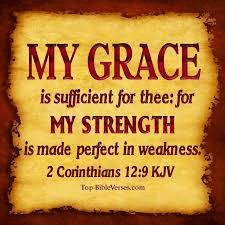
We need to change our understanding. It is faith in God, not ourselves that we boast of anyway. As Paul wrote in his letter to the Corinthians, “ but he said to me, “My grace is sufficient for you, for power is made perfect in weakness.”

So I will boast all the more gladly of my weaknesses, so that the power of Christ may dwell in me.  Therefore I am content with weaknesses, insults, hardships, persecutions, and calamities for the sake of Christ, for whenever I am weak, then I am strong (9-10,NRSVUE).”

See initially Moses took a backseat to his brother Aaron. That wasn’t the arrangement God intended. He pointed out to Moses, Moses was to perform the miracles as God called him (Exodus 4:21a) “When you go back to Egypt, see that you do before Pharaoh all the miracles that I have put in your power (emphasis mine).” 

God has called us to a specific purpose. He uses the analogy of the human body with Christ as the head for a reason. The hand is  not designed to do what our elbow does. Each person has influence in areas and skills that others don’t. This means there are specific callings we can accomplish that others would not be as effective in. Do you know what your calling is?

God does not want us to sit back and miss out on what He has planned for us. What opportunities, circumstances or situations do you steer clear of out of fear of rejection or feelings of inadequacy? It is time to grab the bull by the horns! Hiding will never make it go away. Go to the Lord. 1 John 4: 18 says, “18 There is no fear in love, but perfect love casts out fear; for fear has to do with punishment, and whoever fears has not reached perfection in love (NRSVUE).” We need to surrender to God, turn our fear over to Him so we can be set free and step into the calling He has placed on our lives. 

In the New Testament, when Stephen is speaking about Moses he states this as recorded in Acts, “ So Moses was instructed in all the wisdom of the Egyptians and was powerful in his words and deeds (22, NRSVUE).” Now this may seem a contradiction to what we read Moses saying earlier, but not really. A true contradiction has to be mutually exclusive. In other words, both cannot be true at the same time. It is very possible to be powerful in speech and deeds due to authority, and not be eloquent. However, I personally look at it a bit differently.

We often sell ourselves short, and what we read earlier was Moses who had been hiding in the desert ever since he fled Egypt giving his impression of himself. In addition, I truly believe that as Moses stepped into his God given calling, God did what He always does, brought perfection in Moses weakness. Speech is most definitely an ability that is developed, I used to teach speech classes. So My belief is that Moses grew into his ability as he gave over to God’s calling and so by Stephen’s day, and no one there disagreed with him as we know of his comments on Moses, Moses was remembered as a man who was powerful in speech and deed.

Are you ready to step into what God is calling you into?  There is no better day than today.

Be blessed, God loves you and so do I!

Pentecost

pentecost-300x188Pentecost Sunday is a remembrance and celebration of when God poured out His Holy Spirit upon the early church. When He did this, he was fulfilling what John the Baptist foretold when he said there would come later one who baptized with the Holy Spirit and with fire (Matthew 3:11).
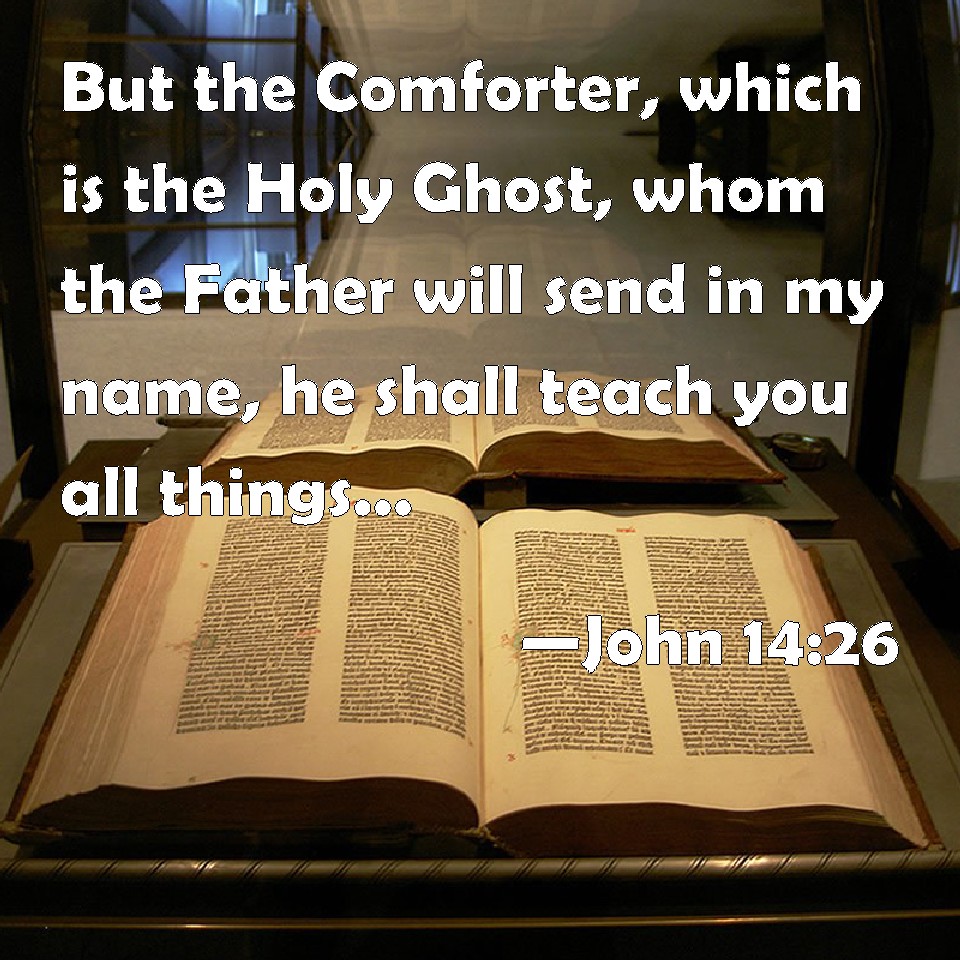
 

This was also a fulfillment of the promise Jesus made to His disciples regarding HimJohn 14 image sending a comforter, the Holy Spirit (John 14:26).
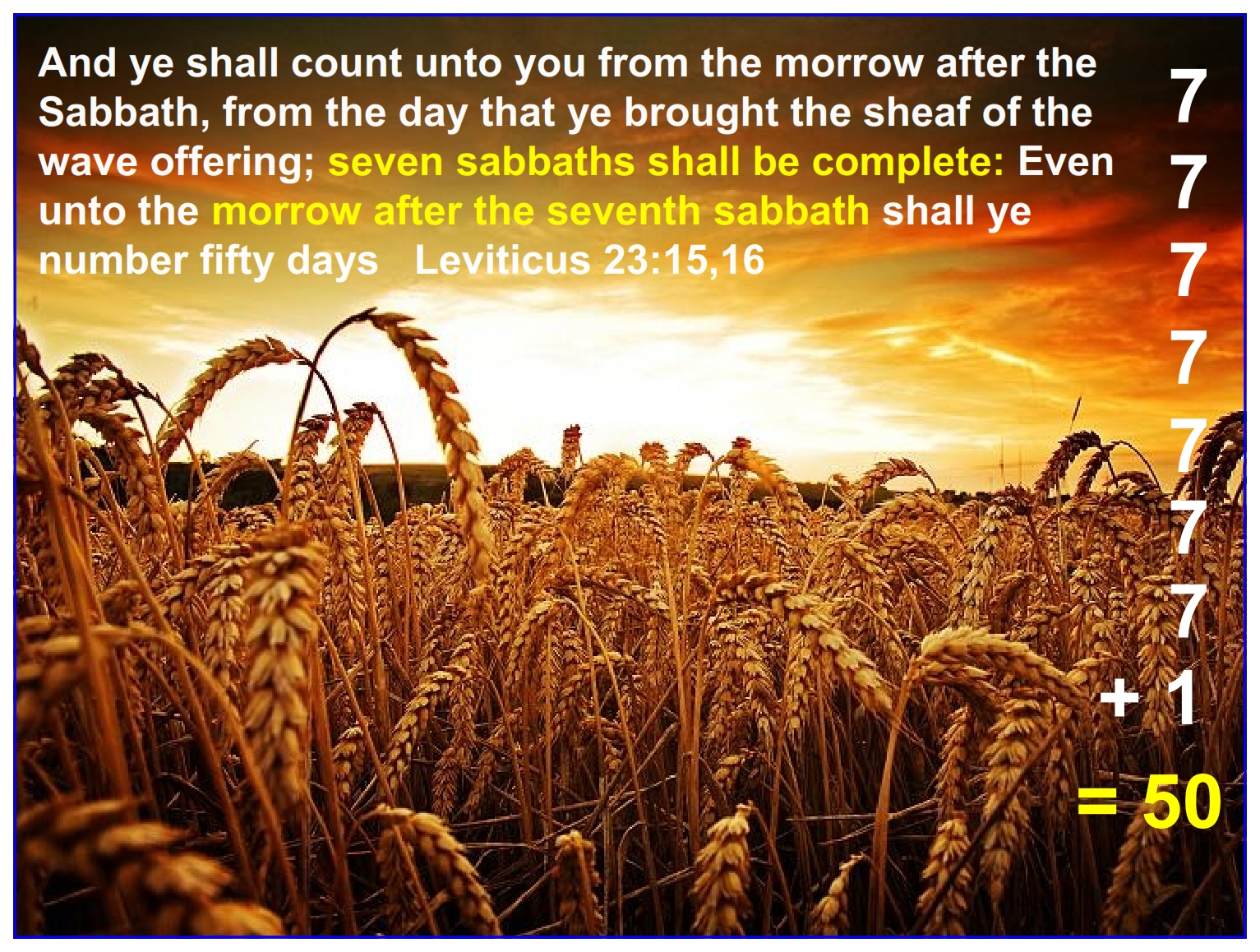
But neither of those are the reason it is called Pentecost. For this reason we need to look back at the foundation of the Christian belief, Judaism. Jesus and the disciples were Jewish. They observed and celebrated the Jewish Feasts.  There are seven feasts celebrated, but three main feasts. The three main feasts are: Pesach (Passover), Shavuot (Weeks or Pentecost), and Sukkot (Tabernacles, Tents, or Booths).

feast of weeksCelebrating the Feast of Pentecost is why the Apostles and other disciples of Jesus were gathered together in the upper room. The word Pentecost comes from  Greek Πεντηκοστή (Pentēkostē) meaning “fiftieth” (50th). It is called this because this feast takes place 50 days following Pesach (Passover).
Biblically speaking this feast is tied to the grain harvest, specifically wheat.  This harvest lasted seven weeks and was considered a time of joy (see Exodus 34:22, Deut. 16: 9-11, Isa. 9: 2 Jer. 5:24). It was the first day that the people could bring the first fruits as an offering to the Lord.

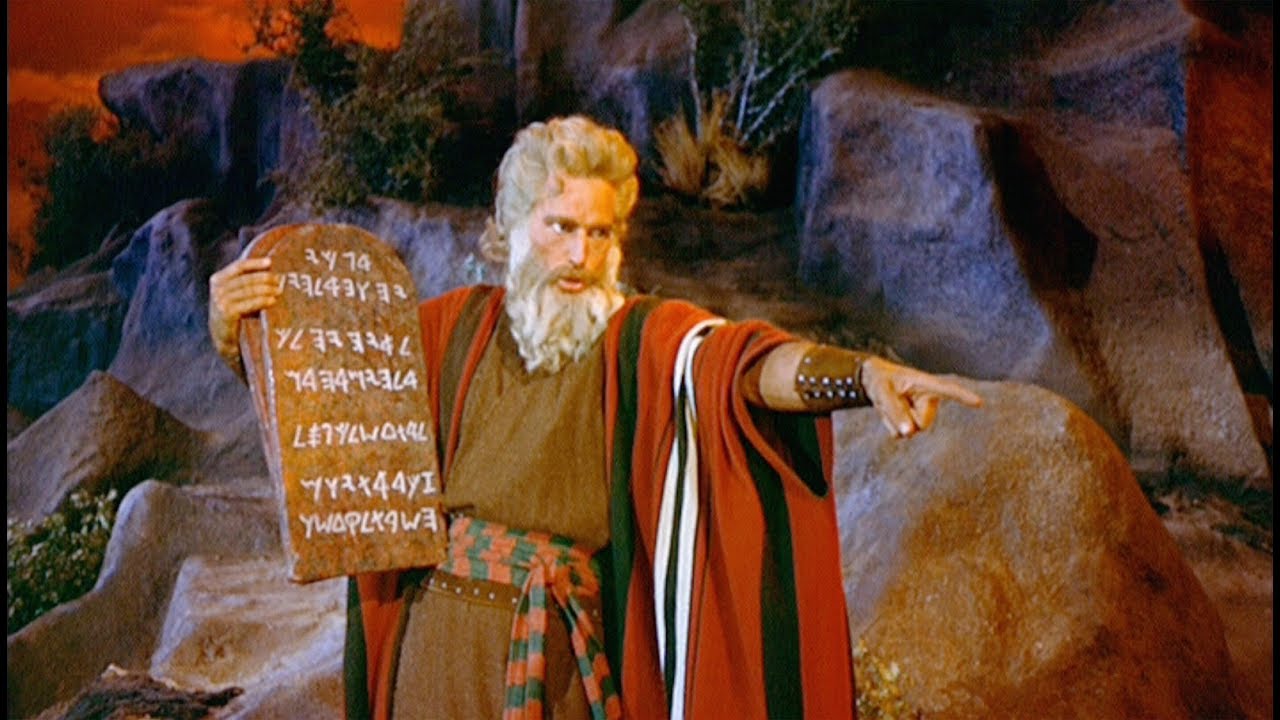
Later in time it would become associated with the giving of the Torah, or Law, to Israel at mosesMt. Sinai, following their salvation from Egypt. This is largely because of its association with Pesach (Passover) and the obvious ties to the Exodus through Moses and the subsequent giving of the Torah to the Israelites.


acts-birth-of-a-churchIn the New Testament, Pentecost is looked at as the birth of the church. It was this event that Jesus referred to when He told the disciples,  “Do not leave Jerusalem, but wait for the gift my Father promised, which you have heard me speak about.  For John baptized with water, but in a few days you will be baptized with the Holy Spirit” (Acts 1:4, HCSB).

The 1st chapter of Acts tells us there were 120 gathered together. Luke then describes in tongues of firechapter two the Holy Spirit falling upon them with what looked like tongues of fire. It says they were all baptized with the Holy Spirit and spoke in other languages or tongues. Peter later testifies in front of the crowd that this gift of the Holy Spirit is the fulfillment of Joel 2:38-32.

“this is what was spoken through the prophet Joel: And it will be in the last days, says God, that I will pour out My Spirit on all humanity; then your sons and your daughters will prophesy, your young men will see visions, and your old men will dream dreams. I will even pour out My Spirit on My male and female slaves in those days, and they will prophesy. I will display wonders in the heaven above and signs on the earth below: blood and fire and a cloud of smoke. The sun will be turned to darkness and the moon to blood before the great and remarkable Day of the Lord comes. Then everyone who calls on the name of the Lord will be saved” (Acts 2:16-21)

foxes-book-martyrs-470x246-01Foxe’s Book of Martyrs

The gift of the Holy Spirit is the catalyst that changed the disciples forever.  The truth of the resurrection was burned into their hearts and the group of men who scattered during the arrest and crucifixion, the men who denied with cussing that they even knew Jesus, went on to each give their lives, literally, to see the world turned upside down. Check out the above link for how each disciple gave their life as well as other Christians.

This was the birth of the church, we were to grow and prosper since that time. In many ways we have, in others we have grown stagnant. We need a fresh infilling of the Holy Spirit in order to truly live out the final instructions of Jesus to His church. It is a because of having access to the Holy Spirit that we will be able to do the things Jesus did, and even more, as according to what Jesus said in John 14.

This is why we celebrate the gift that is the Holy Spirit on Pentecost Sunday. May it be more than a side comment or even a potluck dinner to commemorate it. Let it be a push to seek for more of the Holy Spirit and fire operating in our life so that we can make a difference in the world.

change

The Five “One Things”

The Five “One Things”. 

ONE is particular, specific, and separate.

It stands alone. Regarding numbers it is the principle primary number. It emphasizes significance, an unmistakable quality, and total autonomy.

In this crazy passed world, with its ups and downs and multiple things competing for our attention, it is important to pause and consider what is important. Evaluate priorities.

bible-gateway   When I performed a keyword search on the Bible Gateway website, I found the phrase “One Thing” was used 11 to 18  different times in Scripture depending on the English translation.

There are 5 that kept popping up regardless of the translation that really stood out to me that will be the focus of this lesson, The 5 “One Things”

  1. Psalm 27:4

“I have asked one thing from the Lord; it is what I desire:
to dwell in the house of the Lord all the days of my life,
gazing on the beauty of the Lord and seeking Him in His temple.”

King David is often called a “man after God’s own heart.” He chased and pursued man after God'sintimacy with the Father, sought His heart and desired to be made in God’s image over everything else he could want or desire. When He was confronted with his sin and mistakes, unlike Saul who wanted to be honored in front of the people, David was concerned with not losing the presence of God. Something interesting to point out, when David wrote this, the Temple had not been built yet. It seems David had a glimpse of the Temple not made by human hands where he could dwell with God forever. This is the one thing he sought.
  1. Mark 10:21

21 Then, looking at him, Jesus loved him and said to him, “You lack one thing: Go, sell all you have and give to the poor, and you will have treasure in heaven. Then come, follow Me.”

rich young rulerThe Rich young ruler only lacked one thing. He could not part with his possessions and wealth. There are many reasons this could be, maybe he lacked faith for God’s provision. Maybe it was the fear of losing everything, losing the status his position and wealth brought him. He may have considered, “what might everyone else think?”


 

surrender

Whatever the reason was, he did not give everything to Jesus. One thing He lacked was total submission of every area of his life being given over to Christ.


  1. Luke 10:42

42 but one thing is necessary. Mary has made the right choice, and it will not be taken away from her.”

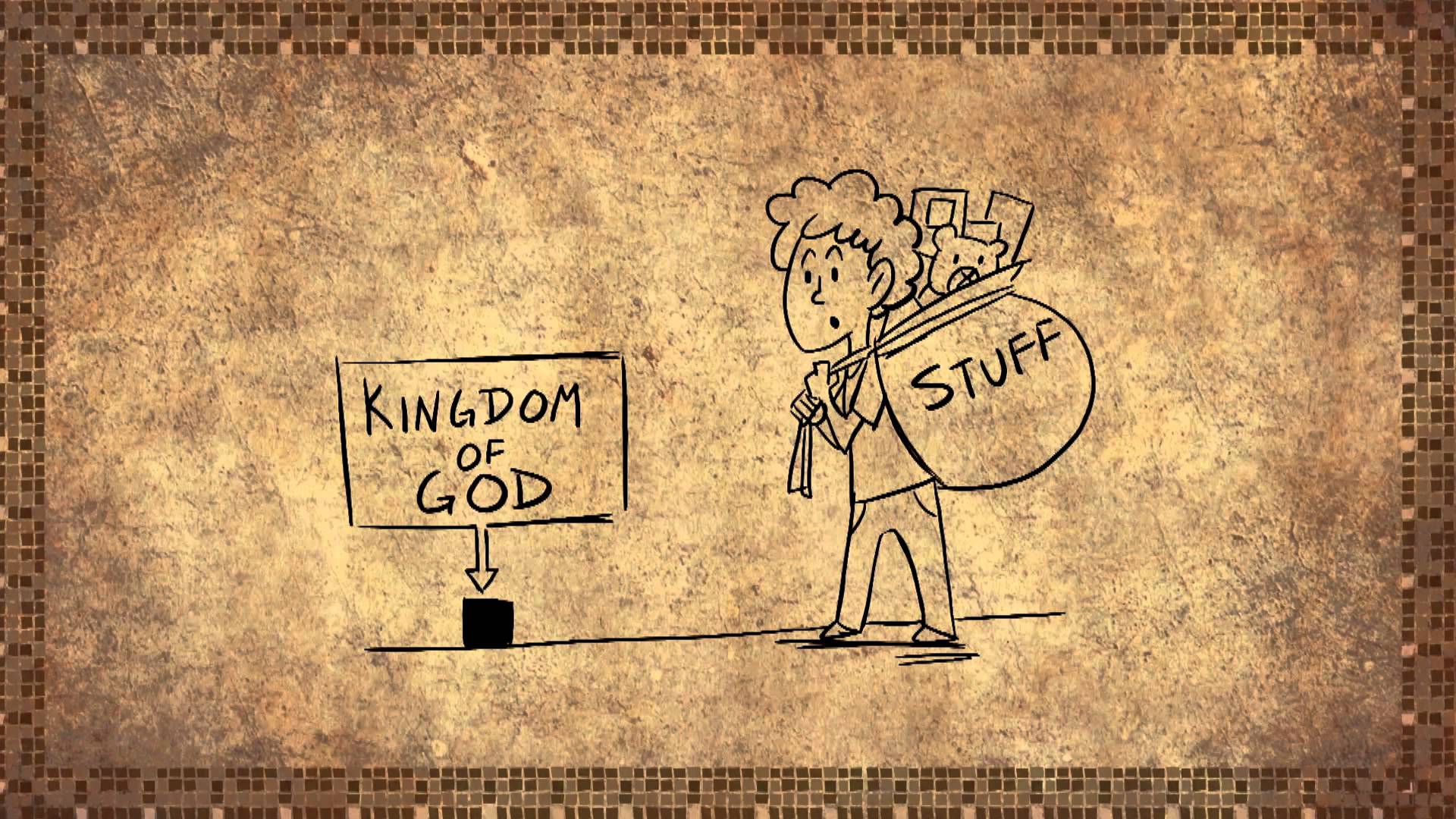
Mary and Martha are two sisters that were close to Jesus. During a particular gathering at their home, Martha was very busy tending to the things to insure the evening went well as a good host would. However when she complained about her sister, an interesting point was made by Jesus. The one thing that is necessary is being with Jesus. Seek First the kingdom of God and all these things will be added to you. Jesus is the physical representation of God’s Kingdom. So Seeking Jesus is the one thin that is necessary. There is no other way to the Father, except through Him. I have often heard it said, the greatest enemy to great, is good. Martha was doing good things, but Mary had chosen that which was better.mary or martha

Are you Mary or Martha? Click to find out.

  1. John 9:25

25 He answered, “Whether or not He’s a sinner, I don’t know. One thing I do know: I was blind, and now I can see!”

blind but nowWe see the story of a man that was born blind. The religious leaders are stuck on being offended by Jesus healing on the Sabbath and not on the miracle. As they question the man, he doesn’t try to convince them of anything or have a well prepared apologetics response. It is O.K. to tell people I don’t know.  He tells them what he knows. I was blind, and now I see. To all the questions He had one focus. Revelation 12 tells us that they [the saints] overcame by the blood of the Lamb and the word of their testimony. There is no greater apologetics or reply that we can give to anyone besides the truth, especially when that truth is the power of God working in our life. We should focus on what God has done in our lives.


  1. Philippians 3:13

13 Brothers, I do not consider myself to have taken hold of it. But one thing I do: Forgetting what is behind and reaching forward to what is ahead, 14 I pursue as my goal the prize promised by God’s heavenly call in Christ Jesus.

goalsetting5Paul did not let his past determine his future. He had a goal and he went after it with a singular purpose. Nothing was going to keep him from his goal.
These five verses showed 5 different people, from 5 different backgrounds, but at the heart of each story is one thing we need to grasp.

  1. Through David we see that knowing God is at the heart of prayer.
  2. Through the Rich Young Ruler we see that knowing God is at the heart of total surrender.
  3. Through Martha we see that knowing God is at the heart of service.
  4. Through the Blind man we see that knowing God is at the heart of witness.
  5. Through Paul we see knowing that God is at the heart of ambition.

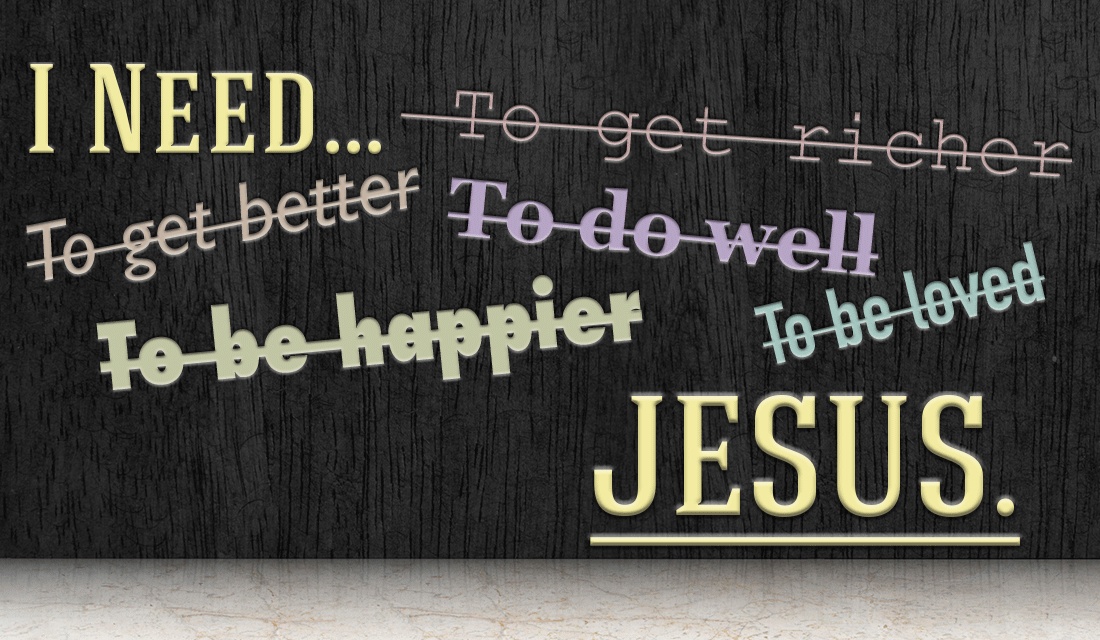
The One Thing we need is a singular focus on Jesus in every aspect of our lives. Not just on Sundays, not just around our church friends, but everyday, everywhere we may be.

need jesus


Lost Art of Listening. A book review of chapters 4, 5 ,& 6

Merriam-Webster defines listening as : to pay attention to sound; to hear something with thoughtful attention; to be alert to catch an expected sound. It is doubtful that anyone does not understand what listening means, and yet there is such a struggle to accomplish this task correctly. Michael Nichols book, The Lost Art of Listening, is sectioned out into four parts. The second part is titled, “ The Real Reasons People Don’t Listen.” Through chapters four, five, and six, Nichols takes a look at barriers to people’s ability to listen.

Chapter four, “When Is It My Turn?”, takes a look at what Nichols calls “the heart of listening” (Nichols, 2009, p.73). This chapter examines the battle everyone faces with ignoring their own needs and focusing on the needs of the speaker. This is not a passive style of listening, but truly finding empathy for the speaker. “The act of listening requires a submersion of the self and immersion in the other” (Nichols, 2009, p. 75). This is not easily done as it requires the listener to set aside their agenda, what they are hoping to accomplish, in order to fully hear what the speaker is saying. So there is a difference between having true interest and faking it. Nichols calls listening a burden. It is setting aside, for the moment, everything and giving your full, undivided, attention to the other. Holding your tongue, not thinking about what you will say next, and just listening. As Nichols puts it, “genuine listening means suspending memory, desire, and judgment-and, for a few moments at least, existing for the other person” (Nichols, 2009, p. 77).

The interesting thing is from all of that you would think a totally selfless person would be a great listener, not according to Nichols. No one is perfect, the Bible is clear in the fact that we all fall short. This very reason comes into play due to the difficulty in sustaining selfless listening all the time and care is not taken, we can fool ourselves into thinking we are better listeners. Seeking to show empathy and connection with phrases such as ,” That reminds me of the time…”; “Oh how awful…”; or “well if I were you…” As well meaning as these seem, they are sending messages that say I can top that, that you pity the speaker, or just giving unwanted advice. The truth is, no one can be selfless all the time, and constantly putting their own needs aside. That isn’t healthy either and it can lead to a break down in communication due to our own hierarchy of needs not being met.

Nichols acknowledges this, “ a good listener may need to set aside his or her own needs to tune in to the other person’s but completely selfless people don’t make good listeners. You have to get listened to yourself to free you up to be receptive “ (Nichols, 2009, p. 81).

Nichols closes out the chapter by asking the question, “Do women listen differently than men?” The author points out the difference in his assertion regarding setting self aside to the ideas promoted by Deborah Tannen. Tannen gives a broad generalization for both sexes stating that “women engage in ‘rapport-talk’ while men specialize in ‘report-talk’” (Nichols, 2009, p. 91). Nichols does not seem to agree that the clash of due to gender differences is always inevitable and emphasizes the importance of listening with out bias. He states being listened to through others bias, and anxiety just leads the listener to feelings of loneliness, not being understood, and leads to alienation. “Those listeners who are more or less always in an unresponsive state find themselves shunned, often with no idea why. They never connect because they never cross the space between themselves and other’s” (Nichols, 2009, p. 93).

I found this an interesting look at differing views. Years ago I read You Just Don’t Understand : Women and Men in Conversation by Deborah Tannen and so am familiar with her ideas on genderlects. It was refreshing to hear someone else not buy completely into the gender stereotypes. I do understand there are obvious differences between men and women, and praise God for them. However I do not buy that certain things are a certain way in regards to our communication styles and personalities just because of our gender. I fear this mentality is at the heart of what we see going on with gender confusion because people relate more to one gender than the other therefore God made a mistake and they are in the wrong type body. I find how I approach communication depends on who it is with and my own past experiences. My wife, she thinks and does certain things more along the lines of what people might think a man would do. She certainly gets along with men much better and struggles to maintain friendships with women. I find myself moving with a more Rapport style communication with my wife. Constantly wanting to connect with her and wondering if everything is okay between us and working to keep it that way. This is a holdover from my previous divorce where I was blind sided that anything was even wrong and just came home to an empty house one day. I do not want to be oblivious and so strive to not make that same mistake. The reality is, I take the pendulum too far the other way and so make all new mistakes allowing my expectations to cloud our communications  this is not the desired outcome since communication is about building relationships and connections. So listening is hearing what the other is saying, not what you want or expect to hear.

“You Hear Only What You Want To Hear,” is the title of chapter 5, and makes a nice transition following the ideas of the previous chapter. Nichols focuses on how the listener’s attitudes and biases can distort what is actually being heard. People’s expectations make us hypersensitive. “The past is alive in memory- and it runs our lives more than we know” (Nichols, 2009, p. 101).  The way our families interacted teaches things such as how to overreact, to be distant. The way our past relationships, even in childhood, have played out trains us into certain patterns that can be transferred to other relationships and cause us to respond in ways that is not even appropriate to the given situation (Nichols, 2009). This leads him to saying “our parents may be the most important unfinished business in our lives” (Nichols, 2009, p. 104).  Our relationships can revert us back to adolescence or childhood when a wife is perceived as nagging and reminds the husband of the belittling and feelings of not measuring up he endured as a child. Nichols states we have sub personalities that create battling inner voices. It is important to remember that “calm fosters unity; conflict fractures it” (Nichols, 2009, p. 105).  It is useful to remember we all have these warring voices and to realize when a person reacts in away that does not make sense to the situation, it may be that they are reacting to the warring voices that have developed due to various experiences.

This is an important idea not only for relationships, but also especially in counseling. So many times what we may first see and experience with a client, whatever the problem is they have come to discuss, it may actually be the symptom and not the true heart of the issue. It will be important to notice and investigate what might be the reason behind certain outburst or feelings regarding situations in order to find the true culprit causing the problem so it can be dealt with and hopefully a workable solution applied. This is exactly the focus of the next chapter.

News Flash: Emotionality makes us defensive. Ok, that is not really breaking news to anyone, and yet it is a pitfall that constantly interrupts true listening. This is the topic of chapter 6, “Why Do You Always Overreact?!”  These emotions, when handled improperly, cause a breakdown in communication. Nichols explains it by comparing it to a radio saying, “Emotional reactivity is like throwing on a switch and having the electricity come on, and instead of music you get static. The static is anxiety” (Nichols, 2009, p. 111). Nichols again takes a look at the interaction between past memories and how we react and deal with present circumstances. Someone overreacting really only looks out of place to us because we can’t see the memories leading to this reaction (Nichols, 2009). All of these experiences build up and create the perspective in which we receive and judge things, which may or may not be a correct evaluation. Often times we are intolerant toward others in the very areas we find ourselves lacking and don’t want to tolerate. The author points out how “we can’t listen well to other people as long as we project the mistaken idea that parts of us aren’t good enough to be loved, respected, and treated fairly” (Nichols, 2009, p.116). This can be a leading cause of conversations becoming arguments. A reaction from one causes a reaction in the other and the next thing both are arguing and not really hearing anything the other is saying. Another cause of arguments is the idea of wanting to prove you are right and the other individual wrong.  If this continues, it will lead to disaster because “when neither party to an exchange is willing to break the spiral of reactivity, both are likely to end up feeling angry and misunderstood” (Nichols, 2009, p. 119).

Responsive listening is designed to help stop arguing. It works by hearing the other person’s side of the story before giving your own. As we all know, there are two sides to every story. This takes practice and self-control. It is not automatically assuming the other is right and just admitting you are wrong, but it is giving fair time to listen and hear what the other is saying instead of just repeating your own position to prove you are right. Some one has to break the pattern, “arguments are like ping-pong games: it takes two to keep them going” (Nichols, 2009, p. 121). Responsive listening is making the conscious decision to draw out the other person’s feelings prior to giving your own response ( Nichols, 2009).   Many factors can contribute to arguments including tone of voice, not feeling listened too, and certain hot topics, etc. it all boils down to what seems obvious at n objective distance,  good listening requires us to resist the urge to overreact, but that is where the struggle truly is, in the heat of the moment. Nichols encourages listeners by stating, “ facing encounters that raise your anxiety tests your maturity, strengthens you if you have the courage to stand fast and let matters unfold” (Nichols, 2009, p. 135).

This whole section spoke to me. I saw my many mistakes I make as well as examples in my own life and reactions that backed up the reality of how our past shapes us and creates our emotional responses that can effect our ability to listen.  A prime example was earlier this week I came home to an empty house,  I had beaten my wife home. She had sent a text telling me she was picking up the kids and so there was a change in our schedule. I felt instant anxiety rise up. Referring back to an incident I mentioned earlier regarding my divorce, I felt a bit of panic and worry. Even though I have been remarried for almost six years and it has been 10 years since my divorce, the fear of rejection and abandonment tried to raise its head.  Remembering 2 Corinthians 10:5, “…taking every thought captive,” I reminded myself this was not the same person, not the same situation, and I had nothing to fear. This is important to realize we have to take control of our thoughts not just to handle our own responses, but to truly be able to listen to others and this will be an important lesson that can help our clients as well.

Check back for the rest of the review…

The Lost Art of Listening. A review of chapters 1, 2 & 3.

Everyone has two ears and one mouth. It might be common sense then that we need to listen twice as much as we speak, and yet that is rarely the case, at least not real listening. There is a difference in hearing what someone says and truly understanding and catching what the mean. This common breakdown in communication, hearing but not truly listening, is what Dr. Michael Nichols discusses and explains how to over come in his book, The Lost Art of Listening.

 Right off the bat Nichols hammers readers with a truth everyone has experienced, “Nothing hurts more than the sense that the people we care about aren’t really listening” (Nichols, 2009, p. 1). Even though most have experienced this hurt, it has not improved the vast majority of people’s true listening skills. This is sad. As Nichols says,” regardless of how much we take it for granted, the importance of listening cannot be overestimated (Nichols, 2009, p 6). The first part of the book, “The Yearning To Be Understood,” examines the desire everyone has for being understood. The three chapters take a look at the importance of listening and why it is important. It examines the interaction between the speaker and the listener and then dives into how breakdowns in communication come about.

The first chapter, “Did You Hear What I Said,” begins with examples of common complaints people express regarding communication between husbands and wives. This illustrates the frustration that comes from not feeling understood or taken seriously by those most important to us. A yearning to be understood and accepted. We are created to be social beings and therefore we desire to bridge the gap between others; to make a connection and us. Just as one desires to reach out to the other, the response can aid or hinder true communication and either allow the connection or hinder it. Therefore “the essence of  good listening is empathy” (Nichols, 2006, p. 10). Combining effort with intuition to make communication work is a necessity. It is this ability that allows bonds to form and connections to happen. This is hugely important. Nichols says, “When deeply felt but unexpressed feelings take shape in words that are voiced and come back clarified, the result is a reassuring sense of being understood and a grateful feeling of shared humanness with the one who understands” (2009, p.10). Therefore, knowing how to listen is key to having successful relationships. We all know it hurts to not be listened too and the author points out most of us think we are better listeners than we really are. We tend to take listening for granted. In spite of how basic listening seems, it as more than one purpose, “taking in information and bearing witness to another’s experience” (Nichols, 2009,p15).  This is what helps people grow up secure in them, having other people validate them and their thoughts as important, being taken seriously. Listening is not just hearing and offering reassurance that everything will be all right, it is actually making an effort to connect and understand why the speaker feels the way they do, showing sympathetic understanding (Nichols, 2009).

Listening is the most important aspect of counseling. Without it, there will be no real progress from sessions and no true connection between the counselor and the counselee. Listening will allow the counselor to catch what is the heart of the problem, not just what is being explicitly said. Sometimes, just listening and understanding can bring healing in of itself without any advice being given. Since helping people work through and deal with problems and issues in their lives, listening is the most important skill. Listening to the client, as well as listening to God’s direction regarding the advice to give.

The second chapter, “Thanks For Listening,” focuses on what connects people to each other and how listening helps to shape us. Nichols explains that, “striking a balance between expression (talking) and recognition (listening) is what allows us and the people we care about to interact as sovereign equals “ (Nichols, 2009, p.25).  Listening is a powerful force for change and in shaping peoples perspectives and relationships lies in the way it allows for shared expression, offering validation or contradiction. So the give and take is very responsible for how people perceive if they are being heard as well as becoming a part of how someone views himself or herself. The old saying “sticks and stones may break my bones, but words will never hurt me,” though often quoted as a shield against bad words unfortunately just isn’t true. Our deepest hurts and even the way in which we learn to view ourselves come from the words we hear from others. The author states that,”…self is not a given. Like having red hair or being tall, but a perspective on awareness, and an interpersonal one at that. The self is how we personify what we are, as shaped by our experience of being responded to by others. Character is formed in relationships and the vitality of the self depends on the quality of listening we receive” (Nichols, 2009, p. 27).  The author looks at how this develops throughout the life cycle of most people.

He lists the time  of this development between birth and two months as the “Here I am” This is when there begins to be an sense of oneself. An infant has needs that they cannot meet themselves, theses needs can only be met if the infant lets someone else know they need something. This is obviously displayed by the only vocalization a baby possesses, crying. This here I am, I need something is how a baby communicates all of it’s needs, even developing a particular culture with certain cries meaning certain things.  Attentive parents help develop this culture through the way in which they listen and respond to their infant. A parent cooing and speaking to a child in ways accrediting certain desires or reasoning behind a babies actions and cries. Obviously they have to be intuitive to their baby’s feelings to understand and meet their needs and desires (Nichols, 2009). Imagine how strong relationships would be if we stayed that attentive to everyone.     The author continues looking a the bonds with the “Hey Look At Me” (two to seven months) where the sense of a core self and autonomy is displayed. He explains that a confident child is developed through listening to the child. Again emphasizing how  the self is built up by the validation of those important in our lives and of course leaving the warning that the opposite would hold true (Nichols, 2009).

From a counseling perspective this is something very important to remember to utilize when dealing with my clients. Even though the connections were examined as in regards to certain ages, even adults adjust and reevaluate self-based on interactions with others. Husbands and wives find most problems arriving due to a communication problems. Being able to listen better will not only help in showing married couples how to interact with each other, but also in providing a safe place for them to tell their story and viewpoint, to discover where the problems exist. As Nichols puts it, “the feeling of not being understood is one of the most painful in human experience (Nichols, 2009, p. 41).  As a counselor, we need to help heal problems, not add to the pain by our own lack of listening and failure to understand. Therefore our own ability to listen in addition to being able to help others learn to listen better is paramount.

Why don’t people listen? A question that most people have probably asked at one time or another also serves as the title to the third chapter. This is where Nichols examines “How Communication Breaks Down” (Nichols, 2009, p. 42). The truth is, there are probably as many answers to that question as there are people who ask it. Being tired, having certain times in which you are ready to listen more than others, current events, what’s going on around you, etc. However, regardless of the distractions, we sometimes just need to put in an effort to communicate. Make an effort to listen is important as is making an effort to talk.  Relationships take investment, which includes investing in being a better listener. Assume people are worth the effort and worth the investment. “The truth is that we become more interesting when we assume interest on the part of the listeners” (Nichols, 2009, P. 44).

The author points out that sometimes the way communication has broken down is due to transference. This is where the speaker has projected certain expectations onto the listener. So many times people look at everyone around through  through lenses tinted by their own experiences and expectations that color everything they see a certain way, which may very well not be reality.  This can lead to what is heard not actually being what was said. This can be exasperated when both parties are doing this, which leaves no wonder why messages get confused and misconstrued leading to misunderstandings and feelings of not being understood. Throw in other possible breakdowns such as The listeners agenda, preconceived notions, emotions, not explicitly saying what is meant, gender differences, and etc., it is a miracle anyone ever understands anyone. This cliff hanger is where the author leaves the chapter , asking the question, “so why are we so sensitive to misunderstanding that we have trouble seeing the other person’s side of things?”  We must tune into the next chapter to discover his answer.

I found myself reading through this book and saying things to myself like,  “oh, I do that…yep, guilty…oh, so that is why she reacted that way.”  These chapters not only highlight the importance of listening for a counseling perspective,     but also I am seeing more deficiencies in my own listening ability that I hope to improve for my wife’s sake as well as other relationships in my life. I am looking forward to finishing this book and applying it to my life personally as it continually leads me to more self-reflection.

Stop back by for the review of the next three chapters…

BUT GOD…

In 1986, a Hip hop artist named Sir-Mix-a Lot, produced a song titled, “Baby got Back” This is a song that is still played in certain genres from time to time. The song starts out with the phrase, ‘ I like big butts and I cannot lie…” This song obviously is referring to body parts, but as I was preparing this word, that opening phrase came to mind. That phrase actually applies to most of us, but in a different way. For example, how many of you have ever said or thought something along these lines:

I would go work out today, but I am too tired.

I want to talk to my friend about this issue, but I don’t like confrontation.

I want to do great things, but I am too old/young.

I would do (insert whatever), but (insert any excuse).

When we follow statements with the word but, it usually negates everything we said before it. Life can make the but seem really big and it often prevents us from doing things.

Well I want to tell you it is time for us all to get off our butts.

When we find ourselves coming up with a thought that contains a but, we need to follow that with god. BUT GOD!

Those are my favorite words in the Bible, my favorite concept regarding how life works. The beauty of how this works rests on God’s mercy and grace.

Mercy and grace are often confused. While the terms have similar meanings, grace and mercy are not the same. To summarize the difference: mercy is God not punishing us as our sins deserve, and grace is God blessing us despite the fact that we do not deserve it. Mercy is deliverance from judgment. Grace is extending kindness to the unworthy.

In short, mercy is God not giving us what we do deserve; grace is God giving us something we do not deserve.

There are many things we have access to because of God’s mercy and grace working together to give us a but God statement. I want to look at just 3 of them today.

1st Gods mercy and grace gives us salvation

Titus 3:5

5 Not by works of righteousness which we have done, but according to his mercy he saved us, by the washing of regeneration, and renewing of the Holy Ghost;

 Ephesians 2:8-9

For you are saved by grace through faith, and this is not from yourselves; it is God’s gift— not from works, so that no one can boast.

 The apostle Paul knew he had received God’s mercy and

he knew full well that he didn’t deserve it. But God, the most wonderful two words ever put together, but God gave it to him anyway.

You see Paul made a lot of mistakes before being saved.

He was essentially an old time Charles Manson, being responsible for the death of a lot Christians. Then one day, on the road to Damascus, Paul received Gods mercy instead of the judgment he deserved. Not only that but grace was given to him, which included a new name (from Saul to Paul), a new life, and a new mission. None of which was based on anything he could boast in. He was forever thankful.

2nd God’s mercy and Grace also gives us help in our times of trouble

 Hebrews 4:16

16 Let us therefore come boldly unto the throne of grace, that we may obtain mercy, and find grace to help in time of need.

 We all face difficult and trying times, I am sure everyone here has cried at some point in life, I know I have.

But there is good news. The help and comfort we need is always available during these times. It is all because of Gods mercy and grace. No one has earned the help that God gives to us each day, we all should be punished for our sins and should reap the results of our bad choices without comfort. Have you ever heard the phrase you made your bed, now lie in it? Well we often times find our selves in trouble, but God shows mercy in not leaving us alone and then in addition shows us Grace by giving us help.;

What have any of us done for God lately that he owes us any favors? He is God. He doesn’t need us to give him anything.

Everything that we are given is because of his loving grace and mercy.

I am so thankful for all the blessings that God gives to me

3rd Because of Gods mercy and grace, we have all we need to endure whatever comes our way

2 Corinthians 4:1

Therefore, since we have this ministry because we were shown mercy, we do not give up.

 Philippians 4:13

I am able to do all things through Him who strengthens me.

 Berean literal translation says:

I have strength for all things in the One strengthening me.

 Sometimes life gets so stressful that it seems like we just can’t go on another day but there is good news. The good news is that we are not alone. God’s mercy and grace strengthens us and sustains us so we do not have to give up. We can endure whatever comes our way because he gives us strength and walks through it with us. We may feel alone and abandoned, too weak to make it through, But God never leaves us or forsakes us. We have a friend in Jesus, a friend that sticks closer to us than a brother. When it seems that we can’t go on any farther he tells us to cast our cares upon him because he cares for us. His mercy and grace is new every day, always available to us.

I want to share a short story about Henry Ford. One day he was driving through the Michigan countryside when he saw a man whose model T Ford had broken down alongside the road. Mr Ford stopped and asked the man if he could take a look and see if he could fix, it the man said yes. In just a matter of minutes Mr Ford had the car running again. The man told Mr Ford he sure was impressed. Henry Ford replied, “well I should be able to fix,. it after all I am the one who designed it.”

God has designed us and whatever might be wrong with us God is able to fix it. There is nothing that God cannot do. The next time life throws you something that causes you to pause and say but… I want you to remember the biggest but of all, but God. Go to Him and take advantage of His mercy and grace today. It turns out I really do like big buts, and I cannot lie.

Great BUT GOD verses:

Genesis 8:1

But God remembered Noah and all the wild animals and the livestock that were with him in the ark, and he sent a wind over the earth, and the waters receded.

Genesis 31:42

If the God of my father, the God of Abraham and the Fear of Isaac, had not been with me, you would surely have sent me away empty-handed. But God has seen my hardship and the toil of my hands, and last night he rebuked you.

Genesis 50:20

You intended to harm me, but God intended it for good to accomplish what is now being done, the saving of many lives.

1 Samuel 23:14

David stayed in the desert strongholds and in the hills of the Desert of Ziph. Day after day Saul searched for him, but God did not give David into his hands.

1 Kings 5:4

But now the LORD my God has given me rest on every side, and there is no adversary or disaster.

Nehemiah 9:17

They refused to listen and failed to remember the miracles you performed among them. They became stiff-necked and in their rebellion appointed a leader in order to return to their slavery. But you are a forgiving God, gracious and compassionate, slow to anger and abounding in love. Therefore you did not desert them.

Psalm 49:15

But God will redeem my life from the grave; he will surely take me to himself.

Psalm 73:26

My flesh and my heart may fail, but God is the strength of my heart and my portion forever.

Isaiah 40:8

The grass withers and the flowers fall, but the word of our God stands forever.

Jonah 2:6

To the roots of the mountains I sank down; the earth beneath barred me in forever. But you brought my life up from the pit, O LORD my God.

Matthew 19:26

Jesus looked at them and said, “With man this is impossible, but with God all things are possible.

John 1:18

No one has ever seen God, but God the One and Only, who is at the Father’s side, has made him known.

Acts 2:24

But God raised him from the dead, freeing him from the agony of death, because it was impossible for death to keep its hold on him.

Acts 3:15

You killed the author of life, but God raised him from the dead. We are witnesses of this.

Acts 5:39

But if it is from God, you will not be able to stop these men; you will only find yourselves fighting against God.

Romans 5:8

But God demonstrates his own love for us in this: While we were still sinners, Christ died for us.

Romans 6:23

For the wages of sin is death, but the gift of God is eternal life in Christ Jesus our Lord.

Romans 8:9

You, however, are controlled not by the sinful nature but by the Spirit, if the Spirit of God lives in you.

1 Corinthians 1:27

But God chose the foolish things of the world to shame the wise; God chose the weak things of the world to shame the strong.

Ephesians 2:4-5

But God, who is rich in mercy, because of His great love that He had for us,[a] 5 made us alive with the Messiah even though we were dead in trespasses. You are saved by grace!

2 Timothy 2:9

for which I am suffering even to the point of being chained like a criminal. But God’s word is not chained.


3 Strand Cord part 3

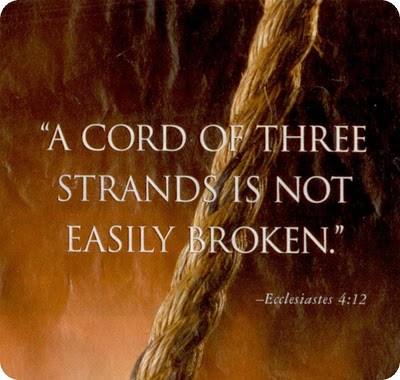
A Call to Action, that is what I would title this section. This is the final post in the 3 part series taking a look at the Christian walk through the symbolism of a 3 strand cord. This last section will focus on Action.The First strand talked about was importance of being in the Word, learning scripture and using it as the standard by which a Christian is to live. The second strand represented prayer, the importance of talking to God and cultivating a relationship with Jesus. This post will focus on the third strand, action.

It is a travesty not to grow in Christ. Salvation is not just saying a prayer and never thinking about it again. True Christians are representatives of God. Our thoughts, our actions, words they represent Christ. People will come to us for a drink, a lot of times without realizing that is what they are doing. We are to be fresh, not stagnant. We cannot be fresh or give fresh water unless we are filled daily.This is what the previous two posts discussed, how to be filled daily. But if you look in nature, the clearest, freshest water isn’t the ponds and lakes, but the rivers. That water which is moving. When you look at a river from any point along the bank, that area has water flowing into it and out of it, it is constantly moving. If it completely stops moving anywhere, the clearness and freshness of the water there will changes over time. The Christian walk is the same.

A believer needs to constantly have new life pouring into them daily as well as allowing that life to pour out of them. Now before anyone misunderstands, I am not saying works are needed in order to be saved. Salvation is by grace through Jesus only, no other way. However,salvation should lead to works. As our lives become more and more like Christ, so will our actions.

Ephesians 2:8-10
8 For you are saved by grace through faith, and this is not from yourselves; it is God’s gift— 9 not from works, so that no one can boast. 10 For we are His creation, created in Christ Jesus for good works, which God prepared ahead of time so that we should walk in them.
we are created for a purpose, God’s purpose. James addressed the connection between faith and works in his teachings:

James 2:14-26

14 What good is it, my brothers, if someone says he has faith but does not have works? Can his faith[d] save him?
15 If a brother or sister is without clothes and lacks daily food 16 and one of you says to them, “Go in peace, keep warm, and eat well,” but you don’t give them what the body needs, what good is it? 17 In the same way faith, if it doesn’t have works, is dead by itself.
18 But someone will say, “You have faith, and I have works.”[e] Show me your faith without works, and I will show you faith from my works.[f] 19 You believe that God is one; you do well. The demons also believe—and they shudder.
20 Foolish man! Are you willing to learn that faith without works is useless? 21 Wasn’t Abraham our father justified by works when he offered Isaac his son on the altar? 22 You see that faith was active together with his works, and by works, faith was perfected. 23 So the Scripture was fulfilled that says, Abraham believed God, and it was credited to him for righteousness,[g] and he was called God’s friend. 24 You see that a man is justified by works and not by faith alone. 25 And in the same way, wasn’t Rahab the prostitute also justified by works when she received the messengers and sent them out by a different route? 26 For just as the body without the spirit is dead, so also faith without works is dead.

Let’s be careful here, if taken out of context this can lead to confusion regarding saved by grace or by works. I have heard some point to this claiming it proves the Bible contradicts itself. But for something to be a contradiction, then it has to be mutually exclusive. In other words, it is absolutely impossible for both things to occur at the same time. That is the meaning of a contradiction.

There is no contradiction in James. Remember to look at the context. James, chapter 2, has 26 verses: Verses 1-7 instruct us not to show favoritism. Verses 8-13 are comments on the Law. Verses 14-26 are about the relationship between faith and works. CARM (Christian Apologetics & Research Ministry) give a great explanation of this verse:

“James begins this section by using the example of someone who says that he has faith but has no works, “What use is it, my brethren, if a man says he has faith, but he has no works? Can that faith save him?” (James 2:14)  In other words, James is addressing the issue of a dead faith–a faith that is nothing more than a verbal pronouncement, a public confession of the mind, and is not heart-felt.  It is empty of life and action. He begins with the negative and demonstrates what an empty faith is (verses 15-17, words without actions). Then he shows that type of faith isn’t any different from the faith of demons (verse 19). Finally, he gives examples of living faith that has words followed by actions. Works follow true faith and demonstrate that faith to our fellow man but not to God. James writes of Abraham and Rahab as examples of people who demonstrated their faith by their deeds.
In brief, James is examining two kinds of faith: one that leads to godly works and one that does not. One is true, and the other is false. One is dead, the other alive, hence, “Faith without works is dead,” (James 2:20). But, he is not contradicting the verses above that say salvation/justification is by faith alone.
Also, notice that James actually quotes the same verse that Paul quotes in Rom. 4:3 amongst a host of verses dealing with justification by faith. James 2:23 says, “and the Scripture was fulfilled which says, ‘and Abraham believed God, and it was reckoned to him as righteousness.'” If James was trying to teach a contradictory doctrine of faith and works than the other New Testament writers, then he would not have used Abraham as an example. Therefore, we can see that justification is by faith alone and that James was talking about false faith–not real faith–when he said that we are not justified by faith alone.”

We do not serve a sleeping or dead God, He does not want a sleeping or dead bride.The world is stIll waiting for the reality of God, It is to be revealed through the church. How will that happen without the church getting off it’s blessed assurance and putting that faith into action? Looking around at Christianity today, especially in America, it is very reminiscent of a pond or are of standing water. There is a lack of fresh water pouring in and a lack of any water running out. It is covered in scum, has bugs and looks diseased. No wonder church attendance is declining.There is no life. The church was not mean to be an institution held within four walls. It is itself a living entity, the body of believers a whole representing the Bride of Christ.

(For more info on church attendance trends check out:
http://www.churchleaders.com/pastors/pastor-articles/139575-7-startling-facts-an-up-close-look-at-church-attendance-in-america.html )

If the river stops flowing, it’s not a river Why do we want more from God if we keep it to ourselves To enjoy what others don’t have? That is not the purpose of having God’s spirit. It is to be shared. The church was never meant to be thought of as a building. We, the followers of Jesus, are the church.

If you read through the Old Testament looking at the judges and the prophets, They were people of action. When the spirit comes on you boldness comes. Boldness demands action or else it isn’t bold. Doing things that are not normal. It is what God wants and expects from the church.

In the Old Testament the Ark of the Covenant was a symbol that represented the presence and glory of God. There were special instructions regarding it’s care and how it was to be handled. The only way it could be carried was special poles ran through rings and the priests carrying it on their shoulders. Do you catch the symbolism and meaning of that? The presence and glory of God is to be carried on the shoulders of men. At the cross the veil separating everyone from the Ark, the symbol of God’s presence was torn down. Everyone now has access to God’s presence through Jesus. However, the method of carrying that presence and the glory of God, Jesus, did not change. It is still to be carried by men. To carry something requires action.

The New Testament is also fun of examples of action, heck the birth of the church is described and detailed in a book titled ACTS. Jesus himself commanded His followers to a life of action,

Matthew 28:18-20

“All authority has been given to Me in heaven and on earth. 19 Go, therefore, and make disciples of[f] all nations, baptizing them in the name of the Father and of the Son and of the Holy Spirit, 20 teaching them to observe everything I have commanded you. And remember,[g] I am with you always,[h] to the end of the age.”

The very last words of Jesus on this earth were “go”. Not sit and read, but go. Yes they were to continue seeking him, to wait on the sending of the Holy Spirit, but his command was to go. A call to action.

We as Christians have received His grace in order to share His grace, so if we have received salvation by grace. we are obligated to share His grace.If you have a desire for more, a desire to see revival, a desire to be blessed, then begin to share your salvation with other people.
Why do you want more if you are not going to give it away? A revival that does not effect other people, does not effect your society is not revival.

Acts 1 “When the Holy Spirit comes upon you you will receive power and you will be my witness”

We must take the church outside these 4 walls, taking it into the streets unashamed of being Crazy in love with Jesus. Paul asked in Romans 10:14:

14 But how can they call on Him they have not believed in? And how can they believe without hearing about Him? And how can they hear without a preacher?
Paul stresses the importance of a Christians need to fulfill the last command of Jesus. Now this brings to my mind one of the more often asked questions by skeptics, but what about those who never hear about Jesus. This is a a topic I will cover in a later post in more depth, but suffice it to say we can rest in the assurance that God is a fair and just God. I mention here because of what it should do for a believer. It should light a burning fire in our hearts to do everything we can to make sure that there isn’t someone who has never heard of Jesus.

In closing, It is of no value to spend time in the word, spend time in prayer to get a manifestation of God and then go home and not shine his light. That is why I see this as 3 strands to make one strong cord: The word, prayer, and action. We must call out to God daily, we must study the word, but we are not to receive from God just for ourselves we must give it away. These are days of Action. Faith acts, faith does something Whatever God gives you, you are to use it ,put it into action. You want awesome things to happen, get where the action is, find someplace or someone who is needy and do something about it. An awesome man of faith and a dear friend of mine, Jeff Collins once said :

There are 3 kinds of people in church

Those who make things Happen
Those who watch things Happen
Those who say , “what Happened ?”

Let’s all be those who make things happen by giving away that which has been given to us, as the Lord has commanded. Go. This is your call to action.

3 Strand Cord (part 2)

As I continue this series regarding the 3 strand cord and look at the second strand, I want to discuss the importance of prayer. Entire books have been written regarding prayer so needless to say anything I mention in this post is definitely not an exhaustive analysis on the importance and power of prayer. However, there are some aspects regarding prayer that kept jumping out to me as I went back through those pages of my journal and I want to share those.

I heard someone once say that prayer is the Cinderella of the church. You know the story, Cinderella was mistreated and hidden away from most of society.Yet when she got out and made it to the ball, she was the most beautiful one there, so enchanting that the Prince went on a search throughout the kingdom to find her after the Ball. Well that is prayer for the church. It is often mistreated, not the most exciting thing to do, even seeming cliche and yet when truly put to practice it is the most beautiful and effective weapon the church has in this world. This is because when people stay on their knees in prayer, Jesus, eagerly runs to His bride.

To say it is important to pray is an understatement. The Bible is full of quotes telling us to pray.

1 Chronicles 16:11 Seek the LORD and his strength, seek his face continually.

Luke 18:1 And he spoke a parable to them to this end, that men ought always to pray, and not to faint;

1 Thessalonians 5:17 Pray without ceasing.

1 Timothy 2:8  Therefore, I want the men in every place to pray, lifting up holy hands without anger or argument.
These are just a few places that Christians are instructed to pray. Why is it so important? Well this Christian walk is a relationship with God and it functions very similar to relationships in the natural. You develop friendships by spending time with people. The more time you spend with someone the more you get to know them and the closer you become. Are you really close with someone that you never spend time with?

The Word Teaches us about Jesus, His teachings, and gives us knowledge on one level, but when coupled with prayer it become illuminated and takes it a step further. It is like a kid who loves Batman. He may have read every comic book available, seen the movies, and watched all the cartoons. He can tell you all about Batman, but if he has never met Batman, does not spend time with Batman regularly, then he does not know Batman. It is the same with Jesus. We can study and learn all about him, and that is good, but it must be coupled with prayer. Talking with God. Taking the time to cultivate that relationship.

This is more than blessing our meals, saying our bedtime prayers and asking him for our needs.
We need to pray more intensely Pray in all circumstances, good or Bad. We need more than just 5, 10, or 20 minute prayers, we need to shake the heavens. All types of prayers: praise and thanksgiving, Intercession, seeking God, crying out when in need, and others. But all types need to be in earnest and with the correct intention.

James 4:3  You ask and don’t receive because you ask with wrong motives, so that you may spend it on your evil desires. Frivolous self centered prayers are not always answered because they are not according to God’s will. Again we see the connection of the first strand with the second, through reading of the word we learn God’s desires and how to pray according to His word, which in turn brings answers to those prayers.

Psalms 145:18 The LORD is near to all them that call on him, to all that call on him in truth.

Proverbs 15:29 The LORD is far from the wicked: but he hears the prayer of the righteous.

James 5:16 Confess your faults one to another, and pray one for another, that you may be healed. The effectual fervent prayer of a righteous man avails much.

The word is clear that prayer, when done fervently and in the right manner accomplishes many things. Now this doesn’t mean there are certain formulas or a set way to pray. It is simply talking to God truthfully, humbly, and without selfish motives. But also with pretentious babbling and vain repetition to make yourself sound good. It is to be with intention and purpose.

The great example to us is the Lord’s prayer: Matthew 6:9-13

Our Father in heaven,
Your name be honored as holy.
10
Your kingdom come.
Your will be done
on earth as it is in heaven.
11
Give us today our daily bread.
12
And forgive us our debts,
as we also have forgiven our debtors.
13
And do not bring us into[f] temptation,
but deliver us from the evil one
[For Yours is the kingdom and the power
and the glory forever. Amen.
This shows examples of thanksgiving, asking for just daily needs , repentance, and forgiveness. a great model to follow given by Jesus himself. One of the most important aspects in this prayer is the point of seeking God’s Kingdom to come here as in heaven. There is a tension between the Kingdom of God being here and the Kingdom that is coming. It is like the difference between being adopted and having a hope to be adopted. It is in this tension where we pray and groan.

Romans 8:26-27
26 In the same way the Spirit also joins to help in our weakness, because we do not know what to pray for as we should, but the Spirit Himself intercedes for us[a] with unspoken groanings. 27 And He who searches the hearts knows the Spirit’s mind-set, because He intercedes for the saints according to the will of God.

When we don’t know what to pray, in our weakness the spirit will lead us, pray through us, and sometimes jus know what we need when don’t, when we can’t even vocalize it. This happens because in prayer you are no longer alone. God is there listening.So pray that you can have an open heaven and live with anticipation of what God is going to do.This is what it means to seek the Lord. The awesome thing about seeking the Lord’s presence is that He will show up. When he does, take time to listen as well. Sit in silence in his presence and let Him speak to you.

Just like when Cinderella went looking to see the prince at the ball in my earlier analogy,the result was the Prince seeking Cinderella to be his bride. Well Jesus eagerly seeks for His Bride, the church. In the story invitations went out inviting everyone to the ball, Jesus invites all of us to seek his presence. Why would we not accept this invitation to be in His presence in prayer?

It is in His presence when we truly experience change in our lives. It is in His presence that the things learned in the Word become truly written upon our hearts.It is through prayer combined with the Word that the anointing flows into our lives. As we saturate our lives in both the word and prayer we find more and more of the presence of God and are forever changed. This is where victory lies, with the presence of the Almighty God. When the Spirit of the Lord shows up, the ropes and chains that have held you bound up become like wax and melt away.

This is the beauty and awesome reward of walking with Jesus. Experiencing love and joy. Not just salvation from our sins that allows us into heaven when we die, but salvation from our sins that allows us to grow in a closer and closer relationship with Jesus hear and now. This does not mean there is no longer troubles, the Bible tells us to expect trials and tribulation. So the Joy of the Lord isn’t the absence of sorrow, but the presence of Jesus. As we pray without ceasing we find ourselves never alone. Our perspective changes because when He is with us, nothing else matters.

So the two strands, the word and prayer, twist together to strengthen our relationship with God and leads us to seek His presence and find it. This seeking the presence of God interlocks with the Great Commission , one flows from the other and leads to the final thread I will discuss in the next post… ACTION.3

3 Strand Cord (part 1)

I was planning on spending sometime adding more of my poems to the poem section of this site. I grabbed the composition book that I have some of these written in and left. When I got an opportunity to flip through the composition book I had grabbed the wrong one and actually had grabbed an old prayer journal. I have stopped and started journaling many times over the years. It is something I like and want to do, but am not super consistent over extended long periods of time. I always pick it back up though and so have entries that span many many years. Since I had it with me I started reading back through it and quickly came to realize through he prompting of the Spirit that this really was not an accident. Reading multiple entries covering a span of years I noticed a theme being woven through the fabric of time. Not just time in general, but my personal timeline and so it became a trip back to an old altar, a chance to rebuild, rededicate, and study again some basic truths. It all offers a message that I want to share over the next few blog Entries..

The theme I saw develop that I will focus on relates to our walk as a Christian. Accepting Jesus as the savior is the most decision we could ever make. Unfortunately that is where a lot of people, and even church instruction, seems to stop. There is a need for true discipleship for new believers, heck even those who have walked for a while. There is more to being a Christian than just going to church or just saying a one time prayer. It is about having a relationship with the creator of the universe. A relationship with God is similar to a relationship in the natural. It has to be cultivated.
Ecclesiastes 4:12 tells us a cord of three strands is not easily broken. This has proven true in my Bushcraft experience as well. A great way of increasing strength of cordage is by twisting more than one strand together or even braiding them. As I perused through the pages of the journal, there were three topics that kept popping back up that when used together create an almost unbreakable cord in our spiritual lives. Now it is important to note that the Christian walk is about relationship, not formulas, but having these three aspects in our walk builds spiritual strength and will bring us in closer intimacy with Jesus.

The three strands every Christian needs in their life to help cultivate a strong relationship with God are the word, prayer, and action.

The first strand, the WORD

So much of today’s society is experience driven. Live life to the fullest, do whatever makes you happy. This has even leaked over into the church. Charismatics can suffer from charismania and focus on living from experience to experience. They are not the only body of believers who suffer with this issue. Our society is focusing more and more on experiencing life. Carpe Diem, Seize the Day! Having a genuine experience with God is awesome, and is something we should all seek to have happen. Yet if your faith comes only from experiences, it will be weak. Having faith based on experiences tends to have us walk according to our feelings. What happens when our feelings, or our experience does not match up with how we thought it should go? Do we then have a spiritual dilemma? We do need to experience the presence of God,
But we need to base everything on something more solid than Our experience. THE WORD OF GOD. When we are abounding in God’s word, then it will set us free and we will be steadfast, unmovable, and will avoid a crisis of faith because our faith is rooted in something with substance. The bible tells us that it is impossible to please God without faith (Hebrews 11:6), so how do we get faith? Well,Faith comes by hearing and hearing comes by the word of God. (Romans 10:17)

What is your faith based on? Why do you believe the things you believe? It is important to know what you believe, and why you believe it. The answer to that question should never be because (insert name or title here) told me so, with the exception of the Children’s song lyrics…”for the Bible tells me so.” So many times I hear people say they are looking for a word from God. This plays into wanting an experience, wanting a touch from God. Nothing wrong with that, but 100% of the time that we cannot discern the voice of the Lord is because we do not have the word of God in our hearts. Jesus said in John chapter 10 that His sheep know him and hear His voice. You want to get to know Him? You want a word from God? READ THE BIBLE! It is 66 books filled with Words from God to you.When you get the word in you, then God will breathe on it. Experience does not change your heart, the word of God changes your heart.

Our heart are changed because the Word is a God given guide for our life. The word is to act as a ruler or standard by which we gauge everything in our lives. It is the guide that tells us how we should live and how we should handle situations. It tells us why we need a savior and is a love letter to us from God. If we do not know the word, then how are we able to know how God expects us to live. It is also only by knowing the word that we can recognize false teachers and doctrines. We are to test everything against the standard of the Bible. Every preacher’s sermon, every message and supposed word from God, against the Bible.If you can’t find it in the Bible, Throw it out!

Jesus himself used scripture when preaching, reciting or reading from the Old Testament. When he spent 40 days in the wilderness being tempted, He resisted the devil through quoting scripture. Following his resurrection In Luke 24 we see that he opened the scriptures to those he was walking with on the road to Emmaus. Jesus, the resurrected Christ could have given them anything, but He opened their minds to the scripture. He still does this through the Holy Spirit for us when we study the word.
It is this opening of the scriptures that helps us acquire knowledge about Jesus as well as helping develop a relationship with Him. The prophet Hosea shows the importance of this in chapter 4 verse 6:

My people are destroyed for lack of knowledge.
Because you have rejected knowledge,
I also will reject you from being priest for Me;
Because you have forgotten the law of your God,
I also will forget your children.

This should serve as a warning that it is important to have knowledge and to know the laws, and more importantly the grace of God. This only comes from studying the word. Without this knowledge we will be as children “tossed by the waves and blown around by every wind of teaching, by human cunning with cleverness in the techniques of deceit (Ephesians 4:14).” Knowing the Word keeps you from being deceived by false doctrine. This is very much the same method used by the FBI and Treasury department. The people who are experts on counterfeiting do not spend all of their time studying the various methods people can produce fake money, and yet when handed a fake bill the truly experienced can recognize it immediately. How is this possible? They spend so much time studying the real thing that a fake is obvious. It is the same for us when we study the word of God, if you truly know the Bible, then fake doctrine, scriptures used out of context, and other errors become evident to you.

So if we don’t want to remain as children, then we need to grow up. There is nothing wrong with a new Christian having a limited understanding of the Bible and the things of God. It even says to desire Spiritual Milk like a new born Baby (1 Peter 2:1-3) However, the Bible is also full of admonishment and encouragement regarding not remaining immature in these things, saying to move on from just milk to meat. (Hebrews 5:11-6:12; 1 Cor 3:1-4;10-15; 2 Peter 1:3-15) Therefore we need to read and study the word in order to grow in our spiritual life and knowledge of Christ.

This knowledge is increased because the word isn’t just about Jesus, it is Jesus.
John 1:1

In the beginning was the Word,[a]
and the Word was with God,
and the Word was God.

Jesus is the incarnate Word of God so by studying the Bible, we are actually building relationship with THE WORD, Jesus. When you get to know someone, you learn who they are, what they desire in life, as well as other aspects of their Character. Well The Bible shows us the Character of God as he reveled himself through Jesus. It is a more solid foundation Heaven and Earth shall pass away but the Word Endures forever. 2 Peter 1:12-21 gives us assurance that the Bible is God given and is a sure foundation. There are plenty of extra biblical evidence pointing to the reliability of the Bible and I will address that in a different post. This shows that the scripture is something that is and will always be true and therefore something we can rely on.

The Word produces faith, faith produces confidence, confidence produces boldness, boldness produces Kingdom. The end result of Jesus coming and what what will be the end game in His return is the establishment of God’s Kingdom. We, as followers are to be a part of that and we can only accomplish this mandate (referred to as the Great Commission) if we know the Bible. Read, Memorize, meditate on the Word of God. Get it inside of you and use it as your standard of living, your code of Honor.

Go out and work on increasing the amount of time you spend reading, even if you start by adding 10 minutes extra a week. That is a start. There are tons of reading plans on the internet to help you, just type it into Google and find a plan. AN easy place to start is with Proverbs. The number of Chapters line up with the length of our months. I personally read a chapter from the Old Testament, one of the Psalms, A Proverb, and then a Chapter out of the New Testament. I do this in order to read through the entire Bible. I miss days, it happens. But my goal is everyday. If I miss a day, I jump right back in and start from where I left off, or time permitting I read extra to catch up and stay on track. The importance is not tied into how you do it, but that you do it.

The next post will focus on the second strand, Prayer. Have a great day!