Blog

The Five “One Things”

The Five “One Things”. 

ONE is particular, specific, and separate.

It stands alone. Regarding numbers it is the principle primary number. It emphasizes significance, an unmistakable quality, and total autonomy.

In this crazy passed world, with its ups and downs and multiple things competing for our attention, it is important to pause and consider what is important. Evaluate priorities.

bible-gateway   When I performed a keyword search on the Bible Gateway website, I found the phrase “One Thing” was used 11 to 18  different times in Scripture depending on the English translation.

There are 5 that kept popping up regardless of the translation that really stood out to me that will be the focus of this lesson, The 5 “One Things”

  1. Psalm 27:4

“I have asked one thing from the Lord; it is what I desire:
to dwell in the house of the Lord all the days of my life,
gazing on the beauty of the Lord and seeking Him in His temple.”

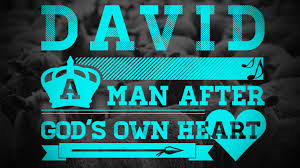
King David is often called a “man after God’s own heart.” He chased and pursued man after God'sintimacy with the Father, sought His heart and desired to be made in God’s image over everything else he could want or desire. When He was confronted with his sin and mistakes, unlike Saul who wanted to be honored in front of the people, David was concerned with not losing the presence of God. Something interesting to point out, when David wrote this, the Temple had not been built yet. It seems David had a glimpse of the Temple not made by human hands where he could dwell with God forever. This is the one thing he sought.
  1. Mark 10:21

21 Then, looking at him, Jesus loved him and said to him, “You lack one thing: Go, sell all you have and give to the poor, and you will have treasure in heaven. Then come, follow Me.”

rich young rulerThe Rich young ruler only lacked one thing. He could not part with his possessions and wealth. There are many reasons this could be, maybe he lacked faith for God’s provision. Maybe it was the fear of losing everything, losing the status his position and wealth brought him. He may have considered, “what might everyone else think?”


surrender

Whatever the reason was, he did not give everything to Jesus. One thing He lacked was total submission of every area of his life being given over to Christ.


  1. Luke 10:42

42 but one thing is necessary. Mary has made the right choice, and it will not be taken away from her.”

Mary and Martha are two sisters that were close to Jesus. During a particular gathering at their home, Martha was very busy tending to the things to insure the evening went well as a good host would. However when she complained about her sister, an interesting point was made by Jesus. The one thing that is necessary is being with Jesus. Seek First the kingdom of God and all these things will be added to you. Jesus is the physical representation of God’s Kingdom. So Seeking Jesus is the one thin that is necessary. There is no other way to the Father, except through Him. I have often heard it said, the greatest enemy to great, is good. Martha was doing good things, but Mary had chosen that which was better.mary or martha
Are you Mary or Martha? Click to find out.

  1. John 9:25

25 He answered, “Whether or not He’s a sinner, I don’t know. One thing I do know: I was blind, and now I can see!”
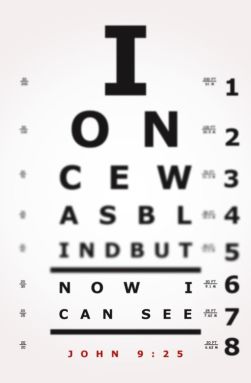
blind but nowWe see the story of a man that was born blind. The religious leaders are stuck on being offended by Jesus healing on the Sabbath and not on the miracle. As they question the man, he doesn’t try to convince them of anything or have a well prepared apologetics response. It is O.K. to tell people I don’t know.  He tells them what he knows. I was blind, and now I see. To all the questions He had one focus. Revelation 12 tells us that they [the saints] overcame by the blood of the Lamb and the word of their testimony. There is no greater apologetics or reply that we can give to anyone besides the truth, especially when that truth is the power of God working in our life. We should focus on what God has done in our lives.


  1. Philippians 3:13

13 Brothers, I do not consider myself to have taken hold of it. But one thing I do: Forgetting what is behind and reaching forward to what is ahead, 14 I pursue as my goal the prize promised by God’s heavenly call in Christ Jesus.

goalsetting5Paul did not let his past determine his future. He had a goal and he went after it with a singular purpose. Nothing was going to keep him from his goal.

These five verses showed 5 different people, from 5 different backgrounds, but at the heart of each story is one thing we need to grasp.

  1. Through David we see that knowing God is at the heart of prayer.
  2. Through the Rich Young Ruler we see that knowing God is at the heart of total surrender.
  3. Through Martha we see that knowing God is at the heart of service.
  4. Through the Blind man we see that knowing God is at the heart of witness.
  5. Through Paul we see knowing that God is at the heart of ambition.

The One Thing we need is a singular focus on Jesus in every aspect of our lives. Not just on Sundays, not just around our church friends, but everyday, everywhere we may be.

need jesus


Lost Art of Listening. A book review of chapters 4, 5 ,& 6

Merriam-Webster defines listening as : to pay attention to sound; to hear something with thoughtful attention; to be alert to catch an expected sound. It is doubtful that anyone does not understand what listening means, and yet there is such a struggle to accomplish this task correctly. Michael Nichols book, The Lost Art of Listening, is sectioned out into four parts. The second part is titled, “ The Real Reasons People Don’t Listen.” Through chapters four, five, and six, Nichols takes a look at barriers to people’s ability to listen.

Chapter four, “When Is It My Turn?”, takes a look at what Nichols calls “the heart of listening” (Nichols, 2009, p.73). This chapter examines the battle everyone faces with ignoring their own needs and focusing on the needs of the speaker. This is not a passive style of listening, but truly finding empathy for the speaker. “The act of listening requires a submersion of the self and immersion in the other” (Nichols, 2009, p. 75). This is not easily done as it requires the listener to set aside their agenda, what they are hoping to accomplish, in order to fully hear what the speaker is saying. So there is a difference between having true interest and faking it. Nichols calls listening a burden. It is setting aside, for the moment, everything and giving your full, undivided, attention to the other. Holding your tongue, not thinking about what you will say next, and just listening. As Nichols puts it, “genuine listening means suspending memory, desire, and judgment-and, for a few moments at least, existing for the other person” (Nichols, 2009, p. 77).

The interesting thing is from all of that you would think a totally selfless person would be a great listener, not according to Nichols. No one is perfect, the Bible is clear in the fact that we all fall short. This very reason comes into play due to the difficulty in sustaining selfless listening all the time and care is not taken, we can fool ourselves into thinking we are better listeners. Seeking to show empathy and connection with phrases such as ,” That reminds me of the time…”; “Oh how awful…”; or “well if I were you…” As well meaning as these seem, they are sending messages that say I can top that, that you pity the speaker, or just giving unwanted advice. The truth is, no one can be selfless all the time, and constantly putting their own needs aside. That isn’t healthy either and it can lead to a break down in communication due to our own hierarchy of needs not being met.

Nichols acknowledges this, “ a good listener may need to set aside his or her own needs to tune in to the other person’s but completely selfless people don’t make good listeners. You have to get listened to yourself to free you up to be receptive “ (Nichols, 2009, p. 81).

Nichols closes out the chapter by asking the question, “Do women listen differently than men?” The author points out the difference in his assertion regarding setting self aside to the ideas promoted by Deborah Tannen. Tannen gives a broad generalization for both sexes stating that “women engage in ‘rapport-talk’ while men specialize in ‘report-talk’” (Nichols, 2009, p. 91). Nichols does not seem to agree that the clash of due to gender differences is always inevitable and emphasizes the importance of listening with out bias. He states being listened to through others bias, and anxiety just leads the listener to feelings of loneliness, not being understood, and leads to alienation. “Those listeners who are more or less always in an unresponsive state find themselves shunned, often with no idea why. They never connect because they never cross the space between themselves and other’s” (Nichols, 2009, p. 93).

I found this an interesting look at differing views. Years ago I read You Just Don’t Understand : Women and Men in Conversation by Deborah Tannen and so am familiar with her ideas on genderlects. It was refreshing to hear someone else not buy completely into the gender stereotypes. I do understand there are obvious differences between men and women, and praise God for them. However I do not buy that certain things are a certain way in regards to our communication styles and personalities just because of our gender. I fear this mentality is at the heart of what we see going on with gender confusion because people relate more to one gender than the other therefore God made a mistake and they are in the wrong type body. I find how I approach communication depends on who it is with and my own past experiences. My wife, she thinks and does certain things more along the lines of what people might think a man would do. She certainly gets along with men much better and struggles to maintain friendships with women. I find myself moving with a more Rapport style communication with my wife. Constantly wanting to connect with her and wondering if everything is okay between us and working to keep it that way. This is a holdover from my previous divorce where I was blind sided that anything was even wrong and just came home to an empty house one day. I do not want to be oblivious and so strive to not make that same mistake. The reality is, I take the pendulum too far the other way and so make all new mistakes allowing my expectations to cloud our communications  this is not the desired outcome since communication is about building relationships and connections. So listening is hearing what the other is saying, not what you want or expect to hear.

“You Hear Only What You Want To Hear,” is the title of chapter 5, and makes a nice transition following the ideas of the previous chapter. Nichols focuses on how the listener’s attitudes and biases can distort what is actually being heard. People’s expectations make us hypersensitive. “The past is alive in memory- and it runs our lives more than we know” (Nichols, 2009, p. 101).  The way our families interacted teaches things such as how to overreact, to be distant. The way our past relationships, even in childhood, have played out trains us into certain patterns that can be transferred to other relationships and cause us to respond in ways that is not even appropriate to the given situation (Nichols, 2009). This leads him to saying “our parents may be the most important unfinished business in our lives” (Nichols, 2009, p. 104).  Our relationships can revert us back to adolescence or childhood when a wife is perceived as nagging and reminds the husband of the belittling and feelings of not measuring up he endured as a child. Nichols states we have sub personalities that create battling inner voices. It is important to remember that “calm fosters unity; conflict fractures it” (Nichols, 2009, p. 105).  It is useful to remember we all have these warring voices and to realize when a person reacts in away that does not make sense to the situation, it may be that they are reacting to the warring voices that have developed due to various experiences.

This is an important idea not only for relationships, but also especially in counseling. So many times what we may first see and experience with a client, whatever the problem is they have come to discuss, it may actually be the symptom and not the true heart of the issue. It will be important to notice and investigate what might be the reason behind certain outburst or feelings regarding situations in order to find the true culprit causing the problem so it can be dealt with and hopefully a workable solution applied. This is exactly the focus of the next chapter.

News Flash: Emotionality makes us defensive. Ok, that is not really breaking news to anyone, and yet it is a pitfall that constantly interrupts true listening. This is the topic of chapter 6, “Why Do You Always Overreact?!”  These emotions, when handled improperly, cause a breakdown in communication. Nichols explains it by comparing it to a radio saying, “Emotional reactivity is like throwing on a switch and having the electricity come on, and instead of music you get static. The static is anxiety” (Nichols, 2009, p. 111). Nichols again takes a look at the interaction between past memories and how we react and deal with present circumstances. Someone overreacting really only looks out of place to us because we can’t see the memories leading to this reaction (Nichols, 2009). All of these experiences build up and create the perspective in which we receive and judge things, which may or may not be a correct evaluation. Often times we are intolerant toward others in the very areas we find ourselves lacking and don’t want to tolerate. The author points out how “we can’t listen well to other people as long as we project the mistaken idea that parts of us aren’t good enough to be loved, respected, and treated fairly” (Nichols, 2009, p.116). This can be a leading cause of conversations becoming arguments. A reaction from one causes a reaction in the other and the next thing both are arguing and not really hearing anything the other is saying. Another cause of arguments is the idea of wanting to prove you are right and the other individual wrong.  If this continues, it will lead to disaster because “when neither party to an exchange is willing to break the spiral of reactivity, both are likely to end up feeling angry and misunderstood” (Nichols, 2009, p. 119).

Responsive listening is designed to help stop arguing. It works by hearing the other person’s side of the story before giving your own. As we all know, there are two sides to every story. This takes practice and self-control. It is not automatically assuming the other is right and just admitting you are wrong, but it is giving fair time to listen and hear what the other is saying instead of just repeating your own position to prove you are right. Some one has to break the pattern, “arguments are like ping-pong games: it takes two to keep them going” (Nichols, 2009, p. 121). Responsive listening is making the conscious decision to draw out the other person’s feelings prior to giving your own response ( Nichols, 2009).   Many factors can contribute to arguments including tone of voice, not feeling listened too, and certain hot topics, etc. it all boils down to what seems obvious at n objective distance,  good listening requires us to resist the urge to overreact, but that is where the struggle truly is, in the heat of the moment. Nichols encourages listeners by stating, “ facing encounters that raise your anxiety tests your maturity, strengthens you if you have the courage to stand fast and let matters unfold” (Nichols, 2009, p. 135).

This whole section spoke to me. I saw my many mistakes I make as well as examples in my own life and reactions that backed up the reality of how our past shapes us and creates our emotional responses that can effect our ability to listen.  A prime example was earlier this week I came home to an empty house,  I had beaten my wife home. She had sent a text telling me she was picking up the kids and so there was a change in our schedule. I felt instant anxiety rise up. Referring back to an incident I mentioned earlier regarding my divorce, I felt a bit of panic and worry. Even though I have been remarried for almost six years and it has been 10 years since my divorce, the fear of rejection and abandonment tried to raise its head.  Remembering 2 Corinthians 10:5, “…taking every thought captive,” I reminded myself this was not the same person, not the same situation, and I had nothing to fear. This is important to realize we have to take control of our thoughts not just to handle our own responses, but to truly be able to listen to others and this will be an important lesson that can help our clients as well.

Check back for the rest of the review…

The Lost Art of Listening. A review of chapters 1, 2 & 3.

Everyone has two ears and one mouth. It might be common sense then that we need to listen twice as much as we speak, and yet that is rarely the case, at least not real listening. There is a difference in hearing what someone says and truly understanding and catching what the mean. This common breakdown in communication, hearing but not truly listening, is what Dr. Michael Nichols discusses and explains how to over come in his book, The Lost Art of Listening.

 Right off the bat Nichols hammers readers with a truth everyone has experienced, “Nothing hurts more than the sense that the people we care about aren’t really listening” (Nichols, 2009, p. 1). Even though most have experienced this hurt, it has not improved the vast majority of people’s true listening skills. This is sad. As Nichols says,” regardless of how much we take it for granted, the importance of listening cannot be overestimated (Nichols, 2009, p 6). The first part of the book, “The Yearning To Be Understood,” examines the desire everyone has for being understood. The three chapters take a look at the importance of listening and why it is important. It examines the interaction between the speaker and the listener and then dives into how breakdowns in communication come about.

The first chapter, “Did You Hear What I Said,” begins with examples of common complaints people express regarding communication between husbands and wives. This illustrates the frustration that comes from not feeling understood or taken seriously by those most important to us. A yearning to be understood and accepted. We are created to be social beings and therefore we desire to bridge the gap between others; to make a connection and us. Just as one desires to reach out to the other, the response can aid or hinder true communication and either allow the connection or hinder it. Therefore “the essence of  good listening is empathy” (Nichols, 2006, p. 10). Combining effort with intuition to make communication work is a necessity. It is this ability that allows bonds to form and connections to happen. This is hugely important. Nichols says, “When deeply felt but unexpressed feelings take shape in words that are voiced and come back clarified, the result is a reassuring sense of being understood and a grateful feeling of shared humanness with the one who understands” (2009, p.10). Therefore, knowing how to listen is key to having successful relationships. We all know it hurts to not be listened too and the author points out most of us think we are better listeners than we really are. We tend to take listening for granted. In spite of how basic listening seems, it as more than one purpose, “taking in information and bearing witness to another’s experience” (Nichols, 2009,p15).  This is what helps people grow up secure in them, having other people validate them and their thoughts as important, being taken seriously. Listening is not just hearing and offering reassurance that everything will be all right, it is actually making an effort to connect and understand why the speaker feels the way they do, showing sympathetic understanding (Nichols, 2009).

Listening is the most important aspect of counseling. Without it, there will be no real progress from sessions and no true connection between the counselor and the counselee. Listening will allow the counselor to catch what is the heart of the problem, not just what is being explicitly said. Sometimes, just listening and understanding can bring healing in of itself without any advice being given. Since helping people work through and deal with problems and issues in their lives, listening is the most important skill. Listening to the client, as well as listening to God’s direction regarding the advice to give.

The second chapter, “Thanks For Listening,” focuses on what connects people to each other and how listening helps to shape us. Nichols explains that, “striking a balance between expression (talking) and recognition (listening) is what allows us and the people we care about to interact as sovereign equals “ (Nichols, 2009, p.25).  Listening is a powerful force for change and in shaping peoples perspectives and relationships lies in the way it allows for shared expression, offering validation or contradiction. So the give and take is very responsible for how people perceive if they are being heard as well as becoming a part of how someone views himself or herself. The old saying “sticks and stones may break my bones, but words will never hurt me,” though often quoted as a shield against bad words unfortunately just isn’t true. Our deepest hurts and even the way in which we learn to view ourselves come from the words we hear from others. The author states that,”…self is not a given. Like having red hair or being tall, but a perspective on awareness, and an interpersonal one at that. The self is how we personify what we are, as shaped by our experience of being responded to by others. Character is formed in relationships and the vitality of the self depends on the quality of listening we receive” (Nichols, 2009, p. 27).  The author looks at how this develops throughout the life cycle of most people.

He lists the time  of this development between birth and two months as the “Here I am” This is when there begins to be an sense of oneself. An infant has needs that they cannot meet themselves, theses needs can only be met if the infant lets someone else know they need something. This is obviously displayed by the only vocalization a baby possesses, crying. This here I am, I need something is how a baby communicates all of it’s needs, even developing a particular culture with certain cries meaning certain things.  Attentive parents help develop this culture through the way in which they listen and respond to their infant. A parent cooing and speaking to a child in ways accrediting certain desires or reasoning behind a babies actions and cries. Obviously they have to be intuitive to their baby’s feelings to understand and meet their needs and desires (Nichols, 2009). Imagine how strong relationships would be if we stayed that attentive to everyone.     The author continues looking a the bonds with the “Hey Look At Me” (two to seven months) where the sense of a core self and autonomy is displayed. He explains that a confident child is developed through listening to the child. Again emphasizing how  the self is built up by the validation of those important in our lives and of course leaving the warning that the opposite would hold true (Nichols, 2009).

From a counseling perspective this is something very important to remember to utilize when dealing with my clients. Even though the connections were examined as in regards to certain ages, even adults adjust and reevaluate self-based on interactions with others. Husbands and wives find most problems arriving due to a communication problems. Being able to listen better will not only help in showing married couples how to interact with each other, but also in providing a safe place for them to tell their story and viewpoint, to discover where the problems exist. As Nichols puts it, “the feeling of not being understood is one of the most painful in human experience (Nichols, 2009, p. 41).  As a counselor, we need to help heal problems, not add to the pain by our own lack of listening and failure to understand. Therefore our own ability to listen in addition to being able to help others learn to listen better is paramount.

Why don’t people listen? A question that most people have probably asked at one time or another also serves as the title to the third chapter. This is where Nichols examines “How Communication Breaks Down” (Nichols, 2009, p. 42). The truth is, there are probably as many answers to that question as there are people who ask it. Being tired, having certain times in which you are ready to listen more than others, current events, what’s going on around you, etc. However, regardless of the distractions, we sometimes just need to put in an effort to communicate. Make an effort to listen is important as is making an effort to talk.  Relationships take investment, which includes investing in being a better listener. Assume people are worth the effort and worth the investment. “The truth is that we become more interesting when we assume interest on the part of the listeners” (Nichols, 2009, P. 44).

The author points out that sometimes the way communication has broken down is due to transference. This is where the speaker has projected certain expectations onto the listener. So many times people look at everyone around through  through lenses tinted by their own experiences and expectations that color everything they see a certain way, which may very well not be reality.  This can lead to what is heard not actually being what was said. This can be exasperated when both parties are doing this, which leaves no wonder why messages get confused and misconstrued leading to misunderstandings and feelings of not being understood. Throw in other possible breakdowns such as The listeners agenda, preconceived notions, emotions, not explicitly saying what is meant, gender differences, and etc., it is a miracle anyone ever understands anyone. This cliff hanger is where the author leaves the chapter , asking the question, “so why are we so sensitive to misunderstanding that we have trouble seeing the other person’s side of things?”  We must tune into the next chapter to discover his answer.

I found myself reading through this book and saying things to myself like,  “oh, I do that…yep, guilty…oh, so that is why she reacted that way.”  These chapters not only highlight the importance of listening for a counseling perspective,     but also I am seeing more deficiencies in my own listening ability that I hope to improve for my wife’s sake as well as other relationships in my life. I am looking forward to finishing this book and applying it to my life personally as it continually leads me to more self-reflection.

Stop back by for the review of the next three chapters…

Coconut Curry


During college there was a lady in the church who would periodically cook for the pastor’spakistani-chicken family with whom I lived. Usually she would bring over what she called Pakistani Chicken. It was a whole chicken in a pot of vegetables with a very yellow color and smelled amazing. The taste was even better.


For years I never knew what the secret spices were that made this chicken so scrumptious. I very pleased to discover it was curry and have since experimented with this wonderful, and yet often different spice.

curry-powder

I say different because depending on the color or  type of curry paste you get,Thai vs Indian the flavors vary.The ingredients in a traditional curry also different depending on the region within the same country.  For example:


green-curry-pasteGreen curry paste (kreung gaeng keo wahn) is a blend of fresh green chilies and herbs and is used mainly to make Green curry, which  is often considered to be the most popular curry in Thailand


red-curry-paste
Red curry paste
(kreung gaeng phet daeng), with a ruddy hue, is made with dried red chilies and is considered the most versatile.


yellow-curryYellow curry (gaeng leung or gaeng karee ) is a Thai version of Indian yellow curry  This richer curry tends to tone down the overall spiciness of the dish, hence its popularity on menus outside of Thailand. cumin, coriander,
turmeric, fenugreek, garlic, salt, bay leaf, lemongrass, cayenne pepper, ginger, mace and cinnamon.

All those are just Thai versions. You also have Indian curry as well as Garam Masala and the list goes on of wonderful spices with which to experiment!!yay


One of my favorite ways to use yellow curry paired with coconut. This has become a family favorite.

The things you will need are:

Coconut Curry Chicken

1-1/4 pounds boneless, skinless chicken breasts, cut into 1/4-inch strips

  • Salt and freshly ground black pepper
  • 2-1/2 teaspoons curry powder, divided
  • 2 Golden Curry cubes (mild or hot your preference)
  • 1 teaspoon turmeric
  • 3 tablespoons olive oil (may substitute red palm oil
  • 1 medium yellow onion, finely chopped
  • 2 tablespoons butter
  • 4 garlic cloves, minced
  • 1 diced stalk of celery
  • 1 tablespoon grated fresh ginger
  • 1 can (14.5 oz) coconut milk
  • 1 can diced tomatoes (I like to use Rotel with chilis to add more spice)
  • 1 tablespoon cornstarch
  • 1 cup frozen peas (no need to thaw)
  • 1/4 cup plain low fat (2%) or whole Greek yogurt (do not use nonfat)


I use both curry powder and curry cubes. The curry cubes I like are made by Golden Curry, it resembles a chocolate bar.

curry-powder-bottle golden-curry golden-curry-cubes-open-package

I like to cover  the chicken pieces in the curry powder, turmeric, salt, pepper and ginger. This gives a nice bit of flavoring to the meat so that the meat is not bland with a flavorful sauce.chicken-curry-seasoning-chicken


Heat the olive oil in a non-stick skillet over medium heat, browning the chicken. Set the chicken to the side and add butter to the pan used with the chicken and sauté the onions, garlic, and celery.

chicken-curry-chicken-almost-cooked

When the vegetables are translucent, add the coconut milk and Greek yogurt, stirring regularly.

Pour the can of diced tomatoes into the mixture.  Next mix the cornstarch with a small amount of warm water to avoid clumps and pour this into the sauce. Return chicken to the sauce and simmer until desired consistency.

You can garnish with coriander, curry leaves, or even cilantro works.

Serve over rice or noodles and dig in!

A Kerala or South Indian chicken curry, which includes tomatoes and coconut milk garnished with coreander and curry leaves and served with salad and rice

What is Inspired?

The Bible is often the subject of much debate. One of the key topics surrounds the idea that the Bible is more than just a book, but is the Word of God. The Bible is spoken of as “inspired”, but  what does this mean?

If we go to a dictionary, we will find:

in·spireddictionary
inˈspī(ə)rd/
adjective
  1. 1.
    of extraordinary quality, as if arising from some external creative impulse.
    “they had to thank the goalie for some inspired saves”
    2. (of air or another substance) that is breathed in.

When people speak of the Bible as being inspired, they are referring to the fact that the Human authors of the Bible were influenced divinely and the words they wrote were literally the words of God.  This does not mean that God took over the authors and wrote through them like an automaton, but that His will flowed through them, using their personality and writing style to convey His words in scripture.

2_timothy_3_162 Timothy 3:16 states, “All scripture is inspired by God, and is profitable for teaching, for rebuking, for correcting, for training in righteousness.”[1] The word translated as inspiration, is qeopneustoj (pronounced theh-op’nyoo-stos)[2] is sometimes translated God-breathed. It literally translates as breathed out by God.

In other words, scripture is the result of  the Holy Spirit working through men.

In the  afore mentioned scripture, Paul clarifies to what extent it is inspired by God, all apostle-paulscripture. This idea is reinforced by Peter in his letter to the churches in Asia. 2 Peter 1:20-21, Peter writes, “First of all you should know this: no prophecy of scripture comes from one’s own interpretation, because no prophecy ever came by the will of man; instead men spoke from God as they were moved by the Holy Spirit.”[3]

Paul is telling his readers that the prophecy of scripture is not just what man thinks God is saying due to his own interpretation, but is actually God speaking through men, using their gifts and words , guided by the His Spirit. So Peter and Paul both believed scripture was straight from God, not man, therefore emphasizing the importance and infallibility of scripture.

Jesus Himself expressed this idea regarding scripture in Matthew 5:17-18, “Don’t assume that I came to destroy the Law or the Prophets. I did not come to destroy but to fulfill.  For I assure you: Until heaven and earth pass away, not the smallest letter or one stroke of a letter will pass from the law until all things are accomplished.”[4] In this scripture, Jesus is attesting to the infallibility of scripture and stating that not one aspect of scripture will fade away until it has all been fulfilled.

god-breathed1Jay Adams sums up what is meant by “inspired” or “God-Breathed”  when he writes, ” When  God says that He breathed out His Word, He means that what is written is as much His Word as if He had spoken it audibly by means of breath.”[5]



Try to find any other collection of 66 books, written by over 40 different authors, spanning a period of over 1500 years and see if they fit together to tell one complete story, weaving together without true contradiction or loss of theme.

keep-calm-and-cite-your-sources-17

[1] Bible Gateway passage: 2 Timothy 3:16 – Holman Christian Standard Bible. (n.d.). Retrieved October 10, 2016, from https://www.biblegateway.com/passage/?search=2 timothy 3:16

[2] KJV w/ Strong’s Concordance – 2 Timothy 3. (n.d.). Retrieved October 10, 2016, from http://www.godrules.net/library/kjvstrongs/kjvstrongs2tim3.htm

[3] Bible Gateway passage: 2 Peter 1:20-21 – Holman Christian Standard Bible. (n.d.). Retrieved October 10, 2016, from https://www.biblegateway.com/passage/?search=2 peter 1:20 -21

[4] Bible Gateway passage: Matthew 5:17-18 – Holman Christian Standard Bible. (n.d.). Retrieved October 10, 2016, from https://www.biblegateway.com/passage/?search=matthew 5:17-18

[5] Jay Adams, A Theology of Christian Counseling, p.17

Can We Trust The Bible?

In apologetics, one mistake beginners tend to make is to start by quoting scripture. Now don’t get me wrong, the scripture is awesome and life changing, but what if the person does not believe the Bible is God’s word? What if they believe it is unreliable and full of mistakes and issues? Quoting scripture to an individual before anything has been established regarding the view of scripture can be fruitless. Especially when other religions hold the similar ideas regarding their holy books. Please understand, discussing the reliability of the Bible is not about proving it is the word of God. It is about showing what has been handed down was done correctly.  It is confirming the accuracy of the transcripts by establishing the Bible as being accurate to what was originally written, and reliable in a historical sense, in other words it can be trusted. Now there are different approaches that apologists have taken when looking at the reliability of the Bible:

a_ready_defense

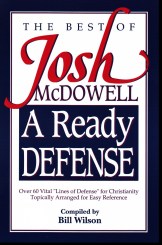
In a Ready Defense by Josh McDowell, McDowell lists criteria that is applied to check the validity of Historical documents. Mcdowell says that according to Military Historian C Sanders there are three basic principles of histography :the bibliographical test, the internal evidence test, and the external evidence test.


Case for Christ


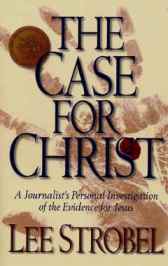
Lee Strobel, author of The Case for Christ and The Case for Faith, approaches the topic from an investigative journalism background. Through Interviewing experts and examining evidence regarding how accurate the Bible is.


Cold-CaseChristianity


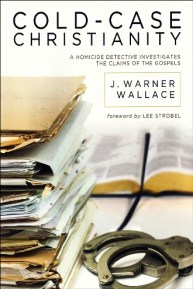
In Cold Case Christianity, J. Warner Wallace, a Los Angeles homicide detective approaches the same idea with an criminal investigator background


Regardless of the approach, what is being investigated is all basically the same. So in regards to reliability what I want to focus on are the areas: is what was passed down what was originally written. Are the accounts reliable to what actually happened, or just made up. Is there any archeological proof to back up the bible.

To do this I want to look at the acronym M-A-P-S

This stands for

Manuscripts, Archaeology, Prophecy, Statistics

bible-answer-man-260x195-v5I did not develop this acronym. This acronym and information mainly comes from CRI (the Christian research Institute). They are a great resource. This information was in an article by Hank Hanegraaf from April, 2009.You may know him from the Bible Answer Man radio broadcasts.


There is a wealth of information available to support the reliability of Scripture .These Four basic areas in the acronym MAPS will help chart your way to understanding basic biblical reliability.

.

Bible Reliability-Manuscriptsmanuscripts

Manuscripts refers to the reliability of the surviving manuscript copies of the original documents penned by the Scripture writers (we do not possess these originals). In determining manuscript reliability, we deal with the question: How can we test to see that the text we possess in the manuscript copies is an accurate rendition of the original?

bee-cartoon

There are three main manuscript tests: the Bibliographic, Eyewitness, and External (a second acronym — BEE — will help you remember these).

The bibliographic test considers the quantity of manuscripts and manuscript fragments, and also the time span between the original documents and our earliest copies. The more copies, the better able we are to work back to the original. The closer the time span between the copies and the original, the less likely it is that serious textual error would creep in. The Bible has stronger bibliographic support than any classical literature — including Homer, Tacitus, Pliny, and Aristotle.

We have more than 14,000 manuscripts and fragments of the Old Testament of three main types: (a) approximately 10,000 from the Cairo Geniza (storeroom) find of 1897, dating back as far as about AD. 800; (b) about 190 from the Dead Sea Scrolls find of 1947-1955, the oldest dating back to 250-200 B.C.; and (c) at least 4,314 assorted other copies. The short time between the original Old Testament manuscripts (completed around 400 B.C.) and the first extensive copies (about 250 B.C.) — coupled with the more than 14,000 copies that have been discovered — ensures the trustworthiness of the Old Testament text. The earliest quoted verses (Num. 6:24-26) date from 800-700 B.C.

The same is true of the New Testament text. The abundance of textual witnesses is amazing. We possess over 5,300 manuscripts or portions of the (Greek) New Testament — almost 800 copied before A.D. 1000. The time between the original composition and our earliest copies is an unbelievably short 60 years or so. The overwhelming bibliographic reliability of the Bible is clearly evident.

The eyewitness document test (“E”), sometimes referred to as the internal test, focuses on the eyewitness credentials of the authors. The Old and New Testament authors were eyewitnesses of — or interviewed eyewitnesses of — the majority of the events they described. Moses participated in and was an eyewitness of the remarkable events of the Egyptian captivity, the Exodus, the forty years in the desert, and Israel’s final encampment before entering the Promised Land. These events he chronicled in the first five books of the Old Testament.

The New Testament writers had the same eyewitness authenticity. Luke, who wrote the Books of Luke and Acts, says that he gathered eyewitness testimony and “carefully investigated everything” (Luke 1:1-3). Peter reminded his readers that the disciples “were eyewitnesses of [Jesus’] majesty” and “did not follow cleverly invented stories” (2 Pet. 1:16). Truly, the Bible affirms the eyewitness credibility of its writers.

The external evidence test looks outside the texts themselves to ascertain the historical reliability of the historical events, geographical locations, and cultural consistency of the biblical texts. Unlike writings from other world religions which make no historical references or which fabricate histories, the Bible refers to historical events and assumes its historical accuracy. The Bible is not only the inspired Word of God, it is also a history book — and the historical assertions it makes have been proven time and again.

Many of the events, people, places, and customs in the New Testament are confirmed by secular historians who were almost contemporaries with New Testament writers. Secular historians like the Jewish Josephus (before A.D. 100), the Roman Tacitus (around A.D. 120), the Roman Suetonius (A.D. 110), and the Roman governor Pliny Secundus (A.D. 100-110) make direct reference to Jesus or affirm one or more historical New Testament references. Early church leaders such as Irenaeus, Tertullian, Julius Africanus, and Clement of Rome — all writing before A.D. 250 — shed light on New Testament historical accuracy. Even skeptical historians agree that the New Testament is a remarkable historical document. Hence, it is clear that there is strong external evidence to support the Bible’s manuscript reliability.

Bible Reliability-Archaeologyarcheology

Going back to the MAPS acronym, we examined the first principle, manuscript reliability. Let us consider our second principle, archaeological evidence. Over and over again, comprehensive field work (archaeology) and careful biblical interpretation affirms the reliability of the Bible. It is telling when a secular scholar must revise his biblical criticism in light of solid archaeological evidence.

For years critics dismissed the Book of Daniel, partly because there was no evidence that a king named Belshazzar ruled in Babylon during that time period. However, later archaeological research confirmed that the reigning monarch, Nabonidus, appointed Belshazzar as his co-regent whie he was away from Babylon.

One of the most well-known New Testament examples concerns the Books of Luke and Acts. A biblical skeptic,Sir William Ramsay, trained as an archaeologist and then set out to disprove the historical reliability of this portion of the New Testament. However, through his painstaking Mediterranean archaeological trips, he became converted as — one after another — of the historical statements of Luke were proved accurate. Archaeological evidence thus confirms the trustworthiness of the Bible.

Bible Reliability-ProphecyProphecy

The third principle MAPS is Prophecy. The Bible records predictions of events that could not be known or predicted by chance or common sense. Surprisingly, the predictive nature of many Bible passages was once a popular argument (by liberals) against the reliability of the Bible. Critics argued that the prophecies actually were written after the events and that editors had merely dressed up the Bible text to look like they contained predictions made before the events. Nothing could be further from the truth, however. The many predictions of Christ’s birth, life and death (see below) were indisputably rendered more than a century before they occurred as proven by the Dead Sea Scrolls of Isaiah and other prophetic books as well as by the Septuagint translation, all dating from earlier than 100 B.C.

Old Testament prophecies concerning the Phoenician city of Tyre were fulfilled in ancient times, including prophecies that the city would be opposed by many nations (Ezek. 26:3); its walls would be destroyed and towers broken down (26:4); and its stones, timbers, and debris would be thrown into the water (26:12). Similar prophecies were fulfilled concerning Sidon (Ezek. 28:23; Isa. 23; Jer. 27:3-6; 47:4) and Babylon (Jer. 50:13, 39; 51:26, 42-43, 58; Isa. 13:20-21).

Since Christ is the culminating theme of the Old Testament and the Living Word of the New Testament, it should not surprise us that prophecies regarding Him outnumber any others. Many of these prophecies would have been impossible for Jesus to deliberately conspire to fulfill — such as His descent from Abraham, Isaac, and Jacob (Gen. 12:3; 17:19; Num. 24:21-24); His birth in Bethlehem (Mic. 5:2); His crucifixion with criminals (Isa. 53:12); the piercing of His hands and feet at the crucifixion (Ps. 22:16); the soldiers’ gambling for His clothes (Ps. 22:18); the piercing of His side and the fact that His bones were not broken at His death (Zech. 12:10; Ps. 34:20); and His burial among the rich (Isa. 53:9). Jesus also predicted His own death and resurrection (John 2:19-22). Predictive Prophecy is a principle of Bible reliability that often reaches even the hard-boiled skeptic!

Bible Reliability-Statisticsstatistics

Our fourth MAPS principle goes hand in hand with predictive prophecy, because it is Statistically preposterous that any or all of the Bible’s very specific, detailed prophecies could have been fulfilled through chance, good guessing, or deliberate deceit. When you look at some of the improbable prophecies of the Old and New Testaments, it seems incredible that skeptics — knowing the authenticity and historicity of the texts — could reject the statistical verdict: the Bible is the Word of God, and Jesus Christ is the Son of God, just as Scripture predicted many times and in many ways.

The Bible was written over a span of 1500 years by forty different human authors in three different languages (Hebrew, Aramaic, and Greek), on hundreds of subjects. And yet there is one consistent, noncontradictory theme that runs through it all: God’s redemption of humankind. Clearly, Statistical probability is a powerful indicator of the trustworthiness of Scripture.

The next time someone denies the reliability of Scripture, just remember the acronym MAPS, and you will be equipped to give an answer and a reason for the hope that lies within you (1 Pet. 3:15). Manuscripts, Archaeology, Prophecy, and Statistics not only chart a secure course on the turnpikes of skepticism ,but provides a strong base for our belief that the Bible is indeed divine rather than human in origin.


Other great resources for more information on this topic:


http://www.josh.org/resurrection/is-the-bible-reliable/

http://www.thepoachedegg.net/.services/blog/6a0133f0b2fdc2970b0133f0b34b07970b/search?filter.q=reliability+of+the+bible

Focus on the Family


Seasoning A New Grill/Pit

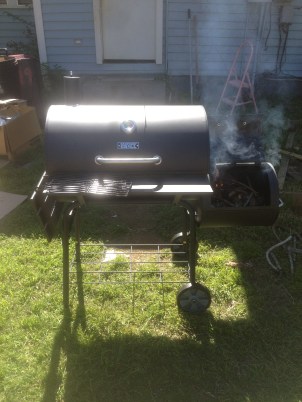
Ahhhh summer is almost upon us and that means, busting out the grills. I love cooking outdoors. I have a gas grill that I enjoy using, but nothing compares to that smoky flavor that comes from using a pit or charcoal grill. I stumbled upon a good deal and I purchased a new pit.  Well after some assembly required my pit was ready to cure/season.

 IMG_1428

This is an important step that some overlook. First off it helps prolong the life of your grill. More importantly it helps the flavor of your food. Nothing is worst than being excited to get your first offerings off of a new grill and have it taste like paint.

See grills and pits are a lot like cast iron cook ware in this regards, it needs to be seasoned first and the more you use it, the better it gets. This is due to the nature of how a grill and pit works, they smoke the juices from what you are cooking and they get vaporized into the grill. This is what provides the unique grill flavor to the food cooked in one and why the more it is used the better it gets.

vegetable oilI started by putting vegetable oil on a cotton rag and rubbing the entire inside of the pit. After this was done it was time to light a fire. I built the fire in the fire box and let it go. I let the temperature stay around 250 ( most air vent s were closed) and let it go that way for an hour or more. I then opened all the vents and let the temperature rise. My intent was just to get to 45oand let it stay there for a bit before raising the temp. Well it is a new pit and some trial and error ensued with the temp quickly climbing to 500. This is perfectly okay. Some tutorials actually say just set it above 400 and let it go for 30-45 minutes. I am a firm believer in low temp and longer cooking times and well some of that idea flows over into the way I season my pits. It didn’t take much closing to get the temp back down.

OLYMPUS DIGITAL CAMERA

I had purchased some hog jowl and placed that straight on the fire and allowed the flavor of that to permeate through the pit and just let it keep burning for several hours. Some people also add spices to the fire and other ideas to add flavor. This is where individual chef personalities take over. I was not worried about that because I was eager to baptize this baby with meat.

 high heat tempI want to point out, depending on how the paint quality , the heat will cause some flaking on the outside of the grill, especially on the fire box if it has an off set firebox. This is okay. If it bugs you, you can always purchase high temperature grill paint and touch it up. It should go with out needing to be said, but obviously wait for it to completely cool before attempting to repaint. Also wait for it to dry before grilling again.
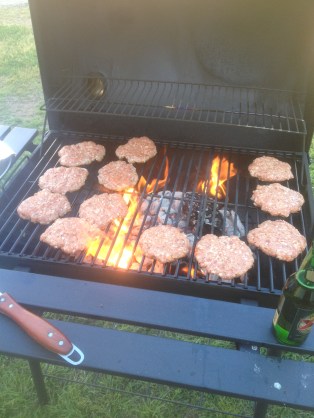
IMG_1453Time to cook some meat.I fired up the main area with charcoal and waited for the coals to completely ignite and become ready. I then started off the initial cooking with grilling one of my favorite burger recipes (recipe below).
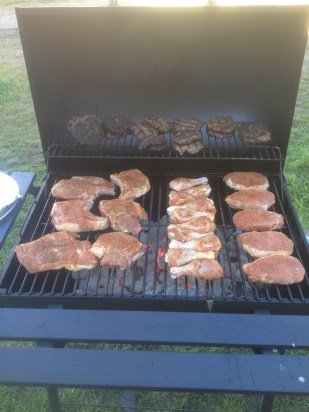
After the burgers were ready I added two types of seasoned pork chops along with some chicken legs. I had prepped some herb and garlic potatoes and had them in foil ready to go on the grill as well. When all of that had finished, there was still plenty of great cooking coals. I hate to let good coals go to waste so I prepped some fish with garlic, curry, and some other spices, wrapped in foil and through it on the grill. Between the visiting with friends, kids, and wanting to get my grub on,                                                                                            I forgot to take finished meat pictures. However it IMG_1454was a successful maiden trip with the new pit. All the food possessed excellent flavors. The friends and family all enjoyed themselves, so mission accomplished and I am confident that this pit’s future is indeed very bright as age will only improve the seasoning.


Burger Recipe

 3 lbs ground beef (chuck or sirloin is fine, I actually do not mind the fattier meat for burgers)

1lb of ground pork

1lb ground breakfast sausage

1 package Bratwurst

1 lb bacon

2 tsp water

1 tsp paprika

1tsp salt

1tsp black pepper

1 tsp garlic powder

I first chopped and fried the bacon, then added it along with the rest of the ingredients in a large bowl. Mix the ingredients together well and form into patties. I personally like to make mine about an inch thick.  I was able to get 24 patties. Slap on the grill and cook. I like my steaks medium rare, but prefer my ground meat to be fully cooked, but not burnt offerings.

 However you do it, just get outside and enjoy family, and friends. Happy grilling!

 A few extras:

 https://www.youtube.com/watch?v=W0jVkPYQjEo

 https://www.youtube.com/watch?v=P844OuDbRcU


BUT GOD…

In 1986, a Hip hop artist named Sir-Mix-a Lot, produced a song titled, “Baby got Back” This is a song that is still played in certain genres from time to time. The song starts out with the phrase, ‘ I like big butts and I cannot lie…” This song obviously is referring to body parts, but as I was preparing this word, that opening phrase came to mind. That phrase actually applies to most of us, but in a different way. For example, how many of you have ever said or thought something along these lines:

I would go work out today, but I am too tired.

I want to talk to my friend about this issue, but I don’t like confrontation.

I want to do great things, but I am too old/young.

I would do (insert whatever), but (insert any excuse).

When we follow statements with the word but, it usually negates everything we said before it. Life can make the but seem really big and it often prevents us from doing things.

Well I want to tell you it is time for us all to get off our butts.

When we find ourselves coming up with a thought that contains a but, we need to follow that with god. BUT GOD!

Those are my favorite words in the Bible, my favorite concept regarding how life works. The beauty of how this works rests on God’s mercy and grace.

Mercy and grace are often confused. While the terms have similar meanings, grace and mercy are not the same. To summarize the difference: mercy is God not punishing us as our sins deserve, and grace is God blessing us despite the fact that we do not deserve it. Mercy is deliverance from judgment. Grace is extending kindness to the unworthy.

In short, mercy is God not giving us what we do deserve; grace is God giving us something we do not deserve.

There are many things we have access to because of God’s mercy and grace working together to give us a but God statement. I want to look at just 3 of them today.

1st Gods mercy and grace gives us salvation

Titus 3:5

5 Not by works of righteousness which we have done, but according to his mercy he saved us, by the washing of regeneration, and renewing of the Holy Ghost;

 Ephesians 2:8-9

For you are saved by grace through faith, and this is not from yourselves; it is God’s gift— not from works, so that no one can boast.

 The apostle Paul knew he had received God’s mercy and

he knew full well that he didn’t deserve it. But God, the most wonderful two words ever put together, but God gave it to him anyway.

You see Paul made a lot of mistakes before being saved.

He was essentially an old time Charles Manson, being responsible for the death of a lot Christians. Then one day, on the road to Damascus, Paul received Gods mercy instead of the judgment he deserved. Not only that but grace was given to him, which included a new name (from Saul to Paul), a new life, and a new mission. None of which was based on anything he could boast in. He was forever thankful.

2nd God’s mercy and Grace also gives us help in our times of trouble

 Hebrews 4:16

16 Let us therefore come boldly unto the throne of grace, that we may obtain mercy, and find grace to help in time of need.

 We all face difficult and trying times, I am sure everyone here has cried at some point in life, I know I have.

But there is good news. The help and comfort we need is always available during these times. It is all because of Gods mercy and grace. No one has earned the help that God gives to us each day, we all should be punished for our sins and should reap the results of our bad choices without comfort. Have you ever heard the phrase you made your bed, now lie in it? Well we often times find our selves in trouble, but God shows mercy in not leaving us alone and then in addition shows us Grace by giving us help.;

What have any of us done for God lately that he owes us any favors? He is God. He doesn’t need us to give him anything.

Everything that we are given is because of his loving grace and mercy.

I am so thankful for all the blessings that God gives to me

3rd Because of Gods mercy and grace, we have all we need to endure whatever comes our way

2 Corinthians 4:1

Therefore, since we have this ministry because we were shown mercy, we do not give up.

 Philippians 4:13

I am able to do all things through Him who strengthens me.

 Berean literal translation says:

I have strength for all things in the One strengthening me.

 Sometimes life gets so stressful that it seems like we just can’t go on another day but there is good news. The good news is that we are not alone. God’s mercy and grace strengthens us and sustains us so we do not have to give up. We can endure whatever comes our way because he gives us strength and walks through it with us. We may feel alone and abandoned, too weak to make it through, But God never leaves us or forsakes us. We have a friend in Jesus, a friend that sticks closer to us than a brother. When it seems that we can’t go on any farther he tells us to cast our cares upon him because he cares for us. His mercy and grace is new every day, always available to us.

I want to share a short story about Henry Ford. One day he was driving through the Michigan countryside when he saw a man whose model T Ford had broken down alongside the road. Mr Ford stopped and asked the man if he could take a look and see if he could fix, it the man said yes. In just a matter of minutes Mr Ford had the car running again. The man told Mr Ford he sure was impressed. Henry Ford replied, “well I should be able to fix,. it after all I am the one who designed it.”

God has designed us and whatever might be wrong with us God is able to fix it. There is nothing that God cannot do. The next time life throws you something that causes you to pause and say but… I want you to remember the biggest but of all, but God. Go to Him and take advantage of His mercy and grace today. It turns out I really do like big buts, and I cannot lie.

Great BUT GOD verses:

Genesis 8:1

But God remembered Noah and all the wild animals and the livestock that were with him in the ark, and he sent a wind over the earth, and the waters receded.

Genesis 31:42

If the God of my father, the God of Abraham and the Fear of Isaac, had not been with me, you would surely have sent me away empty-handed. But God has seen my hardship and the toil of my hands, and last night he rebuked you.

Genesis 50:20

You intended to harm me, but God intended it for good to accomplish what is now being done, the saving of many lives.

1 Samuel 23:14

David stayed in the desert strongholds and in the hills of the Desert of Ziph. Day after day Saul searched for him, but God did not give David into his hands.

1 Kings 5:4

But now the LORD my God has given me rest on every side, and there is no adversary or disaster.

Nehemiah 9:17

They refused to listen and failed to remember the miracles you performed among them. They became stiff-necked and in their rebellion appointed a leader in order to return to their slavery. But you are a forgiving God, gracious and compassionate, slow to anger and abounding in love. Therefore you did not desert them.

Psalm 49:15

But God will redeem my life from the grave; he will surely take me to himself.

Psalm 73:26

My flesh and my heart may fail, but God is the strength of my heart and my portion forever.

Isaiah 40:8

The grass withers and the flowers fall, but the word of our God stands forever.

Jonah 2:6

To the roots of the mountains I sank down; the earth beneath barred me in forever. But you brought my life up from the pit, O LORD my God.

Matthew 19:26

Jesus looked at them and said, “With man this is impossible, but with God all things are possible.

John 1:18

No one has ever seen God, but God the One and Only, who is at the Father’s side, has made him known.

Acts 2:24

But God raised him from the dead, freeing him from the agony of death, because it was impossible for death to keep its hold on him.

Acts 3:15

You killed the author of life, but God raised him from the dead. We are witnesses of this.

Acts 5:39

But if it is from God, you will not be able to stop these men; you will only find yourselves fighting against God.

Romans 5:8

But God demonstrates his own love for us in this: While we were still sinners, Christ died for us.

Romans 6:23

For the wages of sin is death, but the gift of God is eternal life in Christ Jesus our Lord.

Romans 8:9

You, however, are controlled not by the sinful nature but by the Spirit, if the Spirit of God lives in you.

1 Corinthians 1:27

But God chose the foolish things of the world to shame the wise; God chose the weak things of the world to shame the strong.

Ephesians 2:4-5

But God, who is rich in mercy, because of His great love that He had for us,[a] 5 made us alive with the Messiah even though we were dead in trespasses. You are saved by grace!

2 Timothy 2:9

for which I am suffering even to the point of being chained like a criminal. But God’s word is not chained.


Fire Craft:The Art of Building a Fire.

night fireFire, arguably man’s most useful primitive skill, is still one of the most important bush craft or outdoorsman skills. From starting grills, warming up a house with a fireplace, burning off trash and garbage, the productive uses of fire are numerous. In a survival situation, the presence of a fire is a game changer. With benefits that include its’ ability to help regulate core body temperature, water purification, cooking, and the sheer psychological boost that just having a fire brings, fire craft is a skill evno lighter fluidery individual needs.
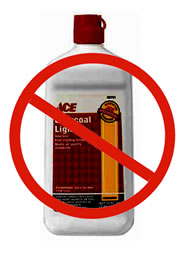
I am pretty sure most everyone thinks they know how to build a fire. Th
row some sticks and wood together, soak it in lighter fluid and throw a match on it. Yay fire! I have watched people start many fires in this manner, and five minutes later they are spraying more
lighter fluid on it to keep it going. True fire craft is the ability to start a fire and keep it going without having to use lighter fluid or other types of liquid combustible.

string fireBack in Boy Scouts, we would have one-match competitions as p

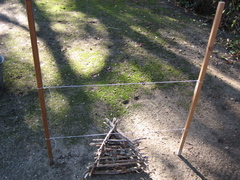
art of a skills based obstacle course. You were provided the materials and one match. A string was stretched across the fire lay at a certain height. The first to build their fire and burn the string moved on to the next event leg of the race. Did I mention you only got one match?

Understanding the basics of how to properly build and light a fire was a necessity to complete the task. I would like to say In the real word ylighter memeou should never be caught with just one match. Heck you should never be caught out with just one way to start a fire. A common motto in the survival and bush craft world states :”two is one, one is none.”
Murphy’s law being what it is, it is best to “be prepared” (good old Scout Motto) and have a backup. I keep a lighter in my pocket even though I am not a smoker, and my EDC (every day carry) has several other ways to start a fire. Nevertheless, you can use up all your matches and all the fluid in a lighter without ever getting a fire going if you do not know the proper mechanics.


In December of 1854, Louis Pasteur gave a speech in that is the origin of the phrase, “Chance favors the prepared mind.” He was specifically referring to the observational sciences, yet it is an idea that transfers over to many areas. Being prepared with knowledge, skills, and experience allows you to notice those chances and opportunities to succeed during difficult situations.

That being said, preparation is the difference between someone successfully stating a fire that stays lit, and running around struggling to keep it going. So always gather your supplies and have them at hand prior to striking your match.

There are four basic essentials you will need to start any fire regardless of the use:

Ignition sourcetinder_kindling_fuel

Tinder

Kindling

Fuel wood


Ignition Sourcefire-starters

 This is relatively self-explanatory. You need something with which to light the fire. There are many options and I suggest having redundancy.

Matches and lighters are at the top of the list due to being easy and widely available. Keep some with you all the time.

The reality is, if you can generate a spark or enough heat, it can be an ignition source for you if you are experienced in fire craft, some require more skill than others. I would suggest practice starting fires with as many different ways as you can because chance favors the prepared mind.

Other possible ignition sources


 Flint and Steel,Batteries and steel wool,Potassium Permanganate and Glycerin,Friction fire (think rubbing sticks together though there is a bit more to it than that.)


So you have an ignition source, you need the building materials for the fire which are: tinder, kindling, and Fuel Wood. Gather these items and have them at hand prior to starting your fire.


Tinder

 Every good fire starts with Good tinder. This is what you will apply your ignition source to, because it catches easily, it also burns quickly and that is why you need to have your kindling at hand.

Different things can be used as tinder, botmanmade tinderh natural and man-made. Natural tinder would include dry grass or leaves, wood shavings, feather sticks, Cattail fluff, lighter wood,etc.
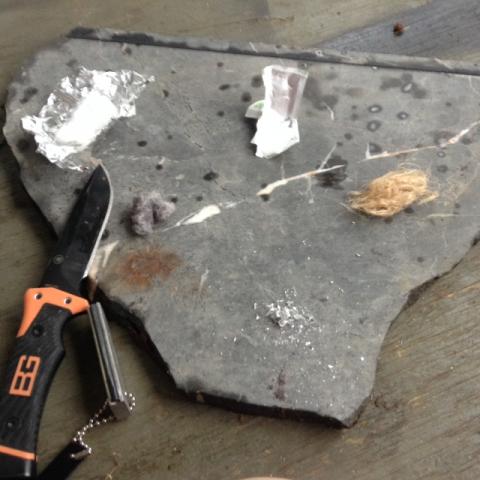
Man made tinder would be things like dryer lint, Vaseline coated cotton balls, Trioxane Fuel tabs, etc.

The important quality to tinder is the fact it takes a spark easily. Again I encourage you to be prepared and take some type of tinder with you on outings. This prokindlingves useful especially when everything is damp. Wet tinder will not light.

Kindling

Tinder is going to burn up quickly and if you throw large pieces of wood onto your tinder it will just smother the fire. You need something to bridge the gap, and that is where kindling comes in.
This consists of small twigs and branches about the size of a pencil or a bit smaller. This needs to be dry as well. If everything is damp then find some larger parts and whittle or baton them into smaller, useable pieces. No matter how damp branches are, the inside of them is usually dry.


Fuel Wood

tripod fireThis is what keeps the fire burning nice and hot and for as long as you keep giving it fuel. This does not have to be giant logs, think about the size of your forearm or wrist. Remember, the larger the log, the longer it will take to start burning. When building a fire you are always going from smaller pieces to larger.

Unlike tinder and kindling, it is okay if the fuel wood is damp. If you have the fire going well with plenty of kindling, it will dry out the dampness of the fuel wood.


Now that you have all of the materials, you need to build your fire lay. In Boy Scouts we were taught many different fire lays for different purposes. It is great to know different ways to set up the fire, but it isn’t a necessity. I may cause my scout masters to have an aneurism, but I have built many successful fires with what basically amounted to just grabbing a handful of sticks and piling them together in the right order (tinder, kindling, then fuel) as opposed to constructing a particular fire lay. It really boils down to what is the purpose for your fire. That is what should dictate what type of fire lay you construct, if you even use one.


That being said, here are some examples of different fire lays:


teepee_fire


Tipi (Good for cooking)

Lay the kindling over the tinder in a triangular shape like you’re building a tipi.


Star(Perfect for a long-lasting campfire)star fire lay

Crisscross the kindling over the tinder.

Lean-to (Good for cooking)

Drive a long piece of kindling into the ground so that it angles over the tinder or use a large log, then lean smaller pieces of kindling against the longer piece. It looks similar to the lean to shelter as the name suggests.


Log Cabin (Longest lasting campfire)log cabin fire lay

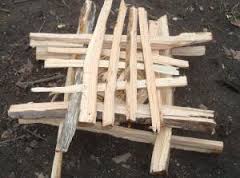
Did you ever play with Lincoln Logs? This is basically the same thing. Surround your pile of tinder with kindling, stacking pieces at right angles. Top the “cabin” with the smallest kindling.


Other fire lays you should check out include:

Key hole fire, Long fire, Star fire, H fire, A frame, and I am sure many many more I do not know.

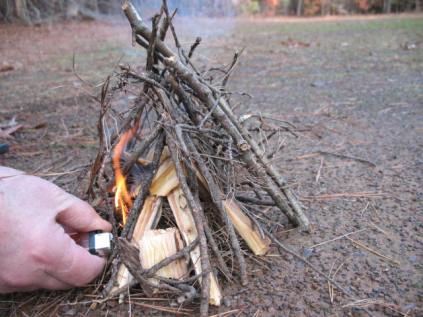
When you have gathered all the materials together, decided on your fire lay, the rest is pretty intuitive. You apply your ignition source to the tinder, waiting for it to ignite. lighting the fireDepending on the type of source and tinder, you may need to gently blow on your ember as you add the kindling to this in order to coax the flame. As the flame grows, slowly add more kindling and ultimately fuel wood creating a larger and larger fire until you reached the desired size based on your needs. It is important to not go too fast when adding wood. Let the the kindling have time to ignite and have create a good base with a decent amount of kindling burning before moving up to the fuel wood. The fuel wood will take longer to ignite and therefore the kindling must keep the flame going during this time.

 

This gives you the basics, what is needed now is practice. So get out and practice building fires, safely

General tips

Be safe. Always clear out the area where you are going to build your fire. Make sure to keep it contained and have water and/or sand nearby to put it out.

 Dry wood is better than green. If it bends instead of snapping or breaking, it is too green.

Dead branches hanging in trees will generally be dryer than those on the ground if it has been raining

Gather twice as much tinder, kindling, and fuel wood as you think you will need. It is surprising how fast you will go through it, and you do not want your fire to go out because you do not have enough materials and it dies while you are out trying to gather more wood. Remember that whole prepared thing.


A great infographic as a recapfire infographic

Other great resources:

http://graywolfsurvival.com/2810/build-fire-basics/

http://www.woodheat.org/build-maintain-fire.html


Quick and Easy Bean and Bacon Soup

I enjoy cooking. I love trying new things, learning how flavors blend, or don’t, with different combinations. I am tantalized by the aroma that fills the house and how it aids in the anticipation of the culinary offering that I will be bringing to the table. However, I do not always have a lot of time to spend preparing every meal. Running around trying to keep up with all of our schedules can be tough and sometimes I have to just throw something together quickly.

Earlier this week my wife was not feeling well, her throat was bothering her. She wanted soup for dinner. Well this was not really what I was planning on making, but I am flexible. Besides, keeping Momma happy is always top priority and very beneficial to me in the long run. I knew I had probably had some items on hand that would make a great quick soup.

As much as I enjoy the wonderful flavor of my go to vegetable soup, I just wasn’t in the mood. My taste buds were also not excited about having a noodle based soup. So after glancing through what was in the pantry and fridge, I had an idea. Everyone in my house loves beans , we always have some on hand, and of course who doesn’t love bacon? So I threw together a quick Bean and bacon soup. When I say quick, I mean it was real quick, under an hour. I am pretty sure if there had been no interruptions by my wonderful little minions, It would have been close to a 30 minute meal.

As with all soups, this could easily be done in a slow cooker. The extra time simmering would allow for the flavors to develop even more. You could also substitute dry beans. Nevertheless, this was put together as a crunch time, take care of Mamma meal so I used canned beans.

The recipe basically unfolded as follows:

 BEAN AND BACON SOUP 

 4 cans Great Northern Beans

2 14 oz cans chicken broth (I like Swanson’s low sodium)

1 15 oz can Tomato Sauce

½ lb package of bacon (it’s what I had but more is always better with Bacon IMHO)

3 celery stalks finely chopped

1 green bell pepper chopped

1 large onion finely chopped

1 tablespoon minced garlic

Salt –to taste ( I used 1 teaspoon and added more at the table mainly trying to cut back on salt intake )

2 teaspoons black pepper

1 teaspoon paprika

2 splashes (or more I really didn’t measure it) of Worchester Sauce

2 teaspoons flour

½ cup of hot water


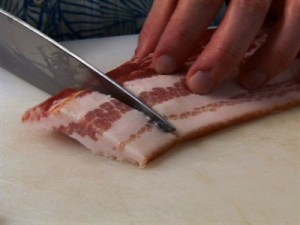
cutting baconI sliced the bacon into about 1 inch squares and browned it on the stove top over medium heat. I did this in the pot I was using for the soup so this was a one pot meal, I love easy clean up.



I added the onions, bell pepper, and celery in with the bacon and cooked then until The-Holy-Trinity-of-Cajun-Cookingtranslucent. Thinking back, I should have set some of the bacon off to the side to use as a garnish as well as chopped some green onions. I will have to do that the next time.  The kids requested I remember this one and fix it again some time, so YAY! A win for Dad.


 

Slow cooker beans

I added the rest of the ingredients , except flour and hot water, into the pot and raised the temperature to high. Blend the flour in with the hot water and add to the soup when it starts to boil. Lower the temp and let simmer, stirring occasionally, until desired thickness and ready to serve.bean and bacon sop


As simple as the recipe was, my kids and wife devoured it. It was so full of flavor, the smokiness of the bacon paired with the paprika very nicely and the thickness of the soup really offered a satisfying comfort food quality to this dish. I hope you enjoy it as well.