

I got to spend two entire summers living in Queretaro, Mexico. The first summer I stayed and worked at an orphanage, The second summer I lived and worked at the Bible house. This was when I met Mariano. He was a Guatemalan and lived in the bible house with me. Mariano was extremely outgoing, an ex stripper, and very funny. Most of the time this was due to him constantly doing the unexpected. There are two main things I remember about him. The first was one of the nights it was my time to cook. I made just simple ham and egg omelets, which by the way purchasing eggs by the kilo is an interesting thing.

If you didn’t know, 1 kilo of eggs is about 20 eggs. Anyway I digress, Mariano fell in love with omelets and this became his request every time It was my time to cook. The other thing I remember, was when we were both in the States he had a wonderful panache for inviting himself over for dinner. He would walk up to you at the end of church and say “ you need to take me to dinner “ or “ I’m coming to your house for dinner today.”
He wouldn’t just do it to me, his old room mate, but would do it to my parents, the pastors, he never ever thought someone wouldn’t want him to come over.
The passage I am looking at today made me remember Mariano. Jesus invites himself to Zacchaeus’ house for dinner.
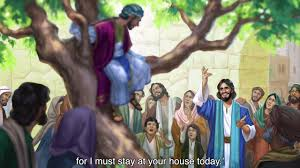
Luke 19:1-10
19 He entered Jericho and was passing through it. 2 A man was there named Zacchaeus; he was a chief tax collector and was rich. 3 He was trying to see who Jesus was, but on account of the crowd he could not, because he was short in stature. 4 So he ran ahead and climbed a sycamore tree to see him, because he was going to pass that way. 5 When Jesus came to the place, he looked up and said to him, “Zacchaeus, hurry and come down, for I must stay at your house today.” 6 So he hurried down and was happy to welcome him. 7 All who saw it began to grumble and said, “He has gone to be the guest of one who is a sinner.” 8 Zacchaeus stood there and said to the Lord, “Look, half of my possessions, Lord, I will give to the poor, and if I have defrauded anyone of anything, I will pay back four times as much.” 9 Then Jesus said to him, “Today salvation has come to this house, because he, too, is a son of Abraham. 10 For the Son of Man came to seek out and to save the lost.”
I can imagine the thoughts going through Zacchaeus mind Much like when Mariano would invite himself over.. what am I going to make, do I have enough, have I even made anything.
Is the house clean? Whether Zacchaeus had any of these thoughts we don’t know, but we do see his excitement.

Now I know you have to all be familiar with this story, even if from nothing more than the song. Most of us who grew up in church know this little song, and any mention of Zacchaeus starts playing in our brains. Zacchaeus was a wee little man and a wee little man was he…
The story of Zacchaeus climbing a tree is fun to share with young children; especially because they are also ‘wee little’ people. Yet there is so much to learn about him beyond the fact that he was a short guy who hung out in trees.

However, I want to take a different approach to this story. Zacchaeus was a tax collector .They were not well liked. I will go more into tax collectors in another writing, but suffice it to say they were hated as many were not fair in their dealings. However, I want to focus on this particular verse:
“Zacchaeus stood there and said to the Lord, “Look, half of my possessions, Lord, I will give to the poor, and if I have defrauded anyone of anything, I will pay back four times as much.”
Is Zacchaeus’ declaration of his financial dealings in verse 8 a promise of future action in response to Jesus’ visit, or is it a report on his present behavior? Grammatically speaking Are the present tense verbs in verse 8 to be understood, in fact, as present tense, thereby describing the current and ongoing behavior of Zacchaeus (as in the RSV and KJV )? Or shall we give them a future cast, describing Zacchaeus’ penitent pledge of future behavior (as in the NRSV and NIV)?Scholars, as well as translators, are divided, because it is correct to translate it as I will give or I give.”
1 If the former, then this is a classic repentance story; if the latter, it is something else entirely. Most of us have heard the general repentance story that preaches so easily from this story…
It has a nice flow of action — Jesus honors Zacchaeus, which prompts his changed behavior, which Jesus then acknowledges — it also plays well with the theology most of us hold: repentance precedes forgiveness. It is therefore easy to conclude — and preach — that in the presence of Jesus all manner of unimagined things can happen, even a wealthy tax collector might give away half his wealth. Or we might deduce — and proclaim — that our repentance must include matters of the wallet as well as the heart, that makes a great sermon on giving. Yet let’s take a look at the entire context of Luke, he has already shown that Jesus has an affect on the sinful tax collector like ole Levi, who later goes by Matthew.
So a synopsis of what we read here:
Jesus, near the end of his journey to Jerusalem, is passing through the border town of Jericho. In that town is a man named Zacchaeus who is not just a tax collector but a chief tax collector which means, as Luke’s Gospel explains, that he is rich. He wants to see Jesus, but because he is short he cannot see over the crowds, so he climbs a tree. When Jesus arrives at the place where Zacchaeus has perched himself, he calls him down and invites himself to Zacchaeus’ home, which simultaneously brings Zacchaeus joy and scandalizes the crowd, because they know that Zacchaeus is a sinner.
This story is only told by Luke, and there are several details that stand out, particularly in relation to passages that have come just before this one. First, sight is important. Earlier, in Luke’s story of the lepers, it is the tenth leper’s recognition that he has been healed that causes him to alter his course, when he saw that he was healed (17:15). In the passage immediately before what we have read today a blind man receives sight and, in response, follows Jesus and glorifies God. Now, Zacchaeus desires to see Jesus, but even as he is trying to catch a glimpse of this prophet Jesus looks up, calls him down, and honors him by coming to dinner and staying at his home.

A second significant detail is wealth. Luke, more than any other gospel writer, is consistently concerned about matters of wealth and treatment of the poor. In the previous chapter a rich man, when asked to give away all he had, departs Jesus in sadness. When Jesus declares that it is nearly impossible for the rich to enter the kingdom of God, the disciples — who like most of their time believe wealth is a sign of God’s favor — are shocked. In contrast, in this story another rich man receives Jesus with joy and gives (or promises to give) half of his wealth to the poor and restores (or promises to restore) fourfold any amount he may have defrauded, and Jesus announces that the impossible has now happened as “salvation has come to this house” (19:9).
Zacchaeus is short, not just in physical stature, but also in terms of his moral standing among his neighbors who, no doubt, despised him; hence their reaction when Jesus invites himself to Zacchaeus’ home. This is not the first time bystanders have been outraged by Jesus’ behavior. Think of Simon’s reaction that Jesus would allow a woman all seem to know has a poor reputation to wash his feet with her tears (7:39) or the reaction of the Pharisees to the sinners and tax collectors who love to listen to Jesus (15:1-2). Nor is this the first time tax collectors have figured prominently in Jesus’ ministry. it is their delight in Jesus’ teaching that prompts the grumbling that in turn Jesus’ “lost” parables. And chapter 17:14 it is the penitent tax collector, not the righteous Pharisee, who returns home justified.
What is Luke’s overall point, is he just repeating the same old tune?
Notice that Zacchaeus neither confesses his sin nor repents. Admittedly, one can view Zacchaeus’ pledge of future behavior as repentance, but it remains a view point and contrasts starkly with the previous verbal penitence, for instance, of the tax collector at the Temple (18:13). Nor does Jesus commend Zacchaeus’ penitence, or his faith, or his change of heart. He merely pronounces blessing, blessing based not on anything Zacchaeus has done but simply because he, like those grumbling around him, is an Israelite, a son of Abraham. Further, Zacchaeus does not offer his financial disclosure in response to anything Jesus has said; rather, it falls on the heels of the grumbling of the crowd. Perhaps it is a response to Jesus’ presence, but perhaps it is his bewilderment at the crowd’s complaint or a defense of his reputation. In either case, I suspect that Zacchaeus is not turning over a new leaf as much as he is lifting up an old one for all to see. which also matches correct interpretation :
The amplified reads Zacchaeus stopped and said to the Lord, “See, Lord, I am [now] giving half of my possessions to the poor, and if I have cheated anyone out of anything, I give back four times as much.”
What if instead of another tax collector repenting this is a story in which Jesus does the unexpected. Like somebody inviting themselves to dinner.
Notice that Jesus calls this chief tax collector by name. “Zacchaeus, come down; for I must stay at your house today.” There is both intentionality and urgency in Jesus’ summons. From the outset of Luke’s gospel and throughout its narrative, Jesus sides with those on the margin, those considered down and out, those not accounted as much in the eyes of the world. While Zacchaeus is rich, he is nevertheless despised by his neighbors, counted as nothing, even as worse than nothing. Yet Jesus singles him out. Why? Might he know of Zacchaeus’ exemplary behavior? We cannot know. Yet by seeing him, calling him, staying with him, and blessing him, Jesus declares for all to hear that this one, even this chief tax collector, is a child of Abraham…and child of God. Perhaps Jesus is again at work seeking out those who are lost (whether through their own actions or those around them) in order to find, save, and restore them.
Or perhaps Zacchaeus serves as yet further evidence of the manifold possibilities present in Jesus’ presence. Thus far, almost everything about this story seems impossible — that a chief tax collector would want to see Jesus; that Jesus would stay in his home; that it would be revealed that this sinner exceeded the law by his generosity; that Jesus would declare not just him but his whole household saved? Yet just earlier Jesus declared that what is impossible for mortals is nevertheless possible for God (18:27). It would make sense for Luke to then show Jesus doing exactly what he said?
Perhaps Zacchaeus is one more example of the impossible possibility that Jesus embodies and regularly manifests.
Or perhaps Zacchaeus simply represents the chief attribute of all disciples: a desire to see Jesus and a corresponding joy in his presence. Zacchaeus cannot see Jesus because he is too short and so the crowds impede his sight. Yet this rich chief tax collector is so desperate to see that he will not be deterred and humiliates himself by climbing a tree like a child in order to glimpse over the crowd and see Jesus. Much like the woman with the issue of blood not being deterred but pushing through the crowd in Luke 8. Read this way, this story is not about formulas regarding repentance and forgiveness — indeed, as in other places in Luke, it calls into question any attempts to reduce the miracle of salvation to a formula like his being anointed by the “sinful woman” Luke 7 Rather, it embodies the promise that anyone — anyone! — who desires to see Jesus will. More than that, anyone who desires to see Jesus will, in turn, be seen by Jesus and in this way have their joy made complete. Imagine, you want to see Jesus, and instead of just seeing him, you have dinner with Him?

WOW. ANYONE can hang out with Jesus. If we want to see Jesus, we can, but more than that, He WILL see us. He knows us, and will call us by name.
Maybe we should ask who among us, both in our congregation and outside, are those who have been left on the margin, who have been ruled out of bounds, who might surprise us by their generosity and faith, and who just want to see Jesus but have been kept at bay. If we are willing to ask — and dare answer — such questions, we might see both Zacchaeus and Jesus in a whole new light that changes us just as much as having dinner with Jesus would change people in the Bible.
 A Rock Between The Eyes