
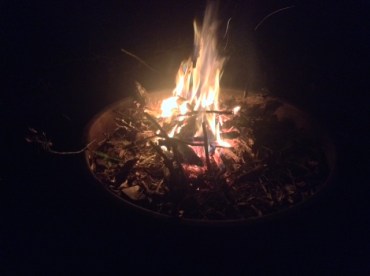
 Fire, arguably man’s most useful primitive skill, is still one of the most important bush craft or outdoorsman skills. From starting grills, warming up a house with a fireplace, burning off trash and garbage, the productive uses of fire are numerous. In a survival situation, the presence of a fire is a game changer. With benefits that include its’ ability to help regulate core body temperature, water purification, cooking, and the sheer psychological boost that just having a fire brings, fire craft is a skill ev
 ery individual needs.
I am pretty sure most everyone thinks they know how to build a fire. Th
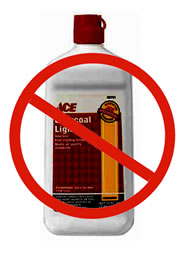
row some sticks and wood together, soak it in lighter fluid and throw a match on it. Yay fire! I have watched people start many fires in this manner, and five minutes later they are spraying more
lighter fluid on it to keep it going. True fire craft is the ability to start a fire and keep it going without having to use lighter fluid or other types of liquid combustible.
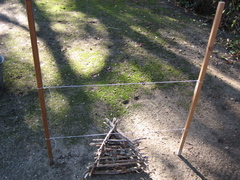 Back in Boy Scouts, we would have one-match competitions as p
art of a skills based obstacle course. You were provided the materials and one match. A string was stretched across the fire lay at a certain height. The first to build their fire and burn the string moved on to the next event leg of the race. Did I mention you only got one match?
Understanding the basics of how to properly build and light a fire was a necessity to complete the task. I would like to say In the real word y ou should never be caught with just one match. Heck you should never be caught out with just one way to start a fire. A common motto in the survival and bush craft world states :”two is one, one is none.”
Murphy’s law being what it is, it is best to “be prepared” (good old Scout Motto) and have a backup. I keep a lighter in my pocket even though I am not a smoker, and my EDC (every day carry) has several other ways to start a fire. Nevertheless, you can use up all your matches and all the fluid in a lighter without ever getting a fire going if you do not know the proper mechanics.
In December of 1854, Louis Pasteur gave a speech in that is the origin of the phrase, “Chance favors the prepared mind.” He was specifically referring to the observational sciences, yet it is an idea that transfers over to many areas. Being prepared with knowledge, skills, and experience allows you to notice those chances and opportunities to succeed during difficult situations.
That being said, preparation is the difference between someone successfully stating a fire that stays lit, and running around struggling to keep it going. So always gather your supplies and have them at hand prior to striking your match.
There are four basic essentials you will need to start any fire regardless of the use:
Ignition source
Tinder
Kindling
Fuel wood
Ignition Source
This is relatively self-explanatory. You need something with which to light the fire. There are many options and I suggest having redundancy.
Matches and lighters are at the top of the list due to being easy and widely available. Keep some with you all the time.
The reality is, if you can generate a spark or enough heat, it can be an ignition source for you if you are experienced in fire craft, some require more skill than others. I would suggest practice starting fires with as many different ways as you can because chance favors the prepared mind.
Other possible ignition sources


Flint and Steel,Batteries and steel wool,Potassium Permanganate and Glycerin,Friction fire (think rubbing sticks together though there is a bit more to it than that.)
So you have an ignition source, you need the building materials for the fire which are: tinder, kindling, and Fuel Wood. Gather these items and have them at hand prior to starting your fire.
Tinder
Every good fire starts with Good tinder. This is what you will apply your ignition source to, because it catches easily, it also burns quickly and that is why you need to have your kindling at hand.
Different things can be used as tinder, bot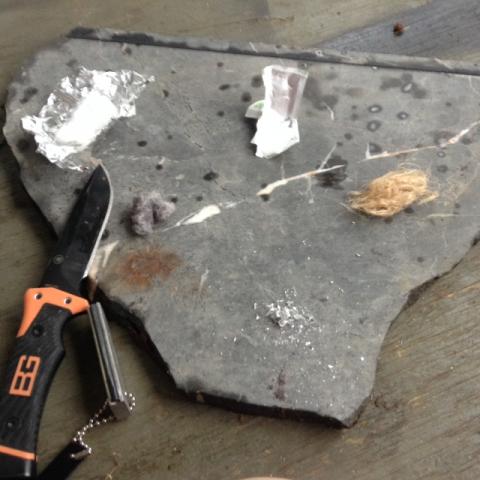 h natural and man-made. Natural tinder would include dry grass or leaves, wood shavings, feather sticks, Cattail fluff, lighter wood,etc.
Man made tinder would be things like dryer lint, Vaseline coated cotton balls, Trioxane Fuel tabs, etc.
The important quality to tinder is the fact it takes a spark easily. Again I encourage you to be prepared and take some type of tinder with you on outings. This pro ves useful especially when everything is damp. Wet tinder will not light.
Kindling
Tinder is going to burn up quickly and if you throw large pieces of wood onto your tinder it will just smother the fire. You need something to bridge the gap, and that is where kindling comes in.
This consists of small twigs and branches about the size of a pencil or a bit smaller. This needs to be dry as well. If everything is damp then find some larger parts and whittle or baton them into smaller, useable pieces. No matter how damp branches are, the inside of them is usually dry.
Fuel Wood
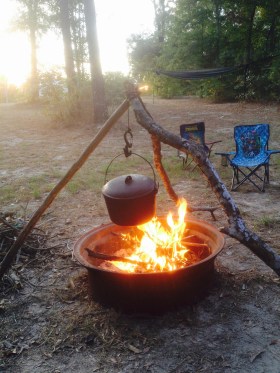 This is what keeps the fire burning nice and hot and for as long as you keep giving it fuel. This does not have to be giant logs, think about the size of your forearm or wrist. Remember, the larger the log, the longer it will take to start burning. When building a fire you are always going from smaller pieces to larger.
Unlike tinder and kindling, it is okay if the fuel wood is damp. If you have the fire going well with plenty of kindling, it will dry out the dampness of the fuel wood.
Now that you have all of the materials, you need to build your fire lay. In Boy Scouts we were taught many different fire lays for different purposes. It is great to know different ways to set up the fire, but it isn’t a necessity. I may cause my scout masters to have an aneurism, but I have built many successful fires with what basically amounted to just grabbing a handful of sticks and piling them together in the right order (tinder, kindling, then fuel) as opposed to constructing a particular fire lay. It really boils down to what is the purpose for your fire. That is what should dictate what type of fire lay you construct, if you even use one.
That being said, here are some examples of different fire lays:

Tipi (Good for cooking)
Lay the kindling over the tinder in a triangular shape like you’re building a tipi.
Star(Perfect for a long-lasting campfire)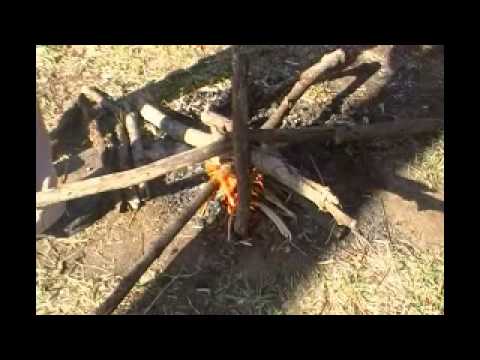
Crisscross the kindling over the tinder.
Lean-to (Good for cooking)


Drive a long piece of kindling into the ground so that it angles over the tinder or use a large log, then lean smaller pieces of kindling against the longer piece. It looks similar to the lean to shelter as the name suggests.
Log Cabin (Longest lasting campfire)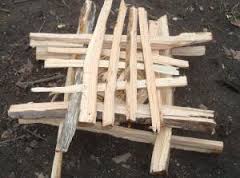
Did you ever play with Lincoln Logs? This is basically the same thing. Surround your pile of tinder with kindling, stacking pieces at right angles. Top the “cabin” with the smallest kindling.
Other fire lays you should check out include:
Key hole fire, Long fire, Star fire, H fire, A frame, and I am sure many many more I do not know.
When you have gathered all the materials together, decided on your fire lay, the rest is pretty intuitive. You apply your ignition source to the tinder, waiting for it to ignite. 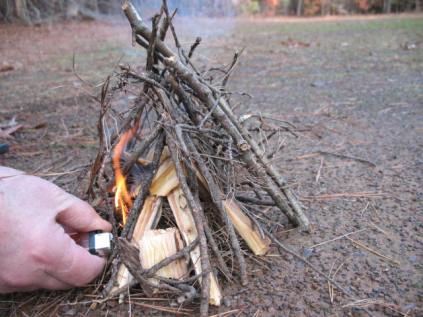 Depending on the type of source and tinder, you may need to gently blow on your ember as you add the kindling to this in order to coax the flame. As the flame grows, slowly add more kindling and ultimately fuel wood creating a larger and larger fire until you reached the desired size based on your needs. It is important to not go too fast when adding wood. Let the the kindling have time to ignite and have create a good base with a decent amount of kindling burning before moving up to the fuel wood. The fuel wood will take longer to ignite and therefore the kindling must keep the flame going during this time.
This gives you the basics, what is needed now is practice. So get out and practice building fires, safely
General tips
Be safe. Always clear out the area where you are going to build your fire. Make sure to keep it contained and have water and/or sand nearby to put it out.
Dry wood is better than green. If it bends instead of snapping or breaking, it is too green.
Dead branches hanging in trees will generally be dryer than those on the ground if it has been raining
Gather twice as much tinder, kindling, and fuel wood as you think you will need. It is surprising how fast you will go through it, and you do not want your fire to go out because you do not have enough materials and it dies while you are out trying to gather more wood. Remember that whole prepared thing.
A great infographic as a recap
Other great resources:
http://graywolfsurvival.com/2810/build-fire-basics/
http://www.woodheat.org/build-maintain-fire.html
 A Rock Between The Eyes
Great article. Adam always tells me it’s all about the preparation and lighter fuel, firefighters etc are all banned in our house. He tells me to ‘grade up’ and to prepare my different grades of wood before lighting. It’s a shame I’m impatient but I’m getting there! In fact, I might write a blog about it! Thank you 🙂
LikeLike