
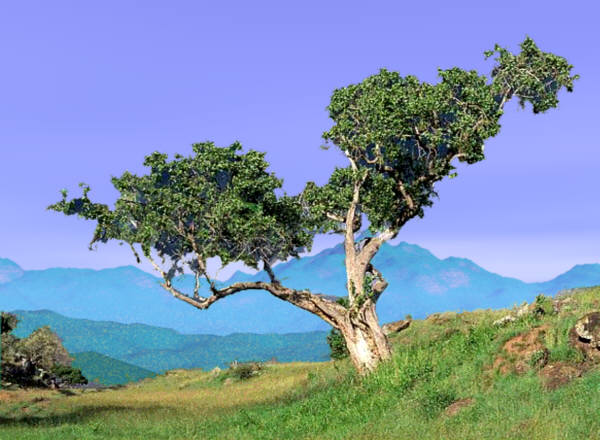
As I was reading in Mark earlier this week, I had a small detail stick out to me and it really stuck with me. It was the story of Jesus cursing the fig tree. What stuck with me was why Jesus cursed the fig tree in the first place. The story in question is:
Mark 11:12-14 and 20- 25 (HCSB)
The Barren Fig Tree Is Cursed
12 The next day when they came out from Bethany, He was hungry. 13 After seeing in the distance a fig tree with leaves, He went to find out if there was anything on it. When He came to it, He found nothing but leaves, because it was not the season for figs. 14 He said to it, “May no one ever eat fruit from you again!” And His disciples heard it.
Cleansing the Temple Complex
15 They came to Jerusalem, and He went into the temple complex and began to throw out those buying and selling in the temple. He overturned the money changers’ tables and the chairs of those selling doves, 16 and would not permit anyone to carry goods through the temple complex.
17 Then He began to teach them: “Is it not written, My house will be called a house of prayer for all nations?[a] But you have made it a den of thieves!”[b] 18 Then the chief priests and the scribes heard it and started looking for a way to destroy Him. For they were afraid of Him, because the whole crowd was astonished by His teaching.
19 And whenever evening came, they would go out of the city.
The Barren Fig Tree Is Withered
20 Early in the morning, as they were passing by, they saw the fig tree withered from the roots up. 21 Then Peter remembered and said to Him, “Rabbi, look! The fig tree that You cursed is withered.”
22 Jesus replied to them, “Have faith in God. 23 I assure you: If anyone says to this mountain, ‘Be lifted up and thrown into the sea,’ and does not doubt in his heart, but believes that what he says will happen, it will be done for him. 24 Therefore I tell you, all the things you pray and ask for—believe that you have received[c] them, and you will have them. 25 And whenever you stand praying, if you have anything against anyone, forgive him, so that your Father in heaven will also forgive you your wrongdoing.
Jesus tells his disciples not to be shocked it withered and uses it as an example of praying with faith and expectation. This is obviously the primary purpose and lesson here, but that small detail kept me pondering. It clearly states it was not the season for figs. Why is the fig tree punished for doing what it was created to do in accordance to the seasons? Well knowing what I know about Jesus, His character being fair and not unjust, my assumption was there is more to this than meets the eye and so I began digging into fig trees and how they relate to this scripture.
It turns out that figs function differently from other fruit bearing trees in several ways such as it blossoms prior to putting on leaves and it’s bloom is covered. What is most important to this verse is how it produces fruit. Figs have more than one crop per year. The Breba crop develops in spring (the time period that this story occurs) on the previous years shoots. The main crop ( what would be referred to as the season for figs) develop’s on the current year’s shoot growth and ripens in late summer or fall. These are the sweetest and tastier crop, hence why it is referred to as the main crop. Another consideration is that depending on climate, the fruit bearing time extends over a longer time period and it is common to find fruit from the previous season still on trees outside of the main harvest time. Therefore the fact the tree was covered in leaves, as they could tell from a distance, it was not weird to expect their to be fruit on the tree that was so covered in leaves.
This then leads into the important message that exists in what happened to the fig tree in this story. Jesus cursed the tree and it withered. This was first an example of faith to the disciples, as Jesus explained to them. It also serves as a reminder of the importance of having spiritual fruit in our lives. The fig tree is the third tree mentioned by name in the Bible, Genesis 3:7. It is mentioned multiple times in the Old Testament, in Deuteronomy, 1 Kings, 2 Kings, Jeremiah,Joel Proverbs, Song of Solomon, and probably in places I have missed. The New Testament carries on the usage of the fig tree as examples and symbols of Israel. Having fig trees was a sign of being blessed and prosperous. Conversely not having any, or one dying could be seen as a sign of judgement and/or rejection. The fact this event took place around him cleaning out the temple, It was another clue to the disciples about the coming judgement to Israel and the importance of bearing good fruit as was in line with many of Jesus’ other teachings. It would be wise of us to consider this in regards to our own lives and what it means to bear good fruit and not just look fruitful or we may find ourselves facing a disappointment and shock as happened in
Matthew 7:21-23 (NKJV)
I Never Knew You
21 “Not everyone who says to Me, ‘Lord, Lord,’ shall enter the kingdom of heaven, but he who does the will of My Father in heaven. 22 Many will say to Me in that day, ‘Lord, Lord, have we not prophesied in Your name, cast out demons in Your name, and done many wonders in Your name?’ 23 And then I will declare to them, ‘I never knew you; depart from Me, you who practice lawlessness!’
May we never hear that phrase, but instead hear, “well done my good and faithful servant.” It is about the relationship, not the work and outward sign as shown by the tree that looked as though it should have fruit and by the people who had the testimonies of what they had so called done in His name, and yet He did not know them.
 A Rock Between The Eyes