
When exploring the great outdoors it pays to adhere to the old Boy Scout motto, “be prepared.”
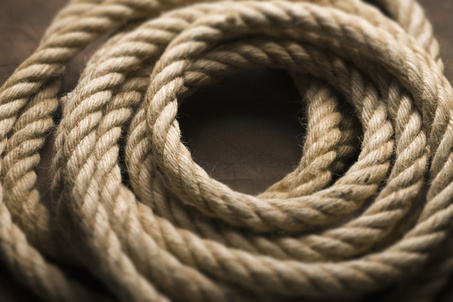
In keeping with that idea I want to talk about cordage. Cordage is an item with many uses:
Lashing 
Shelter Building
replacing shoe laces
nets
clothing repair
Keeping food away from critters
Bow drill for fire starting
tying up bandits
First Aid applications
the list goes on and on…
It is important enough to have landed on Dave Canterbury’s ( The Pathfinder School, Dual Survivor, etc.) 5 C’s of Survivability list.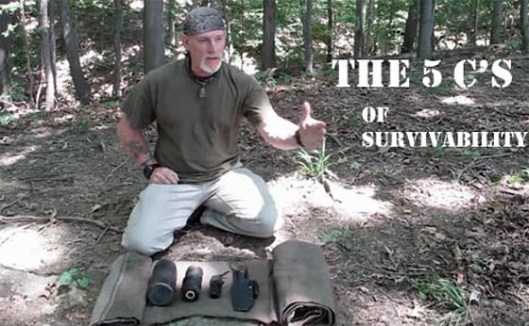
C-cutting device
C-combustion device
C-cordage
C-container
So needless to say it is important to have cordage especially when going out into the great outdoors.
 There are many types of cordage from both natural and man made materials.
Cordage can even be made out in the wild from various materials. This is a great skill to possess so it is work spending the time learning how.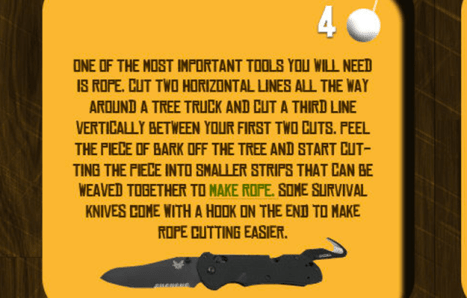
However, with all the types of cordage available,inexpensively, there is no reason everyone should not just include some type of cordage in every EDC, BOB, survival kit, glove box, large pocket, etc.
Two great types of cordage to always have available is Paracord and Bank line.
Paracord is like the duct tape of the cordage world. It’s usefulness and versatility is only limited by the imagination. Paracord comes from the military and was used as parachute cord hence it’s name. It is also sometimes referred to as 550 cord due to its load pairing capability being 550l bs. True Mil-spec paracord consists of 7 inner strands inside a  braided sheath. All this and it is still a very small size. The beauty of it is due to it’s construction. You can take a piece apart and have 7 x the length of the cut portion in a smaller diameter cordage than can now be used for sewing repairs, or a number of projects well as the sheath it rests inside. This greatly increases the usability of the paracord. A good rule of thumb regarding items to carry with you out into the woods is for it to have multiple purposes. Since the paracord itself offers more than on size of cordage, it is an excellent item to carry. I like to replace my shoe laces with paracord so that I always have some on me. If I need to use the cordage, I can take it apart and still have the sheath to lace up my shoes. If I can only have one type of cord, more often than not I choose paracord.
Paracord can be found in most hardware stores, Walmart, and easily found online. Prices vary but you can usually get 100ft for under $ 8.00.
Another type of cordage that gets a lot of raves in the survivalist and bushcraft communities is Bank line, or trout line. This is a type of mariner twine and is very cheap. 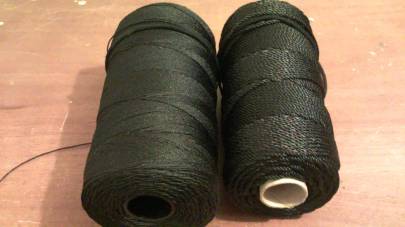 You can get 1,000 ft for around $15.00. This line is smaller than paracord, so you can carry more of it. However it does not break down into multiple sizes. It also has a lower weight capacity usually being 150 to 350 lbs depending on the brand and size of bank line.
However there are ways of increasing strength or cordage such as a two strand twist or braiding. (see bottom for links to tutorials)


Bank line is coated in a tar substance (it’s intended purpose is to be in water) which allows it to hold up to the environment better. The coating does not make it sticky to the touch, nor does it rub off. There is a slight odor to it, but it is barely noticeable to most people. It would be something to consider if using bank line for snares.
There is really no excuse for someone not to have cordage with them when they go out in the woods. So get outside, enjoy nature, and take cordage with you.
Tutorials :
Two strand twist
https://www.youtube.com/watch?v=lFiBQH3-OZ0

 A Rock Between The Eyes